
How to Extend Your GE Water Inlet Valve Life — WH13X10053 Maintenance Guide
Always disconnect power and turn off water supply before inspecting or replacing the inlet valve. Water pressure can cause sudden spraying when hoses are disconnected.
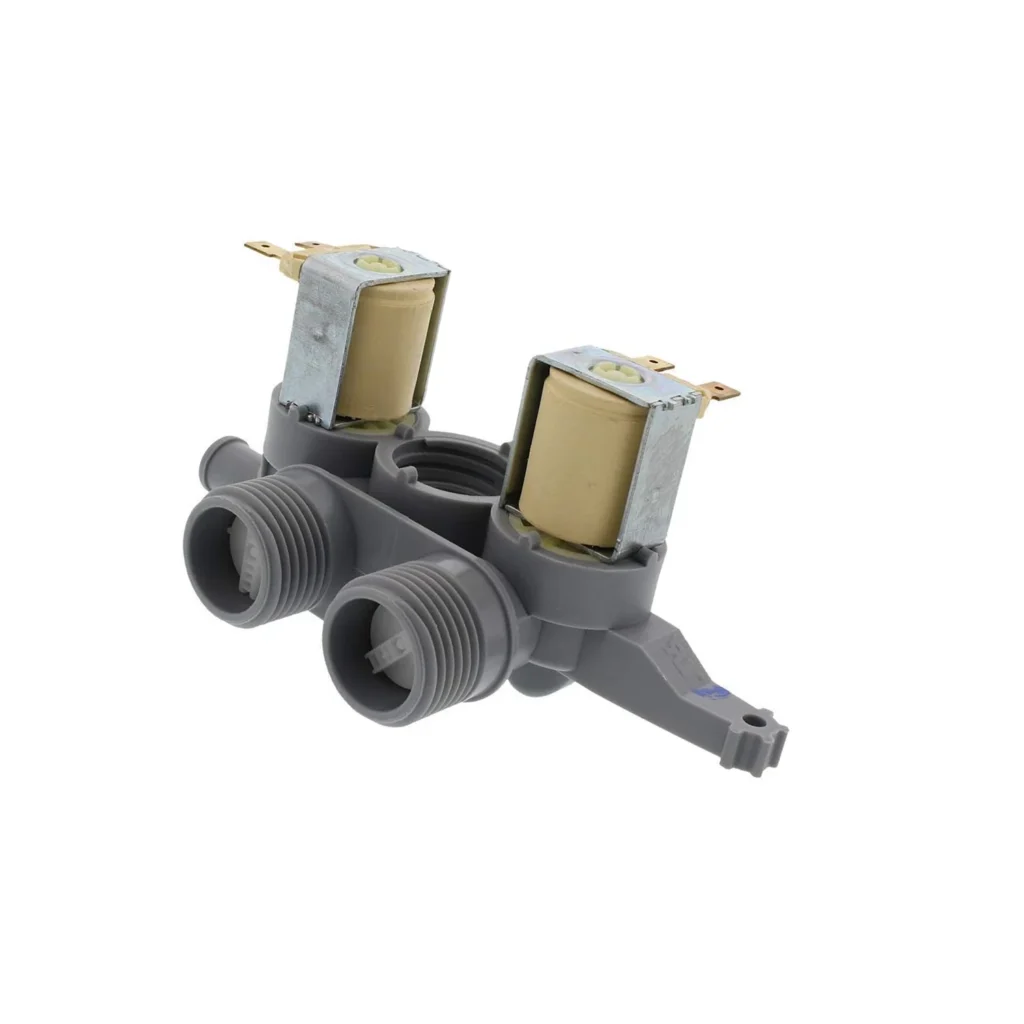
Most GE triple water inlet valves fail between years 3 and 5, but I've seen them last 8+ years with basic preventive care. The difference? Regular inspection and understanding what kills them early.
The WH13X10053 triple valve controls hot, warm, and cold water flow into your GE or Hotpoint washer. It's one of those parts that works perfectly until suddenly it doesn't — you'll get cold-only fills or a valve that won't stop dripping. Let's talk about catching problems early.
How Long Should It Last?
Factory spec says 5-7 years under normal use. Reality is different.
I see these valves fail at the 3-year mark when the water supply has sediment or mineral buildup. Hard water areas are brutal on inlet valves. The solenoids inside get gummed up, the screens clog, and the rubber diaphragms develop tiny cracks.
Here's what affects lifespan:
- Water quality: Hard water cuts life by 30-40%
- Supply pressure: Anything over 80 PSI stresses the diaphragms
- Cycle frequency: Running 2+ loads daily accelerates wear
- Temperature cycling: Constant hot/cold switching is tough on the solenoids
The good news? Simple checks every few months can double the valve's working life.
Signs It's Wearing Out
Most people don't realize their inlet valve is failing until they've got a puddle behind the washer. But there are earlier warning signs if you know what to look for.
Washer Only Fills with Cold Water
You've selected warm or hot, but the water coming in feels cold. This means one or both hot water solenoids have failed. The valve's still working, just not completely. You've got maybe 2-4 weeks before it quits entirely or starts leaking.
Check the hose connections first — sometimes a kinked hot water supply line mimics this symptom. But if both hoses flow freely when disconnected, it's the valve.
Won't Stop Dripping
The cycle ends, but you hear water trickling into the tub. That's a failed solenoid or damaged diaphragm. The valve can't seal completely anymore. This isn't a "wait and see" situation — it'll flood your laundry room eventually.
Some people think it's just a loose connection. It's not. When inlet valves start dripping, they don't fix themselves. The rubber has failed or debris is preventing the seal.
Slower Fill Times
Your washer used to fill in 2 minutes, now it takes 4-5. The screens inside the valve are probably clogged with sediment. You can clean them (I'll show you how below), but if cleaning doesn't restore full flow, the valve itself is restricting water.
Hissing or Humming Sounds
Solenoids make a brief click when they engage — that's normal. But continuous humming or a high-pitched hiss means the coil is working harder than it should. The valve's sticking, and the solenoid is burning itself out trying to overcome the resistance.
Preventive Maintenance Schedule
You don't need to be a technician to keep this valve healthy. Here's what actually works.
Every 3 Months: Inspect the Screens
Turn off both water supplies behind the washer. Disconnect the inlet hoses (you'll need pliers for the connections). Inside each hose port on the valve, there's a small mesh screen.
Pull them out with needle-nose pliers. Hold them under running water and brush with an old toothbrush. If you see rust particles or white mineral buildup, your water supply needs attention. Reinstall the screens and reconnect hoses.
This 5-minute task prevents 80% of premature valve failures.
Every 6 Months: Check for Micro-Leaks
Run an empty cycle and watch the valve during fill. Look at each hose connection and the valve body itself. Even tiny beads of moisture mean the seals are starting to go.
Check the area behind the washer for water stains on the floor or wall. Slow leaks leave rust marks on the valve mounting screws before you see actual drips.
Annually: Test All Temperature Settings
Run short test cycles on hot, warm, and cold. Feel the water coming into the tub during each fill. All three solenoids should respond correctly.
If warm feels cold or hot feels warm, one solenoid is weak. Replace the whole valve now while it's convenient, not at 9 PM when you're trying to finish laundry.
When to Replace vs Maintain
Here's the honest answer: you can't rebuild these valves. They're sealed units. Once the solenoids or diaphragms fail internally, you're replacing the whole assembly.
Replace immediately if:
- Water drips continuously after cycles end
- Only cold water enters on any setting
- You see cracks in the valve body
- The valve is more than 6 years old and showing any symptoms
You can maintain and extend life if:
- All temperatures work correctly
- No visible leaks or moisture
- Fill times are normal
- Screens clean up easily
The replacement itself takes 15-30 minutes if you can access the back of your washer. Multiple users report the whole job from start to finish takes under half an hour. One told us: "The simplicity of this repair surprised me. From start to finish the whole process took less than half an hour."
You'll need basic tools: nut drivers, pliers, screwdrivers, and possibly a socket set. The hardest part is carefully removing the hard plastic hose from the valve when you take off the hose clamp — don't yank on it.
The Water Quality Factor
If you're in a hard water area, consider installing an inline sediment filter on your cold water supply. A $15 filter housing with replaceable cartridges can triple your valve's lifespan.
I've seen the difference firsthand. Customers with filtered water get 7-9 years from these valves. Those without filtration average 3-4 years before failure. The math is obvious.
Compatible Models Reference
This WH13X10053 valve works across GE top-load washers including the GTWN series (GTWN4250D0WS, GTWN4950D1WS, GTWN5250D0WW, GTWN5650F2WS) and GTWP models. If your model number starts with GTW, chances are this is your valve.
It replaces older part numbers AP5629504, WH13X22314, PS3652834, and 2692250. They're all the same valve with updated part numbers.
Frequently Asked Questions
Can I clean the valve instead of replacing it?
You can clean the inlet screens, which helps with flow issues. But if the solenoids or internal diaphragms have failed, cleaning won't fix it. The valve is a sealed unit — once the internals go bad, replacement is the only option. Think of it like a car's fuel injector: you can clean around it, but you can't rebuild what's inside.
Why does my valve work sometimes but not others?
Intermittent failure usually means a solenoid is on its last legs. It works when it's cool, fails when it heats up after several cycles. Or debris is partially blocking the valve — sometimes water pressure pushes past it, sometimes it doesn't. Either way, you're looking at replacement within the next few weeks.
Will a bad inlet valve damage my washer?
A valve that won't stop dripping can overflow the tub and flood your floor — that's the main risk. A valve that won't open just means your washer won't fill, which is annoying but not damaging. The bigger issue is running cycles with cold-only water when you think you're using hot. That doesn't clean clothes properly and you waste detergent and time.
Element showing wear?
WH13X10053 · Replace before it fully fails