
How to Extend Your Whirlpool Washer Suspension Rod Life — Maintenance Guide
Always unplug the washer before inspection or replacement. Wear work gloves when handling rods — metal edges can be sharp. Ensure washer is stable and cannot tip during inspection.
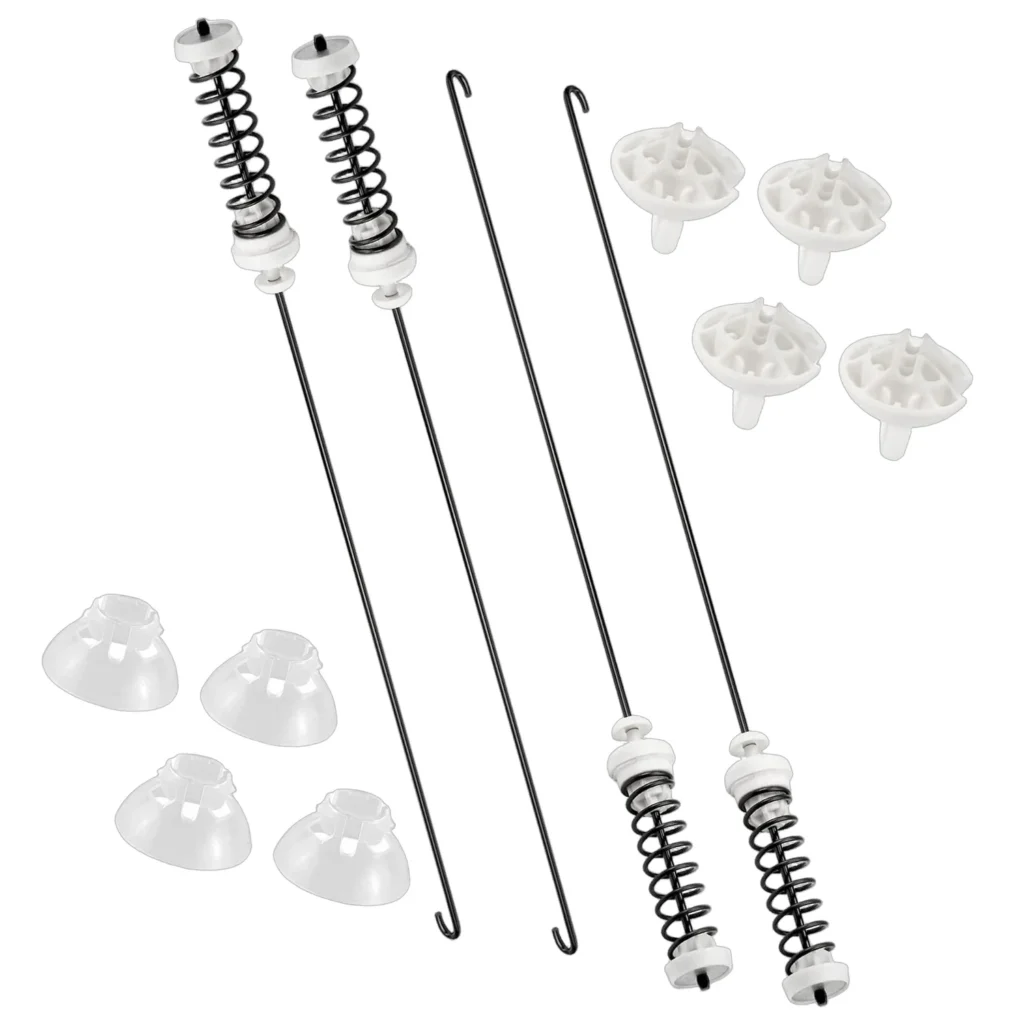
Most Whirlpool washer suspension rods fail between years 5 and 8, yet with proper care, they can last 10-12 years. The difference? Catching wear before it causes catastrophic shaking that damages the tub, cabinet, and your sanity during spin cycles.
The W10780048 suspension rod kit works across Whirlpool, Maytag, Kenmore, and Amana models — like the WTW4800XQ series and MVWC200XW washers. These rods absorb thousands of pounds of force during every spin cycle, and they'll give you clear warnings before they fail completely.
How Long Should Suspension Rods Last?
Factory suspension rods typically last 5-7 years under normal use. That's about 2,500-3,500 wash cycles. But here's what affects that lifespan:
- Load balance matters more than load size. One heavy towel on one side creates more stress than a full balanced load.
- Spin speed settings. Running every load on "extra high" spin shortens rod life by 30-40%.
- Floor stability. Washers on unlevel floors or weak subfloors wear rods 2x faster.
- Overloading frequency. Stuffing loads past the drum's capacity creates uneven stress patterns.
With proper maintenance and balanced loads, you can push these rods to 10-12 years. The key is catching problems early.
Signs Your Suspension Rods Are Wearing Out
Suspension rods don't fail suddenly — they telegraph their decline weeks or months in advance. Here's what to watch for:
Shaking and Moving During Spin Cycles
This is the #1 symptom. When rods start wearing, you'll notice the washer "walking" across the floor during spin cycles — even with balanced loads. Early stage: the washer moves 1-2 inches per cycle. Advanced stage: it can travel several feet and bang into walls.
Why it happens: The suspension rods lose their dampening ability. Instead of absorbing the spin forces, they're transmitting them directly to the cabinet. If you're stuffing towels behind your washer to keep it in place, your rods are past due.
Spinning Issues and Incomplete Cycles
Worn suspension rods throw the drum off-balance. The washer's sensors detect this and either reduce spin speed or stop the cycle entirely. You'll find clothes that are wetter than usual, or the washer stuck mid-cycle with an error code.
Models like the WTW4800XQ1 and NTW4630YQ0 are particularly sensitive to rod wear — their suspension systems have tighter tolerances than older designs.
Unusual Noises During Agitation
Listen for metal-on-metal clanking or a rhythmic thumping that matches the drum rotation. This means the rods aren't keeping the drum centered anymore. The tub is hitting the cabinet walls, and if you let it continue, you'll damage more than just the rods.
When to Replace vs Maintain
Here's the honest truth: suspension rods aren't user-serviceable once they wear. There's no lubrication point, no adjustment mechanism. You can't "tighten them up."
Replace immediately if:
- The washer shakes violently even with small, balanced loads
- You see visible rust or corrosion on the rod shafts
- The rubber bushings are cracked or missing chunks
- The washer has moved more than 6 inches from its original position
You can likely wait 3-6 months if:
- Shaking only happens with heavy or unbalanced loads
- The washer completes cycles normally with light loads
- Movement is minimal (under 1 inch per cycle)
One critical safety note: Always unplug the washer before any inspection. These machines store electrical charge, and you'll be working near the motor and control board. Wear work gloves when handling the rods — the metal edges can be sharp, especially on older units.
Preventive Maintenance That Actually Works
While you can't service the rods themselves, you can dramatically extend their life:
Balance every load. Take 10 seconds to distribute clothes evenly around the drum. It's the single biggest factor in rod longevity.
Level the washer annually. Floors settle, subfloors sag. Use a level on top of the washer (front-to-back and side-to-side). Adjust the feet until all four corners sit solidly with no rocking. An unlevel washer puts asymmetric stress on the rods.
Check floor stability. If your bathroom or laundry room floor feels bouncy when you walk on it, reinforce the subfloor. A weak floor amplifies every vibration and shortens rod life by years.
Use appropriate spin speeds. You don't need maximum spin for every load. Towels and heavy items? Sure. But regular clothes do fine on medium spin, and your rods will thank you.
Frequently Asked Questions
Can I replace just one suspension rod instead of all four?
No. If one rod has worn enough to cause symptoms, the other three are close behind — they've all experienced identical loads. Installing one new rod alongside three worn ones creates an unbalanced suspension system that'll shake worse than before. The W10780048 kit includes all four rods for this exact reason. Always replace them as a set.
How do I know if my floor is causing premature suspension rod wear?
Run an empty spin cycle and watch from the side. If the entire floor vibrates noticeably, or if nearby objects rattle, your floor is too flexible. Professional solution: add blocking between floor joists directly under the washer. Budget solution: place a 3/4-inch plywood sheet under the washer to distribute weight across more joists.
Will worn suspension rods damage other parts of my washer?
Absolutely. When rods fail, the tub impacts the cabinet walls, which can crack the outer tub, bend the drum spider, damage the transmission, and even break motor mounts. I've seen $150 in worn suspension rods turn into $800 in secondary damage because someone waited too long. If your washer is shaking violently, stop using it until you replace the rods.
Element showing wear?
W10780048 · Replace before it fully fails