
How to Extend Your Whirlpool Water Inlet Valve Life — W10238100 Maintenance Guide
Always shut off the home water supply before inspecting or replacing the inlet valve. Disconnect power to the refrigerator. High water pressure above 120 PSI can cause the valve to leak or fail — test your home's pressure with a gauge before replacement.
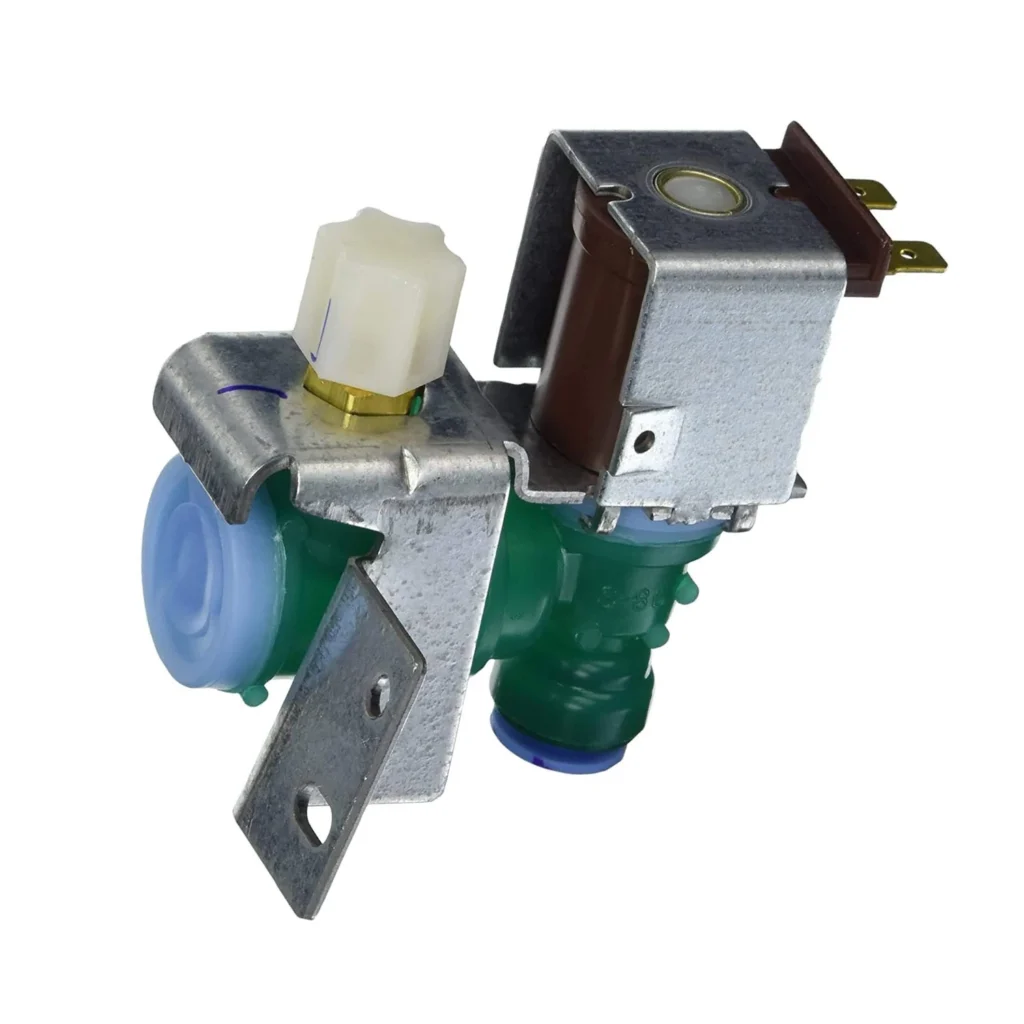
Most water inlet valves fail between 5-8 years, but sediment buildup can kill them in half that time. If you've got hard water running through your Whirlpool refrigerator (models like WRS321CDBM00 or GSF26C5EXS00), that valve is working overtime filtering minerals with every ice cube and water dispenser use.
The W10238100 inlet valve controls water flow to both your ice maker and dispenser. It's essentially a solenoid-operated gate that opens when you press the dispenser paddle or when your ice maker calls for water. The problem? It sits right in the path of whatever's in your water supply — calcium, iron, sediment, and chlorine.
How Long Should It Last?
Under ideal conditions with filtered water, you're looking at 8-12 years. But here's reality: most homes don't have ideal conditions.
With unfiltered municipal water, expect 5-7 years. If you've got well water with high mineral content, you might see failure in 3-5 years. The valve itself doesn't wear out from use — it fails because sediment blocks the screen, calcium builds up on the solenoid, or corrosion eats through the internal components.
Three things drastically affect lifespan:
- Water hardness: Above 10 grains per gallon accelerates mineral buildup
- Filter changes: Skipping filter replacements dumps sediment straight into the valve
- Water pressure: Anything over 120 PSI stresses the internal diaphragm
Signs It's Wearing Out
Water inlet valves don't usually fail all at once. You'll get warning signs weeks or months before complete failure.
Slow Water Dispenser Flow
When water trickles instead of flows, sediment is blocking the valve screen. You should get a full glass in 8-10 seconds. If it's taking 20+ seconds, the valve is struggling. This happens because the tiny mesh screen (about 20-micron) catches particles, and eventually those particles form a barrier.
Ice Maker Cycles But Doesn't Fill
You'll hear the ice maker go through its cycle — the arm drops, the motor hums — but no water enters the tray. The valve is getting the electrical signal but can't open fully. Sometimes it's frozen minerals jamming the solenoid, sometimes it's the coil itself weakening from years of magnetic cycling.
Constant Dripping or Leaking
A valve that won't close completely means the internal seal is shot. You'll see water pooling behind the fridge or dripping from the dispenser even when not in use. This is calcium deposits preventing the valve seat from sealing, or the rubber diaphragm has developed a tear.
Humming or Buzzing Sound
If you hear a buzzing when requesting water or ice, the solenoid is trying to open but can't. The electrical coil is energized but the mechanical parts are stuck. This draws more current and can eventually burn out the coil — you'll smell it when that happens.
Maintenance That Actually Works
You can't take this valve apart to clean it, but you can prevent most failures.
Replace Water Filters on Schedule
Every six months, no excuses. The filter on models like WRF560SEHW00 sits directly upstream of this valve. When filters get saturated, they stop filtering and start dumping trapped sediment. I've seen valves with screens completely caked because someone ran a filter for two years.
Check Your Home's Water Pressure
Get a pressure gauge from any hardware store (costs about $10). Screw it onto an outdoor spigot and turn the water on. If you're above 80 PSI, consider a pressure reducing valve for the whole house. Above 120 PSI, you're definitely shortening the life of this inlet valve.
Inspect the Screen Annually
You'll need to pull the fridge out and access the valve (it's usually on the back lower-left). Shut off the water supply first. Disconnect the inlet line and look at the screen inside the valve inlet — use a flashlight. If you see brown, white, or orange buildup, that's your problem. You can try gently rinsing it with water pressure from the opposite direction, but if sediment is caked on, replacement is your only real option.
Flush After Filter Changes
Every time you install a new filter, run 3-4 gallons through the dispenser. This clears carbon fines that new filters shed and prevents them from reaching the valve. Yeah, it seems wasteful, but it's cheaper than a $140 valve replacement.
When to Replace vs Maintain
Here's the honest truth: if your valve is already showing symptoms, maintenance won't fix it. The W10238100 isn't rebuildable. Once sediment is inside the valve body or the solenoid coil is weakening, you're done.
Replace immediately if you have:
- No water flow at all despite proper water pressure
- Constant leaking that doesn't stop when the valve should be closed
- Burnt electrical smell near the valve
- Visible corrosion or calcium buildup on the exterior
Consider replacement soon if you have:
- Noticeably slower water flow that's gotten worse over months
- Intermittent ice maker fills (works sometimes, not others)
- Any humming or buzzing sounds
The valve works for models GSC25C4EYB02, WRS526SIAE00, GSS30C6EYF02, and dozens of other Whirlpool, KitchenAid, Kenmore, Maytag, and Jenn-Air refrigerators. Check your model number against the compatibility list before ordering.
What Kills Valves Fastest
I've replaced hundreds of these. Here's what actually causes early failure:
Iron-rich well water: Creates rust-colored buildup that's impossible to clear. If you've got well water with visible orange staining, budget for a new valve every 3-4 years or install a whole-house iron filter.
Ignored water filters: The single biggest cause. A filter that's 2+ years old is just a sediment trap waiting to release everything downstream.
Power surges: Lightning strikes or electrical issues can fry the solenoid coil instantly. If your neighborhood has frequent power problems, consider a surge protector for the fridge.
Freezing: If your garage fridge sees temperatures below 32°F, water in the valve can freeze and crack internal components. These valves aren't designed for freeze-thaw cycles.
Frequently Asked Questions
Can I clean the inlet valve screen without replacing the whole valve?
Sometimes. Shut off water, disconnect the inlet line, and carefully remove the small mesh screen if your valve has one that's accessible. Rinse it under high pressure water going backwards through the screen. If sediment won't budge with water pressure alone, don't force it — you'll damage the screen. At that point, replacement is more reliable than trying to salvage a clogged valve.
How do I know if it's the valve or low water pressure causing slow flow?
Test your house water pressure first. Remove the inlet line from the valve and hold it over a bucket. Turn the water on — you should get strong, steady flow. If the supply line flows well but the dispenser doesn't, it's the valve. If the supply line is weak, you've got a pressure or supply line problem upstream.
Will a water softener help my inlet valve last longer?
Absolutely. Water softeners remove the calcium and magnesium that cause most valve buildup. If you're in an area with water hardness above 7 grains per gallon, a softener can double valve lifespan. Just make sure you're still changing refrigerator filters — softeners don't remove sediment, rust, or chlorine.
Element showing wear?
W10238100 · Replace before it fully fails