
How to Extend Your Samsung Washer Spider Arm Life — DC97-17004B Maintenance Guide
Disconnect power and water before any maintenance. Never run the washer if you hear grinding noises or see rust stains — continued use will cause secondary damage to drum, tub, and bearings
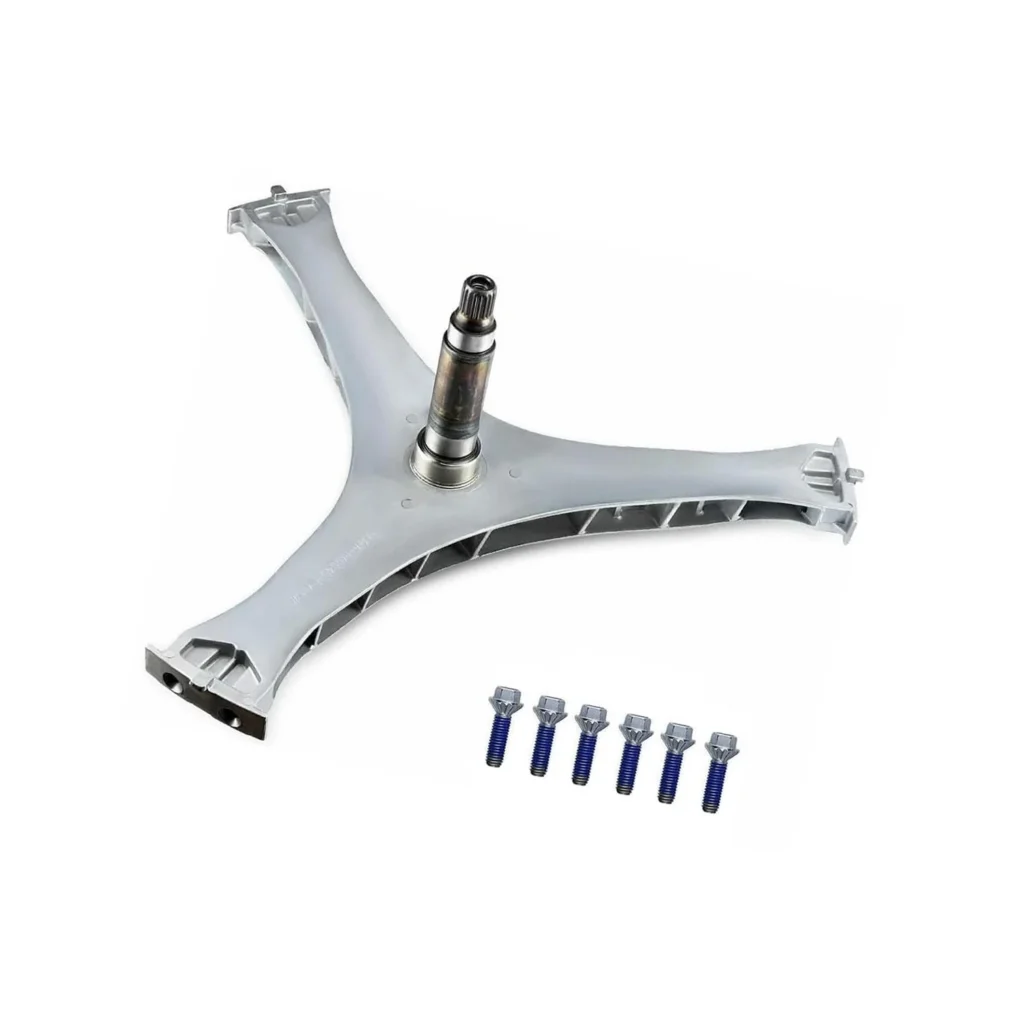
The spider arm in your Samsung front-load washer should last 8-10 years, but most fail around year 5. That's a $190 part plus labor — or a DIY weekend project you'd rather avoid. The DC97-17004B flange shaft assembly (the technical name for the spider arm) connects your drum to the drive shaft, absorbing every ounce of spin cycle force. When it goes, you'll know — loud grinding noises, rust stains on clothes, or a drum that wobbles like a broken carnival ride.
Most spider arm failures aren't from normal wear. They're from something you can actually control: corrosion caused by detergent residue and trapped moisture. Let's keep yours running past that 5-year mark.
How Long Should Your Spider Arm Last?
Samsung's DC97-17004B spider arm is designed for 10+ years of service, but real-world data tells a different story. The average failure point sits around 5-7 years, with front-loaders used daily failing faster. Why the gap?
The spider arm sits behind your drum, constantly exposed to water, detergent, and fabric softener residue. It's made from aluminum alloy — strong but vulnerable to corrosion when moisture sits on it for hours after each wash. High-efficiency (HE) washers are worse because they use less water, meaning concentrated detergent residue never fully rinses away.
Units in humid climates or laundry rooms with poor ventilation fail 18-24 months earlier on average. If you're washing 8+ loads weekly with liquid detergent and fabric softener, you're in the high-risk category.
Signs Your Spider Arm Is Wearing Out
Spider arm failure doesn't happen overnight. You'll get warnings weeks or months before catastrophic failure.
Rust Stains on Laundry
Orange or brown spots on clothes — especially whites — mean corrosion is flaking off the spider arm and getting trapped in fabric. This happens after the aluminum corrodes through its protective coating. Once you see rust stains, the spider arm is already compromised. You're looking at 2-6 months before mechanical failure.
Grinding or Scraping During Spin Cycle
A healthy spider arm is silent. Grinding, metal-on-metal scraping, or rhythmic thumping during high-speed spins means the spider arm has corroded thin enough to flex or break partially. The drum is shifting on its axis, rubbing against the tub or other components. Don't ignore this — continued use will crack the spider arm completely, potentially damaging the drum, bearings, and tub.
Excessive Drum Movement or Wobble
Push your empty drum side to side. It should have minimal play — maybe 1/4 inch of movement. If the drum shifts an inch or more, or wobbles noticeably when you spin it by hand, the spider arm is likely cracked or severely corroded. The connection between drum and drive shaft is compromised. This gets worse under load, causing violent shaking during spins.
Loud Banging During Wash or Spin
If your washer sounds like it's demolishing itself — banging loud enough to hear from another room — the spider arm may have partially separated from the drum. The drum is hitting the tub walls because it's no longer centered. Stop using the washer immediately. A complete spider arm failure can crack the outer tub (a $300+ part) or damage the motor.
Maintenance Schedule to Prevent Early Failure
Spider arm maintenance isn't complicated, but it requires consistency. Most failures trace back to months of moisture and residue buildup.
After Every Wash: Leave the Door Open
This is the single most important habit. Prop the door open for 2-3 hours after each wash to let moisture evaporate from the drum and gasket area. Closing the door traps humidity against the spider arm, accelerating corrosion. If you wash at night, leave it open overnight.
Weekly: Run a Clean Washer Cycle
Use your washer's self-clean cycle with hot water — no detergent, no clothes. This flushes detergent residue from the drum, gasket, and spider arm area. If your model doesn't have a clean cycle, run the hottest, longest wash setting empty. Do this weekly if you use liquid detergent or fabric softener, every two weeks if you use powder detergent only.
Monthly: Wipe Down the Gasket and Drum
Pull back the rubber door gasket and wipe out trapped water, hair, and gunk with a clean towel. Check for black mold or slime — both indicate moisture isn't drying properly. While you're in there, wipe the inside of the drum with white vinegar on a cloth to remove any residue film. Pay attention to the drum holes — detergent residue clogs them, preventing proper drainage.
Every 3-6 Months: Deep Clean with Vinegar
Run a hot wash cycle with 2 cups of white vinegar (no clothes, no detergent). Vinegar dissolves mineral deposits and detergent buildup that regular cleaning cycles miss. For heavy buildup, pause the cycle halfway through for 30 minutes to let the vinegar soak, then resume. Follow with a rinse cycle using plain hot water.
What Actually Kills Spider Arms
Understanding what causes failure helps you prevent it. The spider arm's aluminum alloy corrodes through a process called galvanic corrosion — when moisture, metal, and detergent chemicals interact. Here's what accelerates it:
Liquid fabric softener: This stuff is spider arm poison. It leaves a waxy residue that traps moisture against metal surfaces. If you must use fabric softener, switch to wool dryer balls instead. Your spider arm will last years longer.
Too much detergent: HE washers need 1-2 tablespoons of detergent per load. More doesn't clean better — it just leaves residue. If you see suds during the rinse cycle, you're using too much.
Cold water washes exclusively: Cold water doesn't dissolve detergent completely. Run at least one hot wash weekly to prevent buildup. Hot water is also essential for keeping the spider arm area dry — it evaporates faster after the cycle ends.
Closing the door immediately: We mentioned this, but it bears repeating. Trapped moisture + metal = corrosion. Always leave the door ajar.
When to Replace vs Maintain
Here's the honest truth: once corrosion starts, maintenance can't reverse it. You can slow progression, but you can't fix corroded aluminum. Rust stains or grinding noises mean you're past the maintenance stage — you're in replacement territory.
If your washer is 3+ years old and you've been closing the door after washes or using lots of fabric softener, inspect the spider arm now. You'll need to remove the outer tub to see it — not a quick job, but worth checking if you're experiencing minor symptoms like slight wobble or musty smells.
Caught early (minor surface corrosion, no structural damage), aggressive maintenance might buy you 12-18 more months. But if there's visible pitting, rust flaking, or any movement in the drum, order the DC97-17004B now. The longer you wait, the more secondary damage you'll cause to bearings, seals, and the tub itself.
Best Practices for Maximum Spider Arm Life
Switch to powder detergent: It rinses cleaner than liquid and leaves virtually no residue. Use HE powder at the recommended amount.
Use the extra rinse option: If your model has it, enable extra rinse for every load. The additional water flush removes more detergent residue from the spider arm area.
Balance your loads: Unbalanced loads force the spider arm to absorb uneven stress. Wash towels with towels, jeans with jeans — don't mix one heavy item with light clothes. If the washer struggles to balance during the spin cycle, it's working the spider arm harder than designed.
Keep the laundry room ventilated: Run a fan or dehumidifier if your laundry area is humid. The faster moisture evaporates from the washer interior, the longer your spider arm lasts.
Frequently Asked Questions
Can I Replace Just the Spider Arm Without Replacing the Drum?
No. The DC97-17004B spider arm is welded or permanently bonded to the rear drum half. When it fails, you're replacing the entire rear drum assembly — the spider arm, the drum half, and the bearings come as one unit. Some DIYers attempt to drill out the old spider arm and bolt in a new one, but this rarely works long-term because the drum mounting points are already compromised.
Will Using More Hot Water Prevent Spider Arm Failure?
Partially, yes. Hot water dissolves detergent better and evaporates faster after the cycle, reducing moisture exposure time. But hot water alone won't prevent failure if you're still using fabric softener, too much detergent, or closing the door immediately after washing. It's one component of a complete maintenance approach.
How Do I Know If My Spider Arm Is Already Damaged?
Without disassembling the washer, watch for these signs: rust stains on clothes, grinding or scraping noises during spin, excessive drum wobble when pushed by hand, or musty smells that won't go away even after cleaning cycles. Any of these indicate corrosion has progressed beyond surface level. The only way to inspect the spider arm directly is to remove the front panel and outer tub — a 2-3 hour job for experienced DIYers.
Element showing wear?
DC97-17004B · Replace before it fully fails