
How to Extend Your Samsung Water Inlet Valve Life — DC97-15459G Maintenance Guide
Always disconnect power and shut off water supply before servicing. Water valves operate under household water pressure (up to 120 PSI) — disconnecting hoses without closing shutoff valves will flood your laundry room.
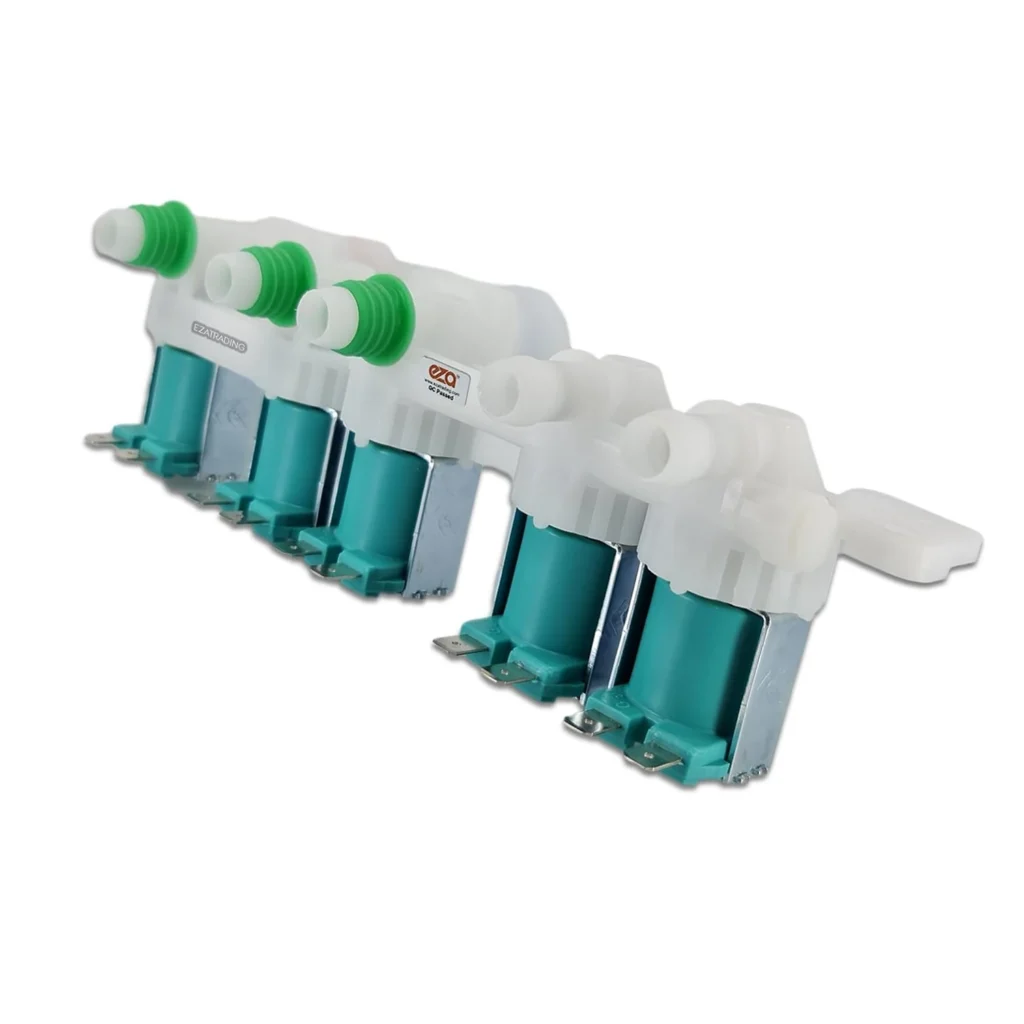
Most Samsung washer inlet valves should last 7-10 years, but I've seen dozens fail at the 3-year mark. The DC97-15459G valve assembly in models like the WA456DRHDSU/AA and WA48J7700AW/A2 typically fails from mineral buildup or rubber seal deterioration — both preventable with basic maintenance.
Here's what you need to know to get the full decade out of this $112 part instead of replacing it early.
How Long Should It Last?
Under normal conditions, the DC97-15459G inlet valve assembly should function for 8-10 years. That's roughly 2,500-3,000 wash cycles. But "normal conditions" matter more than you'd think.
Hard water cuts that lifespan in half. If your water has high mineral content (anything above 120 ppm), you're looking at 4-5 years max before the solenoid coils struggle or the screens clog completely. I've pulled valves from homes with well water that looked like they'd been submerged in concrete after just 18 months.
Water pressure also plays a role. The valve's designed for 20-120 PSI. Consistently high pressure (above 100 PSI) wears the rubber diaphragm faster. Low pressure under 30 PSI makes the solenoids work harder, generating extra heat that degrades the coil insulation.
Signs It's Wearing Out
The valve doesn't just fail overnight. It'll give you warnings weeks or months ahead if you know what to watch for.
Leaking Around the Valve Connection
Small water drips where the hoses connect to the valve often start as occasional moisture you barely notice. Within weeks, it becomes a steady drip. This happens when the rubber gaskets inside compress unevenly from mineral deposits, creating gaps. If you catch it at the "damp spot" stage, cleaning and reseating can buy you another year.
Water Filling Issues During Cycles
The washer takes 10 minutes to fill when it used to take 3. Or it fills for rinse cycles but barely trickles during the wash. That's the inlet screens getting clogged or one solenoid starting to fail. The valve has two solenoids — one for hot, one for cold — and they don't always die together. You'll notice uneven fill rates between cycles that use different temperature settings.
Humming or Buzzing Before Water Flows
When you hear a buzzing sound for 2-3 seconds before water enters the drum, the solenoid coil is struggling. It's trying to generate enough magnetic force to open the valve but can't quite manage it cleanly. This usually means you've got 2-3 months before complete failure.
Mineral Deposits on Valve Body
White, chalky buildup on the outside of the black plastic valve body means it's definitely forming inside too. The screens and valve seat are probably partially blocked. If you can scrape deposits off the exterior with your fingernail, you need to service this immediately.
Maintenance Schedule That Actually Works
I'll be straight with you — most people do zero inlet valve maintenance, and most valves still make it 6-7 years. But if you want the full lifespan and you've got hard water, here's what works:
Every 6 months: Turn off the water supply, disconnect both hoses, and pull out the inlet screens with needle-nose pliers. They're little mesh filters that catch sediment. Soak them in white vinegar for 30 minutes, scrub with an old toothbrush, rinse thoroughly. This 10-minute task prevents 80% of valve failures.
Annually: Check water pressure at your house. You want 50-80 PSI for optimal valve life. Pick up a $10 pressure gauge from any hardware store, screw it onto an outdoor faucet, and check. If you're above 90 PSI, install a pressure regulator before the washer. Your valve (and every other appliance) will last longer.
Every 2-3 years: Replace the rubber fill hoses even if they look fine. When old hoses develop internal cracks, they shed tiny rubber particles that jam the valve screens. New hoses are cheap insurance — maybe $15 for a pair.
When to Replace vs Maintain
If you're seeing active leaking from the valve body itself (not the connections), replacement is your only option. The internal diaphragm has failed, and there's no fixing that.
Same thing if the valve won't open at all after you've cleaned the screens. A dead solenoid coil can't be repaired. You might test it with a multimeter (should read 500-1500 ohms), but if it's open circuit or shorted, you need the new valve.
But if you're catching early symptoms — slow fill, occasional connection drips, mineral buildup on screens — maintenance buys you time. Clean those screens, check your water quality, maybe install a whole-house filter if your water's terrible. You can easily add 2-3 years to the valve's life.
The DC97-15459G costs $112. A service call to have someone replace it runs $200-300. Spending 20 minutes twice a year on basic maintenance is the obvious choice, but most folks don't think about it until water's pooling on the floor.
Frequently Asked Questions
Can I clean the inlet valve without removing it from the washer?
You can clean the inlet screens without full removal — just shut off water, disconnect the hoses, and pull the screens. But to properly inspect and clean the valve body, you'll need to remove it. That requires unplugging the washer, turning off water, removing the top panel, disconnecting the wire harness and internal hose, and unbolting the valve. Takes about 15 minutes if you've done it before.
Will a water softener help my inlet valve last longer?
Absolutely. If you've got hard water above 150 ppm, a water softener is the single best thing you can do for every appliance with water valves. I've seen washers in softened-water homes where the inlet valves looked brand new after 12 years. Without softening, those same valves would've been replaced twice. The upfront cost of a softener system pays for itself in extended appliance life.
How do I know if my washer has high water pressure?
The easiest test: turn on your kitchen sink full blast, then flush a toilet. If the sink flow barely changes, your pressure's probably fine (50-70 PSI). If the sink flow drops noticeably, you might have low pressure. If your faucets ever make banging sounds when you shut them off quickly, your pressure's too high. For exact numbers, get a pressure gauge. They're under $10 at any hardware store and screw right onto an outdoor spigot or washing machine hookup.
Element showing wear?
DC97-15459G · Replace before it fully fails