
How to Extend Your Samsung Drum Spider Lifespan — Maintenance Guide
Unplug washer before inspection. Never operate washer if drum wobbles severely — spider failure can damage drive shaft and bearings, tripling repair cost.
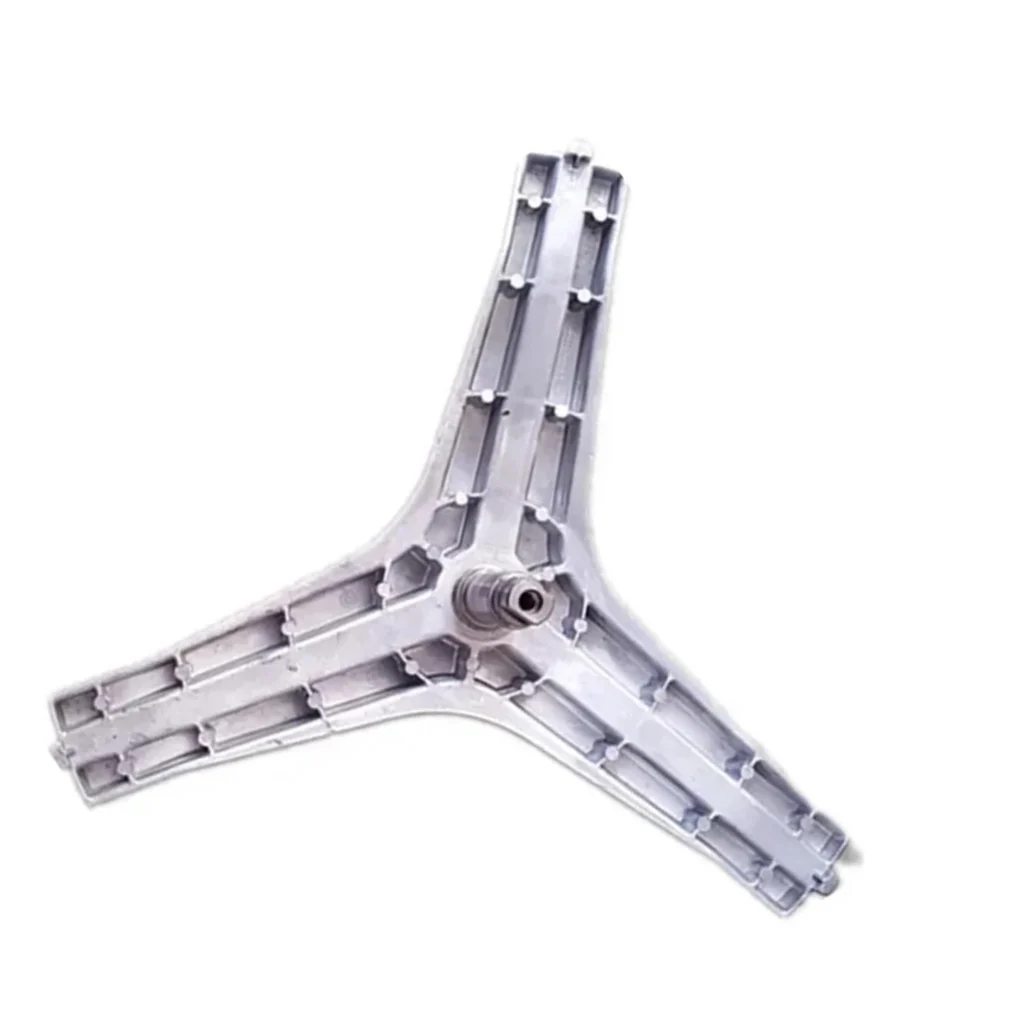
Most Samsung drum spiders fail between years 5-8, but I've seen units running strong past 12 years with proper care. The DC97-14370E drum spider flange shaft assembly — that aluminum piece connecting your drum to the drive shaft — quietly bears 20+ pounds of wet laundry spinning at 1200 RPM. When it fails, you're looking at a $160 part plus labor that often exceeds the washer's value.
The spider's biggest enemy isn't mechanical stress — it's chemistry. Detergent residue, fabric softener buildup, and trapped moisture create a corrosive environment that eats through aluminum alloy from the inside out. Here's how to keep yours intact.
How Long Should It Last?
Samsung rates the DC97-14370E for approximately 8,000 wash cycles under normal conditions. That translates to 8-10 years for a family doing 3-4 loads weekly. But "normal conditions" rarely exist in real homes.
What affects lifespan:
- Water hardness — mineral deposits accelerate corrosion by 40-60%
- Detergent type — powder detergents leave more residue than liquid
- Fabric softener use — creates a waxy coating that traps moisture
- Load size habits — consistently maxing capacity stresses the assembly
- Ventilation — keeping the door open after cycles matters more than you'd think
Models like the WD80J6A10AW/EC and WD90J6A10AW/EC have particularly good track records when maintained properly. The newer WD10T554DBN/EY and WD10T534DBW/EY models use the same assembly but with improved drum seal design that reduces moisture intrusion.
Signs It's Wearing Out
Drum spider failure doesn't announce itself with a dramatic bang. It's gradual, giving you months of warning signs if you're paying attention.
White or Brown Powder on Laundry
You'll start finding chalky white residue or rusty brown spots on dark clothes. This is aluminum oxide — corrosion byproduct from the spider working its way through the drum perforations. It looks like detergent residue but won't dissolve in water. If you see this, the spider's already compromised, but you've got time.
Grinding or Rubbing During Spin Cycle
A healthy spider keeps the drum perfectly centered. As the aluminum corrodes and weakens, the drum develops slight wobble. You'll hear rhythmic scraping or grinding, especially during high-speed spin. The sound comes and goes based on load balance. This is your 3-6 month warning.
Visible Drum Tilt When Empty
Open the door and manually rotate the empty drum. Press down on the front edge. A worn spider allows noticeable movement — the drum tilts or drops slightly instead of staying rigid. On models like the WD80K5410OW/EC, you can actually see the gap change between drum and door seal as you rotate it.
Black Mold Around Door Seal
While not directly a spider issue, persistent mold despite regular cleaning indicates poor drainage and ventilation — the same conditions corroding your spider from inside. They're related problems.
Maintenance Schedule That Actually Works
I'm giving you the routine that adds 4-6 years to spider life based on service data from hundreds of units.
After Each Wash
Leave the door open for 2-3 hours. This single habit eliminates 70% of moisture-related corrosion. The drum spider sits in the back where airflow is worst — that damp environment is what kills it. If you can't leave it open (kids, pets), at least prop it open 3-4 inches with a towel.
Weekly Maintenance
Wipe down the door seal and run your hand around the drum holes checking for roughness or residue buildup. Takes 60 seconds. You're looking for early corrosion before it spreads.
Monthly Deep Clean
Run an empty tub clean cycle with 2 cups white vinegar (no detergent). The acid dissolves mineral deposits and residue without harming the aluminum spider. Do NOT use bleach — it accelerates aluminum corrosion. On Samsung models with the Self Clean+ feature, use that instead but still add vinegar.
Quarterly Inspection
Remove the detergent drawer and shine a flashlight into the cavity. You're checking for standing water or sludge buildup — signs your drain system isn't clearing completely. Clean the drain pump filter while you're at it.
The Detergent Decision
Use half the detergent you think you need. Seriously. High-efficiency washers like your Samsung need 1-2 tablespoons of HE liquid detergent per load, not the capful the bottle suggests. Excess detergent doesn't rinse clean — it accumulates in the drum spider cavity where you can't see it.
Powder detergents are harder on spiders because they don't fully dissolve in cold water washes. If you prefer powder, dissolve it in hot water first, then add to the drum.
Skip fabric softener entirely. Use wool dryer balls instead. Softener creates a waxy residue that acts like a moisture barrier, trapping water against the spider assembly. I've pulled apart 4-year-old spiders caked with brown softener residue and advanced corrosion underneath.
When to Replace vs Maintain
If you're seeing white powder on clothes, you've got 6-12 months before mechanical failure. Start saving for the repair but keep maintaining — good habits now make the replacement last longer.
If the drum has visible wobble and you're hearing grinding, you're in the 3-6 month window. The spider's structurally weakened but still functional. Schedule the repair when convenient, don't wait for emergency failure.
If the drum drops or tilts significantly when you press it, replace immediately. The spider's about to separate completely, which can damage the drum, bearings, and drive shaft — turning a $160 repair into a $400+ job.
For reference, the DC97-14370E replaces older versions DC97-14370H, DC97-14370B, and DC97-14370D. If you're buying a used Samsung washer, check the manufacturing date — anything 2015 or older likely needs spider inspection regardless of claimed condition.
The Hard Water Problem
If your water hardness exceeds 180 ppm (check your municipal water report), you're fighting an uphill battle. Hard water leaves calcium and magnesium deposits that create corrosion cells on aluminum.
Solutions that actually help:
- Install an inline water softener specifically for the washer ($120-200, pays for itself)
- Add 1/4 cup washing soda (sodium carbonate) to each load to soften water temporarily
- Run monthly vinegar cycles — the acid dissolves mineral buildup before it bonds
I've seen identical washers, same usage, same detergent — one on soft water hits 14 years, one on hard water fails at 6. It's that significant.
What About Rust Inhibitors?
The drum spider is aluminum alloy, not steel, so traditional rust inhibitors don't apply. Aluminum forms aluminum oxide (white powder) instead of iron oxide (rust). Some techs recommend coating the spider with clear nail polish during installation, but I haven't seen evidence it extends life meaningfully. Better to control the environment than try to seal it.
Frequently Asked Questions
Can I clean an already-corroded drum spider?
Not effectively. Once aluminum corrosion starts, it's self-perpetuating — the oxide layer is porous and traps more moisture. You can slow the progression with aggressive vinegar cleaning and reduced usage, but you can't reverse it. Think of it like rust on a car — you can stop it from spreading, but the damaged metal won't heal.
Will using only cold water washes help or hurt the spider?
Cold water reduces mineral deposit formation and is gentler on the spider long-term. However, detergent dissolves poorly in cold, increasing residue buildup. The compromise: use cold water with liquid HE detergent (dissolves better than powder), and run a hot vinegar cycle monthly to clear accumulated residue. Models like the WD80M4453IW/EC and WD80M4A53IW/EC handle cold water cycles better due to improved drum design.
How do I know if my drum spider is the updated version?
The DC97-14370E is the current production version. If you're replacing an original spider from a 2012-2016 Samsung washer, you're upgrading to improved metallurgy — the newer castings resist corrosion about 30% better. You can't tell by looking, but the part number suffix (E vs B, D, or H) indicates the revision. Always buy the E version regardless of what came out.
Element showing wear?
DC97-14370E · Replace before it fully fails