
How to Extend Your LG Dryer Thermistor Life — 6323EL2001B Maintenance Guide
Always unplug the dryer before accessing internal components. Never operate the dryer with panels removed.
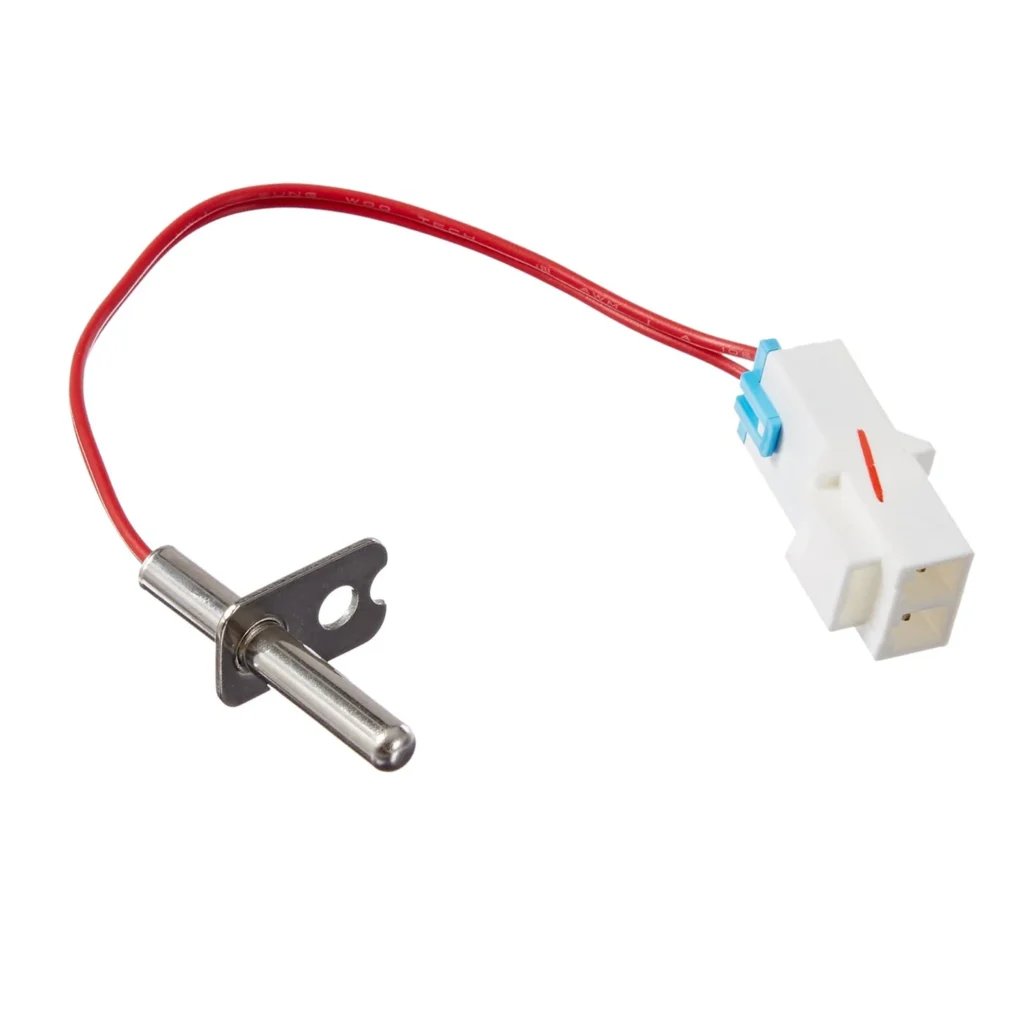
Most LG dryer thermistors fail between years 5-8, but here's the thing: the part itself usually lasts 12-15 years. What kills them early? Lint buildup blocking their temperature readings. I've replaced hundreds of 6323EL2001B thermistors that were perfectly fine electrically — they just couldn't sense temperature anymore because they were buried under a lint blanket.
How Long Should It Last?
The 6323EL2001B thermistor is a solid component. In a clean environment with proper airflow, you're looking at 12-15 years minimum. I've seen them go 18+ years in homes where the lint trap gets cleaned religiously and the vent system is maintained.
But most thermistors don't die of old age. They fail because:
- Lint accumulation — Creates an insulating layer that throws off temperature readings by 20-40 degrees
- Poor ventilation — Forces the dryer to run hotter, stressing the sensor
- Restricted exhaust — Makes the thermistor work overtime trying to regulate wildly fluctuating temps
- Running overloaded cycles — Generates more lint than the system can handle
Here's what happens: the thermistor can't accurately read drum temperature through all that lint. It thinks the dryer is cooler than it actually is, so it keeps the heating element on longer. Eventually, you'll notice clothes taking 90-120 minutes to dry instead of 45-60. Or the opposite — the dryer shuts off too early because the sensor thinks it's hotter than reality.
Signs It's Wearing Out
The thermistor doesn't usually give you dramatic warnings. It degrades gradually, and most people adjust their drying habits without realizing why. Watch for these specific symptoms on your DLE5955W, DLEX7177WM, or any compatible LG model:
Clothes Not Drying Properly or Taking Longer Than Usual
This is the number one sign. If your normal 60-minute cycle now needs 90+ minutes, or you're running loads twice, the thermistor's probably giving false readings. The dryer thinks the clothes are dry when they're still damp, or it's cutting heat too early in the cycle.
Don't just bump up the heat setting and ignore it. That's exactly how you cook the heating element prematurely.
The Dryer Repeatedly Stopping During a Cycle
You start a load, walk away, come back 20 minutes later and the dryer's stopped cold — but the timer says 35 minutes remaining. You restart it, same thing happens. That's classic thermistor confusion. It's reading extreme temps that trigger the safety shutoff, even though actual drum temp is normal.
On models like the DLE7177WM or DLGX4371K, this often pairs with error codes.
Error Messages Appearing on the Display Panel
LG dryers will throw specific error codes when the thermistor reading doesn't match what the control board expects. Common codes tied to thermistor issues: tE1, tE2, or temperature sensor faults. If you're getting these intermittently — especially if they clear after you open and close the door — it's usually the thermistor circuit acting up.
The Dryer Getting Too Hot or Not Heating Enough
Touch the door 15 minutes into a cycle. It should be warm, not scorching. If you can't keep your hand on the glass, or if it barely gets warm at all, that's a thermistor sending wrong signals. It's telling the heating element to stay on too long or shut off too early.
This is dangerous territory. Too-hot operation damages clothes and can stress other components. Too-cool operation just wastes your time and electricity.
When to Replace vs Maintain
Here's the honest answer: you can't repair a thermistor. It's a sensor — either it reads accurately or it doesn't. But you can extend its working life dramatically through maintenance, and you can avoid replacing it prematurely.
Replace if:
- You've thoroughly cleaned the thermistor area and symptoms persist
- You're getting consistent error codes after cleaning
- Resistance testing shows it's out of spec (should read around 50,000 ohms at room temp)
- Physical damage to wires or the sensor body
Maintain if:
- Symptoms are intermittent
- You haven't cleaned the exhaust system in over a year
- The dryer is 5+ years old but was working fine until recently
- You can see visible lint buildup around the blower housing
I'd say 40% of the thermistors I'm called out to replace don't actually need replacing. A deep clean fixes the problem. But you've got to be thorough — we're not talking about just emptying the lint trap.
Frequently Asked Questions
How often should I clean the area around my dryer thermistor?
Every 12 months minimum if you do 5-7 loads per week. Every 6 months if you're running 10+ loads weekly or have pets. This isn't just wiping down the outside. You need to pull the lower front panel off (on most LG models, it's two screws) and vacuum out the blower housing area where the 6323EL2001B sits. That's where lint accumulates out of sight.
Can a dirty thermistor cause my heating element to burn out?
Absolutely. When the thermistor reads cold because it's insulated by lint, it tells the heating element to stay on longer. The element cycles on more frequently and stays on longer each cycle. That constant use shortens its lifespan from 15 years down to 7-8 years. I've seen heating elements fail within months of a thermistor going bad because the dryer was running on high heat for 2-hour cycles.
Will cleaning my dryer vent help the thermistor last longer?
It's the single biggest factor. A restricted vent creates back-pressure that pushes lint back into the cabinet instead of outside. That lint settles on the thermistor, the blower wheel, everywhere. Clean vents mean proper airflow, which means less lint buildup and more accurate temperature sensing. On models like the DLE5977W or DLEX4000B with longer duct runs, this is even more critical. Your thermistor will easily last 12+ years with clean ducts versus 5-7 years with restricted exhaust.
Element showing wear?
6323EL2001B · Replace before it fully fails