
How to Extend Your Samsung Washer Inlet Valve Life — DC62-00266G Maintenance Guide
Always turn off both hot and cold water supply valves before disconnecting hoses or performing maintenance. Do not attempt to disassemble the valve body — it's not serviceable.
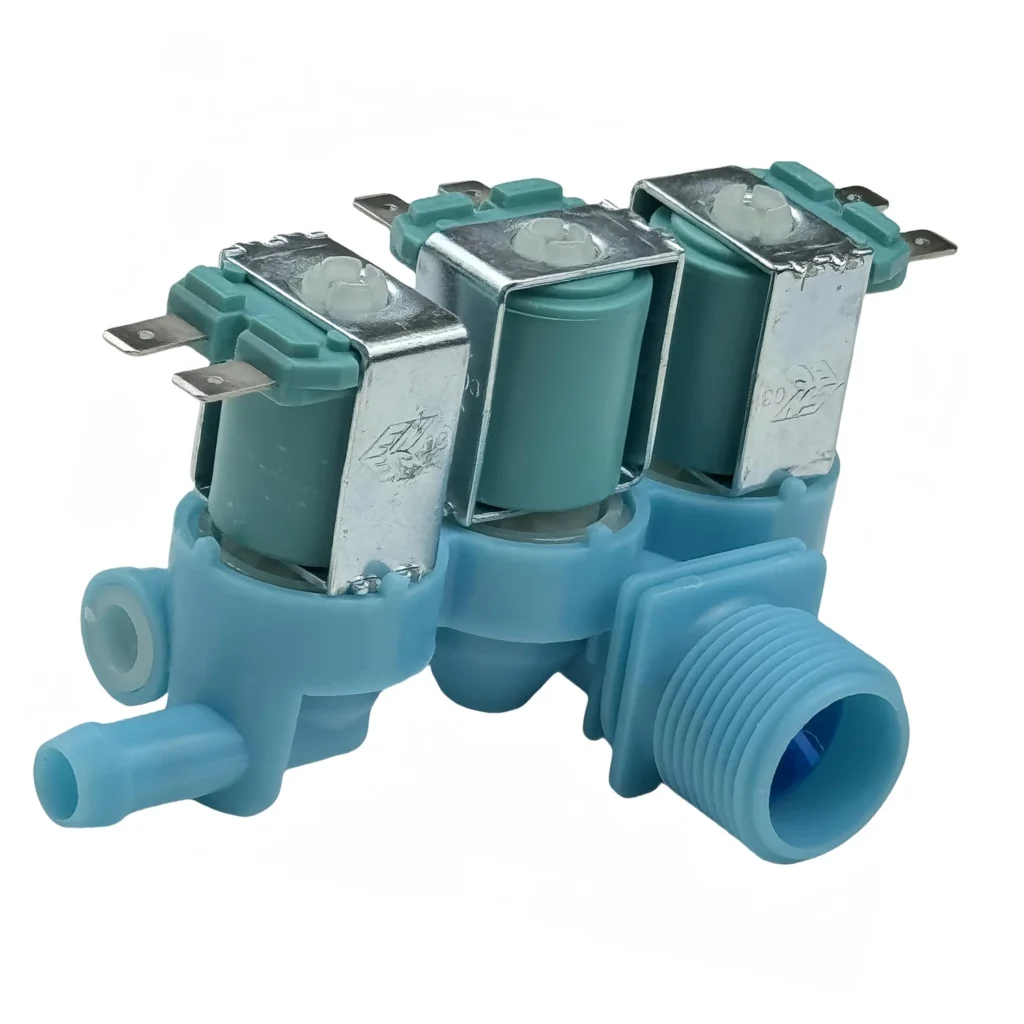
Most Samsung washer inlet valves like the DC62-00266G are designed to last 8-12 years, but sediment buildup and hard water can cut that lifespan in half. If you've got a WF45R6300AV, WF50R8500AV, or any of the compatible Samsung front-loaders, you're probably not thinking about this valve until water stops flowing properly — but a few simple maintenance steps can save you from a $157 replacement down the road.
How Long Should Your Inlet Valve Last?
Under normal conditions, the DC62-00266G inlet valve should give you 8-12 years of reliable service. But here's what actually affects its lifespan:
Water hardness is the biggest factor. If you've got hard water (above 180 ppm), mineral deposits build up inside the valve screens and solenoid chambers. This forces the valve to work harder to maintain water flow, wearing out the internal components faster.
Water pressure matters too. Samsung specifies 20-120 PSI as the safe range. If your home pressure runs above 80 PSI without a regulator, you're putting extra stress on the valve's seals and diaphragms. They'll start leaking sooner than they should.
Temperature cycling also plays a role — the valve handles both hot and cold lines, and constant expansion and contraction of the internal rubber components eventually leads to cracking.
Signs Your Valve Is Wearing Out
Most inlet valve problems announce themselves pretty clearly. Here's what to watch for:
Slow Fill Times
If your WF45A6400AW or WF50A8600AV suddenly takes 15-20 minutes to fill instead of the usual 5-7 minutes, sediment has probably clogged the inlet screens. The valve itself might still be fine — it's just being starved of water flow.
Pull off the fill hoses and check those little mesh screens. If they're packed with white or rust-colored crud, you've found your problem.
Water Doesn't Stop Flowing
A valve that won't fully close is failing internally. You'll notice the drum keeps filling even after the cycle should've started, or water trickles in between cycles. This is the solenoid coil or the rubber diaphragm inside wearing out. Once this starts, replacement is your only real option.
No Water Flow At All
Complete failure usually means the solenoid coil has burned out or the valve mechanism is seized with mineral deposits. Before replacing the valve, verify you've got water pressure at both hoses and the screens aren't completely blocked.
Maintenance Schedule That Actually Works
Every 3-6 months, clean the inlet screens. Turn off your water supply, disconnect both hoses from the back of your WF45T6000AV or whichever model you've got, and pull out those little mesh filters with needle-nose pliers. Rinse them under running water, use an old toothbrush to scrub away mineral deposits, and soak them in white vinegar for 30 minutes if they're really crusty.
Once a year, check for external leaks. Run your hand around the valve connections while the washer fills. Any moisture means the rubber gaskets are starting to go. Catching this early saves you from water damage to your laundry room floor.
If you have hard water, install an inline filter. A $20 sediment filter on your cold water line will catch most of the minerals before they reach your valve. Change it every 6 months and your valve will last significantly longer.
When to Replace vs Maintain
Here's the honest truth: inlet valves aren't really repairable. If the solenoids are bad or the internal diaphragm is cracked, you're replacing the whole unit.
But screen cleaning and external leak checks can prevent premature failure. If your valve is still functioning normally and you're just doing preventive maintenance, you'll likely get the full 10-12 year lifespan out of it.
If you're already seeing slow fills or won't-shut-off behavior, maintenance won't fix it. That's when you need the DC62-00266G replacement.
One exception: if your valve suddenly stops working right after a power outage or electrical storm, check your washer's main control board first. Sometimes what looks like a valve failure is actually a control board issue not sending power to the valve.
Frequently Asked Questions
Can I clean the inside of the valve to restore flow?
Not really. The valve body is sealed and not designed to be disassembled. You can clean the external inlet screens, but internal cleaning isn't possible without destroying the valve. If mineral buildup has gotten inside the valve chambers, replacement is your only option.
Will a water softener help my inlet valve last longer?
Absolutely. If you've got hard water above 180 ppm, a whole-house softener or even just a washer-specific softener will dramatically reduce mineral buildup. Your inlet valve, drain pump, and heating elements will all last longer. It's one of the best investments you can make for appliance longevity.
Is it normal for the valve to make clicking sounds when filling?
Yes, you'll hear distinct clicks when the solenoids open and close — that's normal operation. What's not normal is buzzing or humming sounds while the valve should be open and flowing water. That usually indicates the solenoid is struggling, often because of low water pressure or a partially clogged screen.
Element showing wear?
DC62-00266G · Replace before it fully fails