
How to Extend Your Whirlpool Evaporator Fan Motor Life — Maintenance Guide
Always unplug the refrigerator before accessing the evaporator fan motor. The fan compartment may contain sharp edges and extremely cold surfaces. Do not operate the refrigerator with the evaporator cover removed.
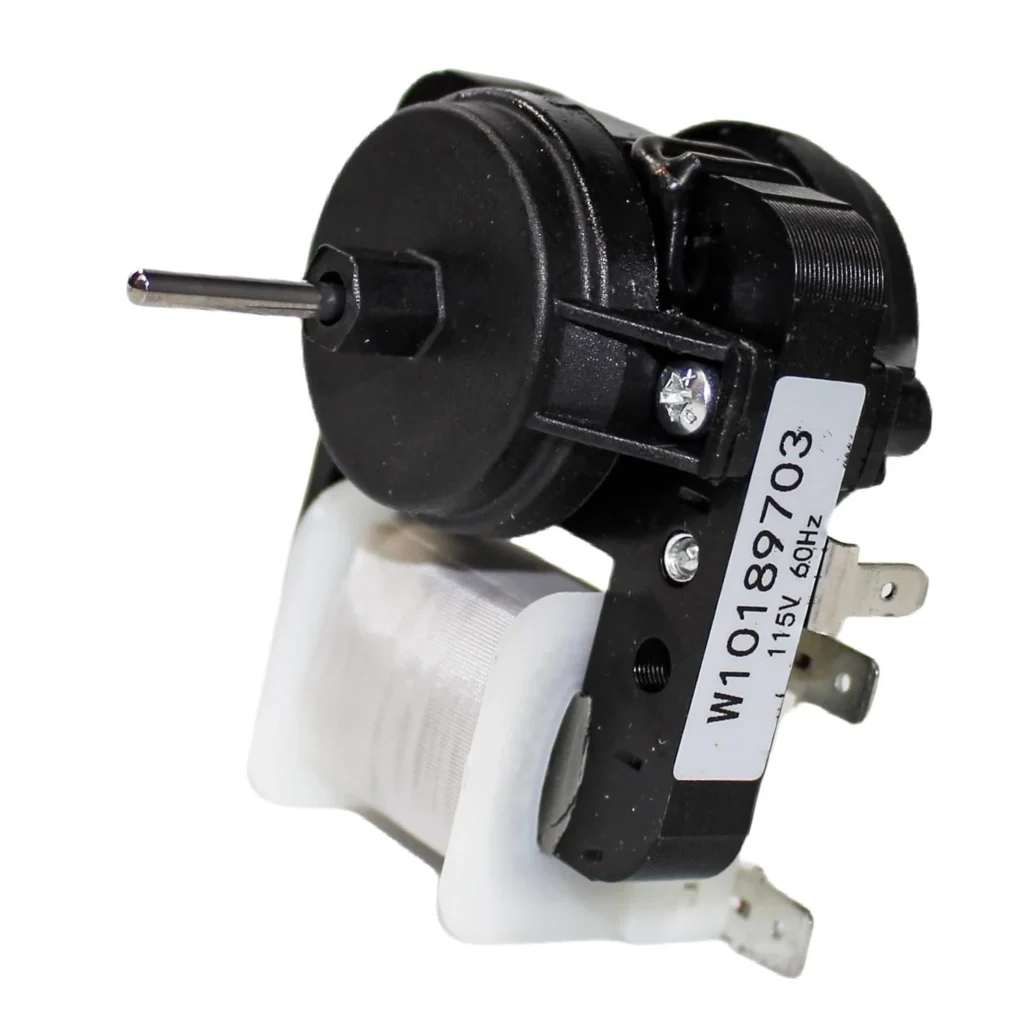
Most Whirlpool evaporator fan motors should run quietly for 8-12 years, but most homeowners replace them around year 5. The difference? A few simple maintenance habits that take maybe 15 minutes twice a year.
The W10189703 fan motor sits in your freezer compartment, circulating cold air throughout both the fridge and freezer. When it starts failing, you'll notice temperature problems before you hear anything — your milk spoils faster, ice cream gets soft, and you're adjusting the thermostat constantly trying to compensate.
How Long Should It Last?
Under normal conditions, this evaporator fan motor has a design life of 10-15 years. But "normal conditions" is doing a lot of work in that sentence.
In reality, most motors fail between 5-8 years because of three things: dust buildup on the motor housing (which causes overheating), ice accumulation on the fan blades (which creates resistance), and voltage fluctuations during power outages. The motor itself is reliable — it's the environment that kills it early.
If you've got a humid climate, a garage fridge, or you open the doors frequently throughout the day, you're looking at the shorter end of that range. Models like the MFI2569VEM1 and 7GR2SHWXRS00 that see heavy family use tend to work harder and wear faster.
Signs It's Wearing Out
The evaporator fan doesn't just quit one day — it gives you warnings. You just need to know what you're listening and feeling for.
Temperature Fluctuations in Both Compartments
When the fan starts struggling, the first thing you'll notice is your fridge running warmer than it should, even though the freezer seems okay. That's because the fan isn't circulating cold air from the evaporator coils into the fresh food section efficiently. You'll find yourself turning the temperature dial colder, but nothing really improves. This symptom shows up on models like the ET1FTKXKQ09 and G2IXEFMWS02 months before the motor actually fails.
Grinding or Squealing Noise from the Freezer
A healthy evaporator fan is nearly silent — you might hear a soft whoosh of air movement, but that's it. When you start hearing grinding, squealing, or a rhythmic clicking sound coming from the back of the freezer compartment, the motor bearings are wearing out. Sometimes this noise is intermittent at first, happening only during the cooling cycle. Don't ignore it — that sound means metal is rubbing on metal, and it won't get better on its own.
Frost Buildup on the Evaporator Coils
Open your freezer and check the back panel (you might need to remove a cover). If you see thick frost accumulation, your fan isn't running enough to prevent moisture from freezing on the coils. This creates a feedback loop — frost makes the fan work harder, which stresses the motor, which causes it to cycle off more frequently, which allows more frost to build up. Models like the MFD2561HES and 8GT2FTKXSS03 are particularly prone to this issue if the door seals aren't perfect.
Preventive Maintenance Schedule
Most people never think about their evaporator fan until it stops working. Here's what actually keeps it running longer:
Every 6 months: Vacuum the condenser coils underneath or behind your fridge. Dirty condenser coils make your compressor work harder, which means more heat, which means your evaporator fan runs longer cycles. It's all connected.
Quarterly: Check your freezer for frost buildup. If you see more than a thin layer of frost on the back wall, something's wrong — either the defrost system isn't working properly, or your door seal is leaking. Both will shorten your fan motor's life.
Monthly: Listen for changes in fan noise. Stand in front of your open fridge for 30 seconds. You should hear a consistent, quiet hum. Any grinding, squealing, or intermittent stopping means it's time to investigate.
After power outages: Check that your fridge temperatures recover within 4-6 hours. The evaporator fan motor can take a voltage hit during outages, and sometimes it'll run but not at full speed. If your temps don't stabilize quickly, the fan might be compromised.
When to Replace vs Maintain
Here's the honest truth: there's no rebuilding an evaporator fan motor. When it's worn out, you replace it.
But you can often prevent premature failure. If you're catching grinding noises early, you might have ice on the fan blade — that's fixable by defrosting. If you're seeing temperature issues but the fan spins freely and quietly, your problem might be elsewhere (bad door seal, failed defrost heater, dirty coils).
Replace the motor when you hear grinding or squealing that persists after defrosting, when the motor won't start at all, or when you've got temperature problems in both compartments and you've ruled out other causes. At $49.99, the W10189703 is cheaper than throwing away a week's worth of groceries because your fridge isn't holding temperature.
The motor works with dozens of Whirlpool, Maytag, and KitchenAid models including the W2RXNMMWL02 and MFI2568AEW. If you've got the symptoms, don't wait — these issues don't fix themselves.
Frequently Asked Questions
Why does my evaporator fan only run sometimes?
It's supposed to. The fan cycles on and off with the compressor and shuts off when you open the door (there's a door switch that controls this). If it's not running when the compressor is on and the door is closed, that's your problem. If it runs intermittently but seems random, you might have a failing motor that's overheating and shutting down to protect itself.
Can I just unplug the fan if it's making noise?
You could, but your fridge will stop working properly within hours. The evaporator fan is what circulates cold air from the freezer to the refrigerator section. Without it, your freezer will get extremely cold while your fridge gets warm. You'll end up with frozen vegetables in the back of the crisper and spoiled milk on the top shelf. Fix it or replace it — don't just disable it.
How do I know if it's the fan motor or something else?
Open your freezer and listen. If you don't hear any fan noise at all and the fridge is running, manually spin the fan blade (you'll need to remove the back panel inside the freezer). If it spins freely but won't start on its own, the motor's dead. If it's hard to spin or feels rough, you've got ice buildup or a seized bearing. If it spins and runs but your temps are still off, look at your door seals and defrost system instead.
Element showing wear?
W10189703 · Replace before it fully fails