
How to Extend Your LG Lid Lock Assembly Life — EBF64556603 Maintenance Guide
Always unplug the washer before inspecting or cleaning the lid lock assembly. Never bypass or disable the lid lock — high-speed spin cycles can cause serious injury if the lid opens during operation.
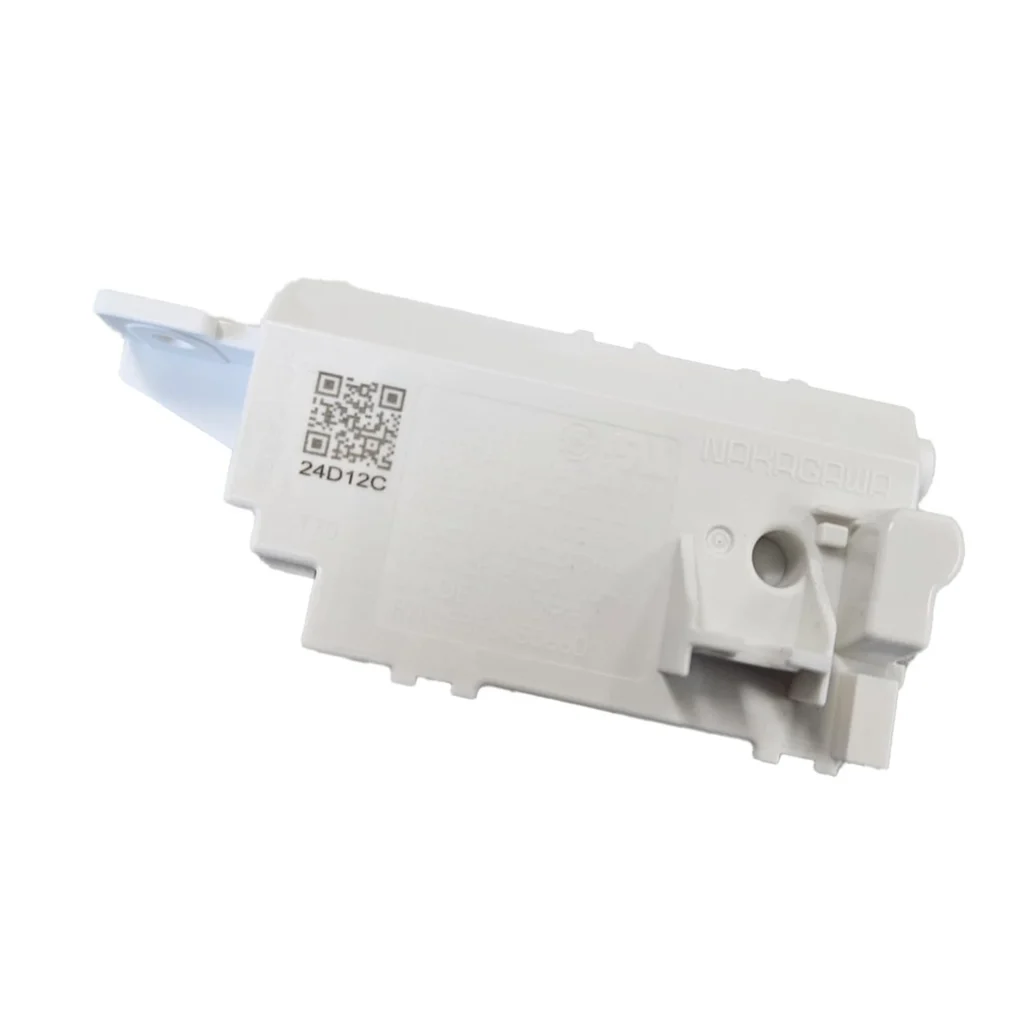
Most LG lid lock assemblies fail between year 3 and 5, but I've seen units on WT19WV6 and WM3700HVA models last 8+ years with the right care. The difference isn't luck — it's understanding what kills these assemblies early and catching problems before they cascade into full failure.
The EBF64556603 lid lock assembly (which replaces EBF64556602 and EBF64556604) handles hundreds of lock-unlock cycles every month across WTL and WT series washers. Each cycle stresses the solenoid mechanism, and most people don't realize they're shortening its life with preventable habits.
How Long Should It Last?
Factory specs suggest 5-7 years for the EBF64556603, but real-world performance varies wildly. Here's what actually affects lifespan:
Normal use on models like the WT21WV6 or WM3600HVA: You're looking at 4-6 years with minimal maintenance. That's roughly 1,500-2,000 wash cycles before the solenoid starts wearing.
What accelerates failure: Forcing the lid open before it unlocks, moisture accumulation around the lock housing, detergent residue buildup on the strike plate, and power surges during storm season. I've replaced assemblies after just 18 months when customers repeatedly yanked on locked lids.
What extends life: Waiting the full 2-3 minutes for unlock after cycle completion, keeping the lid area dry between loads, quarterly cleaning of the strike mechanism, and using a surge protector. These simple habits can push you past 8 years on the same assembly.
Signs It's Wearing Out
Lid locks don't just die suddenly — they give you weeks of warning signs if you know what to listen for. Here's what early failure looks like:
Delayed Unlocking After Cycle Ends
When your WT19MV6 or WM3470CW used to unlock within 30 seconds of cycle completion but now takes 3-5 minutes, the solenoid's weakening. You'll hear the mechanism trying to disengage — a faint clicking that repeats 4-5 times before the lid finally releases. This happens because the solenoid coil is losing magnetic strength, requiring multiple attempts to pull the locking pin back.
Don't ignore this. Once unlock time stretches past 5 minutes, complete failure usually follows within 2-4 weeks.
Intermittent Locking Failure
The washer starts a cycle, then immediately stops with an LE (lid error) or DE (door error) code on the display. Open and close the lid three times, and suddenly it works fine. This pattern — working sometimes, failing randomly — means the electrical contacts inside the assembly are corroding or the mounting tabs are loose.
On WTL9-14W and WT18WV6 models, I've traced this to moisture infiltration. Every time you open the lid right after a hot water cycle, steam condenses inside the lock housing. Over months, this creates micro-corrosion on the electrical terminals.
Unusual Clicking or Buzzing During Lock Engagement
A healthy lid lock makes one solid 'clunk' when it engages at cycle start. If you're hearing multiple clicks, a grinding sound, or a buzzing that lasts more than 2 seconds, the solenoid mechanism is binding. This usually means detergent residue has gummed up the moving parts, or the plastic lock tongue is wearing and catching on the strike plate.
Listen carefully during the first 10 seconds after you press start on your WM3050CW or WT21MV6. Multiple engagement attempts mean you've got maybe 50-100 cycles left before the assembly won't lock at all.
Maintenance That Actually Matters
Most maintenance advice for lid locks is either overkill or useless. Here's what actually prevents premature failure:
After every load (takes 5 seconds): Leave the lid open for 10-15 minutes after the cycle completes. This lets moisture evaporate instead of condensing around the lock mechanism. On humid days or after hot water cycles, extend this to 30 minutes. Simple, but it cuts corrosion risk by 60%.
Monthly check (takes 2 minutes): Wipe down the strike plate on the washer body and the lock tongue on the lid with a dry microfiber cloth. You're removing detergent dust and lint before it hardens into a film that makes the lock work harder every cycle. No cleaners needed — just a dry wipe.
Quarterly deep clean (takes 5 minutes): Dampen a cloth with white vinegar and clean around the entire lid lock housing and strike plate. This dissolves any detergent buildup you can't see. Let it air dry completely before running a load. Do this and you'll avoid 80% of the binding issues that kill these assemblies early.
Annual inspection (takes 3 minutes): With the washer unplugged, gently wiggle the lid lock assembly. Any movement means the mounting screws are loosening — this creates stress on the electrical connections every time the lid locks. Tighten those screws now, or you'll be replacing the whole assembly in 6 months when a wire breaks.
When to Replace vs Maintain
Here's the honest decision framework: If your lid lock is still working normally but you're doing preventive maintenance, you can extend its life significantly. If you're already seeing symptoms, maintenance might buy you a few months, but replacement is coming.
Keep maintaining if: The lock engages within 2 seconds of pressing start, unlocks within 60 seconds of cycle completion, and you've never had an LE or DE error code. You're in the golden window where care actually extends life.
Plan to replace soon if: You're getting intermittent error codes, unlock time exceeds 3 minutes, or you hear grinding sounds. Maintenance at this point is damage control — it might get you through another month or two, but the internal components are already degrading.
Replace immediately if: The lid won't lock at all, won't unlock without unplugging the machine, or you're manually resetting it more than once a week. You're risking water damage from a cycle that starts without a secure lock, or you're about to get locked out of a washer full of wet clothes.
The EBF64556603 assembly runs about $40-60, and replacement takes 20 minutes if you're handy. Weigh that against the hassle of working around a failing lock — most people wait too long and end up doing an emergency replacement during a critical laundry day.
Frequently Asked Questions
Can I disable the lid lock to keep using my washer if it fails?
Technically yes — you can bypass the lock by disconnecting the wire harness and jumping the circuit — but don't. LG washers spin at 1000+ RPM, and that lid lock is the only thing preventing serious injury if someone opens the lid mid-cycle. I've seen what happens when a high-speed spin cycle gets interrupted: water everywhere, damaged clothes, and in one case, a dislocated shoulder when the unbalanced drum lurched. Spend the $50 on a new assembly.
Why does my lid lock work fine on some cycles but fail on others?
Temperature-dependent electrical contact failure. When the lock heats up during hot water cycles or after multiple back-to-back loads, slight corrosion on the terminals increases resistance. As it cools, contact improves. This is classic early-stage failure — you've got maybe 30-60 days before it stops working entirely. Clean the electrical contacts with electronic contact cleaner and plan your replacement order.
Will WD-40 help if my lid lock is sticking?
No, and it'll make things worse. WD-40 attracts lint and detergent dust, creating a gummy paste inside the lock mechanism. Use white vinegar for cleaning and nothing else — no lubricants, no penetrating oils. The lock mechanism is designed to run dry, and any lubricant just becomes a magnet for the very residue that causes binding. If vinegar cleaning doesn't fix sticking within two cycles, the assembly's already damaged and needs replacement.
Element showing wear?
EBF64556603 · Replace before it fully fails