
GE Refrigerator Won't Dispense Ice — 7 Causes & How to Fix WR17X11705
You press the dispenser paddle, hear the motor humming, but nothing comes out. Or maybe you get a pathetic trickle of ice cubes when you should be getting a full glass. One frustrated GE owner summed it up perfectly: "Engine revs but auger will not turn" — and that's exactly what's happening inside your freezer door.
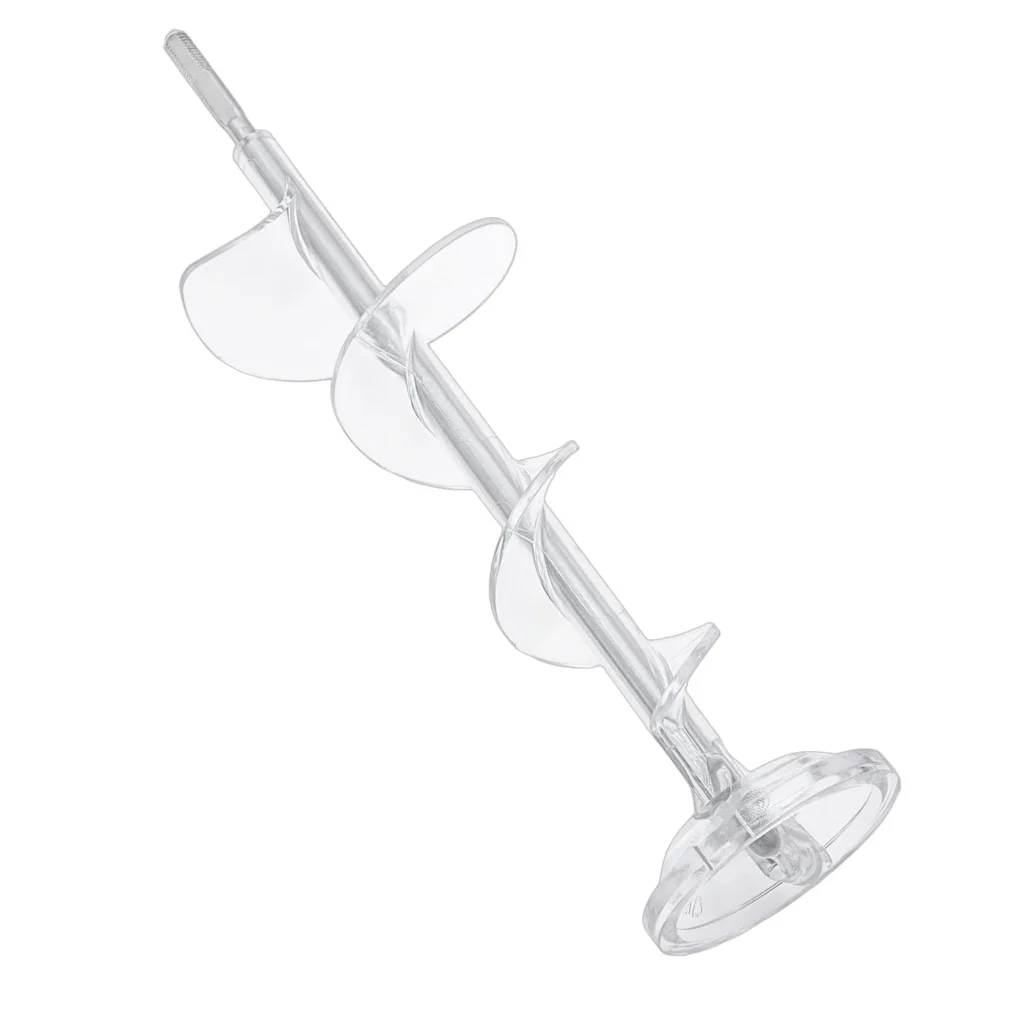
The ice bucket auger (part WR17X11705) is the plastic spiral that sits inside your ice bucket and pushes ice toward the dispenser chute. When it fails, you'll hear all the right sounds but get none of the ice. Let's diagnose what's actually broken.
Quick Symptom Check
Before you pull the ice bucket, confirm what you're experiencing:
- Motor runs, no ice dispenses — most common auger failure
- Partial dispensing — some ice comes out, then stops
- Grinding or clicking noise — auger trying to turn against resistance
- Ice dispenses briefly then jams — auger teeth worn or broken
- Water dispenses fine, ice doesn't — motor/auger issue, not water valve
If you're getting water but no ice, the problem is mechanical, not electrical. That narrows it down fast.
Cause #1: Broken or Worn Auger Teeth (65% of Cases)
The plastic spiral teeth on the WR17X11705 auger wear down over time or snap off completely. This is the most likely culprit if your dispenser motor runs but ice doesn't move.
How to diagnose: Pull out your ice bucket (it just lifts straight up). Look at the auger inside — it's the blue plastic spiral. Check for:
- Missing teeth on the spiral
- Cracks in the plastic shaft
- Worn-down edges that won't grip ice anymore
One repair tech noted: "The part arrived... One thing to note is the augers plastic is dark blue, not clear as shown in the online pictures." That's normal — GE changed the plastic color but function is identical.
The fix: Replace the auger. It's a straightforward swap — no tools required on most models. The auger pulls straight out of the ice bucket, and the new one slides right back in. Most people complete this in under 10 minutes.
Part needed: WR17X11705 ($61.99) — also replaces older numbers WR17X11305, WR17X10690
Works on models: GSH25JFTAWW, GSS25WGMDWW, BSS25JFTAWW, ESH22JFWAWW, and 500+ other GE, Hotpoint, and RCA side-by-sides
Cause #2: Ice Frozen Around the Auger (20% of Cases)
If your freezer temperature fluctuates or the door seal leaks warm air, ice cubes can melt slightly and refreeze into a solid block around the auger. The motor spins, but the auger is locked in place.
How to diagnose: Remove the ice bucket. If you can't easily pull out the auger with your hand, it's frozen in. You might see ice crystals or a solid mass coating the bucket walls.
The fix: Let the bucket sit at room temperature for 30 minutes. Once melted, check the door gasket for tears and verify your freezer is staying at 0°F. If this happens repeatedly, you've got an underlying temperature control issue.
Cost: Free if it's a one-time thing. If it's recurring, budget $50–$150 for a door gasket or $200–$300 for a temperature sensor.
Cause #3: Dispenser Motor Failure (10% of Cases)
Sometimes the motor itself dies, even though you think you hear it running. What you're actually hearing might be the relay clicking or another component trying to engage.
How to diagnose: With the ice bucket removed, press the dispenser paddle while looking into the dispenser chute. You should see the motor shaft spinning. If it's not moving at all, the motor is dead.
The fix: Replace the dispenser motor assembly. This requires removing the dispenser housing from the freezer door — more involved than just swapping the auger, but still a DIY job if you're comfortable with screwdrivers and wire connectors.
Cost: Dispenser motor assembly runs $80–$150 depending on your model
Cause #4: Stripped Motor Coupling (3% of Cases)
The auger connects to the motor through a plastic coupling. If this coupling strips out, the motor spins freely but doesn't turn the auger.
How to diagnose: Remove the ice bucket and manually try to turn the auger. If it spins freely with no resistance and doesn't engage with the motor shaft, the coupling is stripped.
The fix: The coupling is usually part of the auger assembly (WR17X11705 includes it), so replacing the auger solves this problem. On some older models, the coupling is a separate piece you can replace individually.
Cause #5: Dispenser Control Board Malfunction (1% of Cases)
Rarely, the control board that sends power to the dispenser motor fails. This is the least likely cause — only consider it if you've already replaced the auger and motor with no improvement.
How to diagnose: Use a multimeter to test for voltage at the motor connector when the dispenser is activated. No voltage = board problem.
The fix: This is typically when you call a pro. Control board diagnosis and replacement requires electrical testing skills and runs $200–$400 with labor.
The 10-Minute Auger Replacement (Most Common Fix)
Since a worn auger causes 65% of ice dispensing problems, here's the quick replacement process:
- Pull out the ice bucket — it lifts straight up and out
- Remove the old auger — grip it firmly and pull straight up (it's friction-fit)
- Check the motor shaft — make sure it's not damaged or covered in ice
- Install new auger — align it with the motor shaft and press down until it seats
- Reinstall ice bucket — slide it back into the door until it clicks
- Test dispenser — you should get immediate ice flow
One happy customer confirmed: "Easy installation, now we have ice! I'm very pleased with this product."
A word of caution from another installer: "Had my unit disassembled, so parts got scrambled and had to got to the site provided help video." Don't take everything apart at once — just the ice bucket comes out, nothing else.
When to Call a Pro
Call a technician if:
- You've replaced the auger and motor but still get no ice
- The entire dispenser assembly needs removal from the door (uncomfortable with door panel disassembly)
- You're seeing refrigerant leaks or temperature control issues
- The ice maker itself isn't producing ice (different problem entirely)
For just an auger swap? Save the $150 service call and do it yourself. It's honestly easier than replacing a light bulb.
Frequently Asked Questions
Do I Need to Disassemble the Ice Crushing Components to Replace the Auger?
No. The ice bucket lifts straight out, and the auger pulls straight up from inside it. You never touch the crushing mechanism. As one parts supplier confirmed: "We do have access to a video for installing the Auger Bucket WR29X42446 which should show you how to disassemble" — but for the auger alone, you just pull the bucket and swap the part. No tools, no crusher disassembly.
Why Is My New Auger Dark Blue Instead of Clear Plastic?
GE changed the plastic formulation on newer production runs. The dark blue auger (WR17X11705) functions identically to the older clear versions. As one installer noted: "Not an issue for functionally. Removing and replacing the old auger was very easy. Fit the GE ice bucket perfectly. The bucket is working like new."
How Long Should an Ice Bucket Auger Last?
Typically 7–12 years depending on usage. Heavy ice users (large families, frequent entertaining) wear them out faster. If you're dispensing 10+ glasses of ice daily, expect the lower end of that range. The plastic teeth gradually wear down from constant friction against ice cubes.
Diagnosed the problem?
WR17X11705 · In Stock · Fast shipping