
Oven Won't Broil or Broiler Element Not Glowing — 5 Causes & Fixes
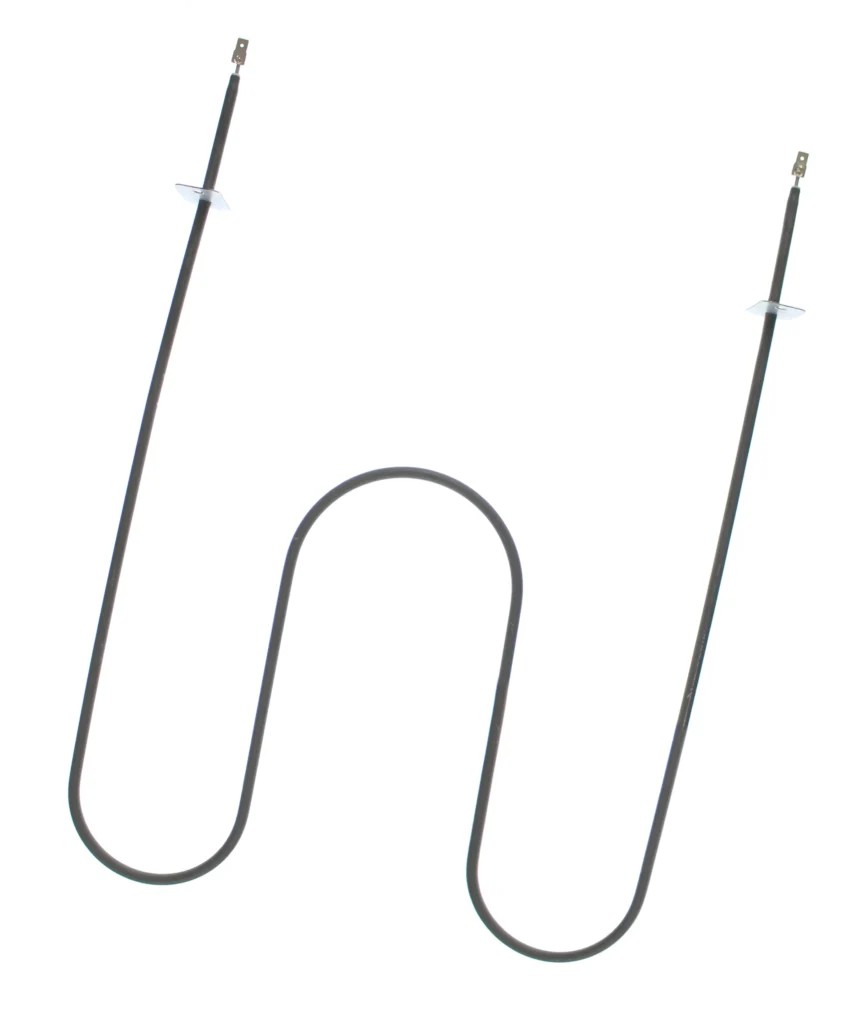
You slide a tray of marinated chicken under the broiler, turn the dial to HIGH, and... nothing. Five minutes later, you open the door to find raw chicken and a cold broil element staring back at you. This isn't just inconvenient — it's dinner ruined and a repair bill looming.
When your Maytag, Whirlpool, or KitchenAid oven won't broil, the broil element itself fails about 60% of the time. But there are four other causes that can mimic a dead element, and diagnosing the wrong part wastes time and money.
This guide walks through all five causes in order of likelihood, with specific tests you can do yourself. Most Maytag MER6770 and MER6775 series ovens share the same W10201551 broil element, so these steps apply across dozens of models.
Quick Symptom Check
- Broil element doesn't glow at all when set to broil mode
- Element glows in spots but not fully across its length
- Oven heats normally on bake but broil function is dead
- Tripped breaker or blown fuse when broil is activated
- Visible cracks, blisters, or breaks in the element coil
- Burning smell the last time broil was used
Cause #1: Burned Out Broil Element (Most Likely — 60%)
The broil element is a high-resistance heating coil that glows red-hot when voltage flows through it. Over time — usually 8-12 years of regular use — the nichrome wire inside degrades, develops hot spots, and eventually fails open.
How to diagnose:
- Turn off power at the circuit breaker (critical safety step)
- Open the oven door and locate the broil element at the top of the oven cavity
- Visually inspect for obvious damage: cracks, breaks, blisters, or separated coils
- Remove the two mounting screws (usually 1/4" hex head) holding the element bracket
- Carefully pull the element forward and disconnect the two wire terminals
- Use a multimeter set to ohms — you should read 30-50 ohms across the terminals
- If you read infinite resistance (OL) or zero ohms, the element is dead
Probability: 60% if element doesn't glow and other oven functions work normally.
Fix: Replace with W10201551 broil element ($42.99). This is a direct-fit replacement for Maytag MER6770, MER6771, MER6772, MER6775, Whirlpool, and Jenn-Air models. Installation takes 15-20 minutes with a 1/4" nut driver.
Cause #2: Faulty Oven Control Board
If your element tests good with a multimeter but still won't heat, the control board relay that sends power to the broil circuit may have failed. This is especially common if you've had recent power surges or if the bake function also acts erratically.
How to diagnose:
- Confirm the broil element has proper continuity (30-50 ohms)
- Check for voltage at the element terminals with oven set to broil — you should read 240V
- If there's no voltage reaching the element, the control board isn't closing the broil relay
- Inspect the control board for burn marks, especially around the relay area
Probability: 20% if the element tests good but never receives power.
Fix: Replace the oven control board (part numbers vary by model — check your model tag inside the door frame). This is a $150-$300 repair depending on the model, and requires careful wire documentation before removal.
Cause #3: Broken Wire Connection or Loose Terminal
The broil element connects to the oven wiring harness via two push-on terminals. These terminals can corrode, loosen from vibration, or burn due to arcing — especially if the element was previously removed and reinstalled improperly.
How to diagnose:
- Power off, pull element forward, and inspect both wire terminals and element prongs
- Look for discoloration, corrosion, or loose fit when you wiggle the connection
- Check the wires themselves for scorching near the terminals
Probability: 10% — more likely if broil worked intermittently before failing completely.
Fix: Clean terminals with electrical contact cleaner or replace damaged wire connectors. If the element prongs are badly corroded, replace the element even if it tests good — poor connections cause resistance and future failures.
Cause #4: Blown Thermal Fuse
Some oven models (particularly Whirlpool and KitchenAid) use a thermal fuse in the broil circuit as a safety cutoff. If the oven has overheated — say, during a self-clean cycle or a grease fire — this fuse blows permanently and cuts all power to the broil element.
How to diagnose:
- Locate the thermal fuse (usually mounted on the rear wall behind the control panel or near the broil element bracket)
- Test continuity across the fuse with a multimeter — should read near 0 ohms
- If it reads infinite (OL), the fuse is blown
Probability: 5% — only on models with a thermal fuse, and only after a significant oven overheat event.
Fix: Replace the thermal fuse (typically $15-25). Important: Investigate WHY it blew. If the oven overheats regularly, you may have a stuck relay or failed temperature sensor causing the issue.
Cause #5: Tripped Circuit Breaker or Faulty Outlet
Electric ovens run on 240V and pull significant amperage during broil mode. If your home's wiring is marginal or the breaker is old, it may trip under the high load. Less commonly, one leg of the 240V supply can fail, giving you 120V — enough to power the control panel and light, but not enough to heat elements properly.
How to diagnose:
- Check your electrical panel for a tripped breaker (it may not be fully in the OFF position — reset it firmly)
- At the outlet or junction box, test voltage — you should read 240V across the two hot legs and 120V from each hot to ground
- If you're only getting 120V total, one leg of the supply has failed
Probability: 5% — more likely if multiple oven functions are weak or if lights dim when you try to broil.
Fix: Reset breaker; if it trips again immediately, you have a short in the oven wiring or element. If you're reading incorrect voltage, call an electrician — this is a home wiring issue, not an appliance problem.
When to Call a Pro
If you're comfortable with a screwdriver and a multimeter, replacing the broil element (Cause #1) is absolutely DIY-friendly. It's two screws and two wire terminals — no special tools, no gas lines, no complex disassembly.
Call a professional if:
- You're not confident working with 240V electricity
- The element tests good but still won't heat (control board diagnosis gets complicated)
- Your breaker trips repeatedly even after replacing the element
- You find multiple burnt or melted wires inside the oven cavity
A service call typically runs $150-200 for diagnosis plus parts. Since the W10201551 element itself is only $42.99 and installs in 20 minutes, this is one of the better DIY repairs if you're willing to try.
Frequently Asked Questions
Can I still use my oven if the broil element is broken?
Yes, you can still bake normally. The broil element and bake element are separate circuits, so a failed broil element won't affect baking or roasting functions. You'll just lose the ability to broil or use recipes that require top-down high heat.
How long does a broil element typically last?
Most broil elements last 8-12 years with regular use. If you broil frequently (multiple times per week), expect closer to 6-8 years. Heavy grease buildup accelerates failure because it creates hot spots on the element surface, so keeping the oven cavity clean extends element life.
Will a broil element work if it only glows partially?
No — if sections of the element aren't glowing, it means the internal coil has developed a break or high-resistance spot. This creates uneven heating and will eventually fail completely. A properly functioning broil element glows evenly red-orange across its entire length within 60-90 seconds of turning on.
Diagnosed the problem?
W10201551 · In Stock · Fast shipping