
GE Refrigerator Won't Start — 5 Causes & How to Fix WR07X10097
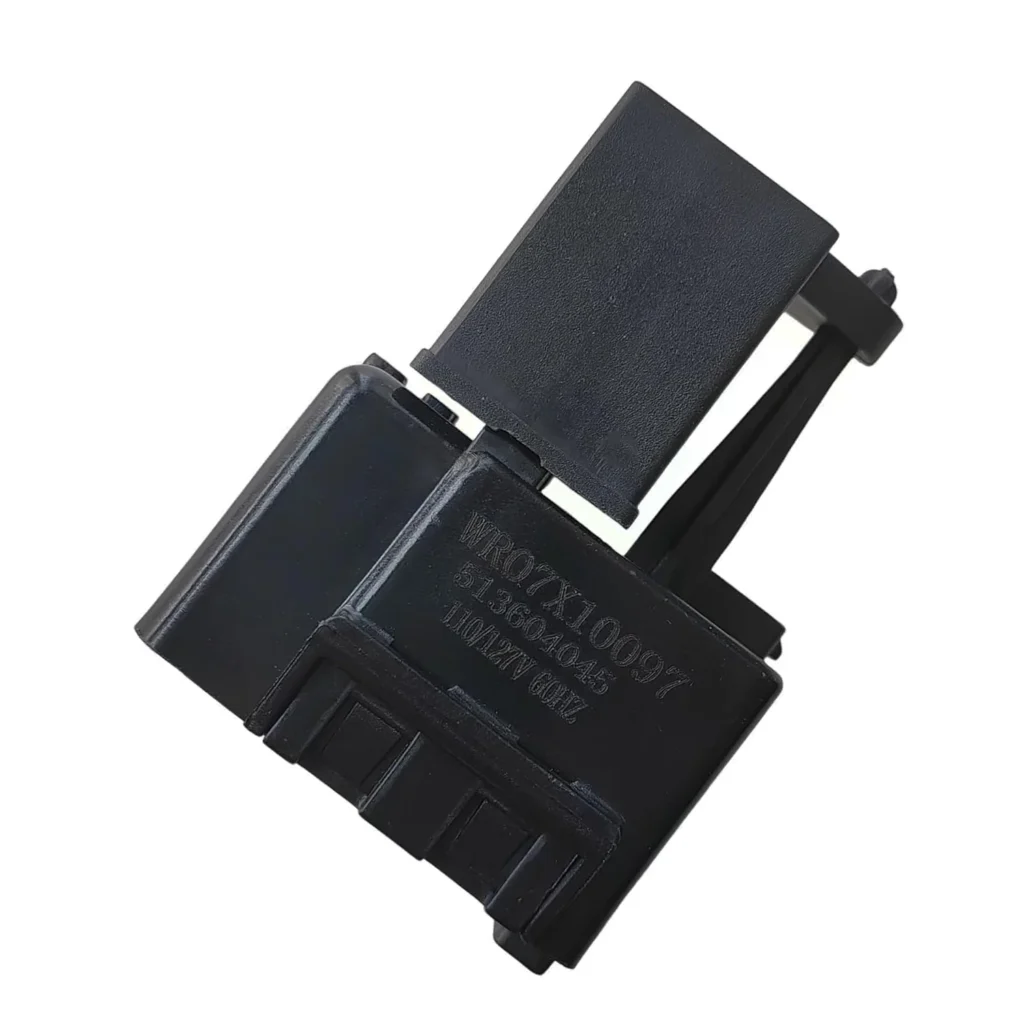
You walk into your kitchen and something's off. The refrigerator's completely silent. No humming, no compressor clicking, just dead air. You open the door and the light works, but that's it — your GE PFS22MBSABB isn't starting at all. Before you panic and call for a $300 service visit, there's a $97 part that fixes this exact problem about 60% of the time.
The WR07X10097 PTC start relay and overload assembly is what kicks your compressor into action. When it fails, your fridge becomes an expensive insulated box. Let's figure out if that's your problem or if something else is going on.
Quick Symptom Check
Before you pull out tools, confirm these symptoms:
- Interior light works — power's getting to the fridge
- Compressor is completely silent — no humming, clicking, or buzzing
- Condenser fan runs normally — check the back or bottom
- Temperature rising steadily — both freezer and fresh food sections
- No clicking sound every few minutes — relay isn't even trying
If you've got three or more of these, keep reading. If the compressor makes loud humming or buzzing sounds, that's a different problem entirely.
Cause #1: Failed PTC Start Relay (60% Probability)
The PTC (Positive Temperature Coefficient) relay is a solid-state device that gives your compressor the electrical boost it needs to start. Over time — usually 8-12 years — the thermistor inside degrades and stops conducting properly.
How to diagnose: Unplug the fridge and locate the black plastic relay attached to the compressor's side (you'll need to remove the lower back panel). Pull it off gently. Shake it. If you hear rattling, it's toast. The internal components have broken loose.
Even if it doesn't rattle, test it with a multimeter. Set to continuity mode. Touch probes to the two prongs that connect to the compressor. You should get a reading between 3-20 ohms when cold. No reading? Failed relay.
The fix: The WR07X10097 replaces both the relay and overload protector as a single assembly. It's a direct plug-in replacement — literally just pull off the old one and push on the new one. Takes about 15 minutes once you've got the panel off.
Cost breakdown: Part runs $96.99. DIY repair saves you $150-250 in labor. Your total investment: under $100 and maybe 30 minutes of your time.
Cause #2: Overload Protector Tripped (25% Probability)
The overload protector sits right next to the relay and acts like a circuit breaker for your compressor. If the compressor draws too much current — maybe from a voltage spike or the compressor working too hard — it trips to prevent damage.
How to diagnose: With the fridge unplugged and the relay assembly removed, look at the overload protector. Some have a small reset button. Press it and listen for a click. If it clicks, it was tripped.
Here's the thing: if it tripped, there was a reason. Maybe a power surge, maybe the compressor's struggling. Resetting it might work temporarily, but if it trips again within a few hours, you're looking at either a failing compressor or a bad overload that's too sensitive.
The fix: Since the WR07X10097 includes both relay and overload as one unit, replacing it solves potential issues with either component. If your overload keeps tripping with the new assembly, then you've got compressor problems.
Cause #3: Compressor Winding Failure (10% Probability)
Sometimes the compressor itself has failed internally. The motor windings short out or go open circuit, and no relay in the world will help.
How to diagnose: With the relay removed, you'll see three pins on the compressor. Using your multimeter, test between each pair:
- Start to Run: should read 1-4 ohms
- Start to Common: should read 8-12 ohms
- Run to Common: should read 6-10 ohms
If any reading is infinite (open) or zero (shorted), the compressor's done. Also test from each pin to the compressor housing — you should get infinite resistance. Any continuity to ground means internal short.
The brutal truth: Failed compressor means replacing the entire compressor ($$$$) or replacing the fridge. On a unit that's more than 10 years old, replacement usually makes more sense.
Cause #4: Low Voltage Supply (3% Probability)
Your fridge needs a solid 120V to start the compressor. If your outlet's delivering 105V or less, the relay won't have enough juice to do its job.
How to diagnose: With the fridge plugged in, test voltage at the outlet. Should read 115-125V. Below 110V? You've got a house wiring issue. Could be a loose connection at the breaker, corroded outlet contacts, or undersized wiring if you're running too many appliances on one circuit.
The fix: Call an electrician. This isn't a refrigerator problem, it's an electrical system problem. Running your fridge on low voltage will just kill components faster.
Cause #5: Control Board Malfunction (2% Probability)
On some GE models — particularly the PFS22SIS and PFS22MIS series — there's an electronic control board that tells the compressor when to run. If that board fails, the compressor never gets the signal to start.
How to diagnose: This one's trickier. If you've tested the relay, overload, and compressor windings and everything checks out fine, but it still won't start, the control board's suspect. You'd need to check for voltage output from the board to the relay during a cooling cycle.
The fix: Control board replacement runs $200-400 depending on the model. Not a beginner repair, and honestly, at that price point you're getting close to "maybe just buy a new fridge" territory on older units.
When to Call a Pro
Look, I'm all for DIY repairs, but here's when you should just call someone:
- You smell burning — that's compressor damage, not relay failure
- The compressor runs but overheats — sealed system problem, needs EPA-certified tech
- You're not comfortable working with electrical components — no shame in that
- Your fridge is still under warranty — don't void it by DIYing
- Multiple tests point to compressor failure — you need a cost/benefit analysis from a pro
That said, if your tests point to the relay and you're handy with basic tools, this is one of the easier refrigerator repairs. The WR07X10097 works across dozens of GE and Hotpoint models including PFS22MBSABB, PFS22SBSASS, PFS22SISASS, and the entire PFS22 series. It's a proven fix.
Frequently Asked Questions
How long does a PTC relay typically last?
Most PTC start relays last 8-15 years depending on how often your compressor cycles. If you live somewhere hot where the fridge runs constantly, expect the lower end. Moderate climate with normal usage? You'll get 12+ years. The WR07X10097 is built to the same specs as the original, so you're getting the same lifespan.
Can I test the relay without removing it from the compressor?
Not effectively. You need to shake it to check for broken internal components, and you need to access the terminals for continuity testing. Just unplug the fridge, remove the back panel, and pull the relay. Takes five minutes and gives you accurate diagnosis. Guessing costs more in the long run.
Why does my new relay feel hot after the fridge runs for a while?
That's actually normal. The PTC element heats up during compressor start, which is how it works — increased temperature increases resistance, limiting current flow once the motor's running. It should cool down between cycles. If it stays scorching hot constantly, your compressor's drawing too much current, which means it's struggling. That's a separate issue from the relay itself.
Diagnosed the problem?
WR07X10097 · In Stock · Fast shipping