
GE Washer Only Fills with Cold Water or Won't Stop Dripping — Triple Inlet Valve Fix
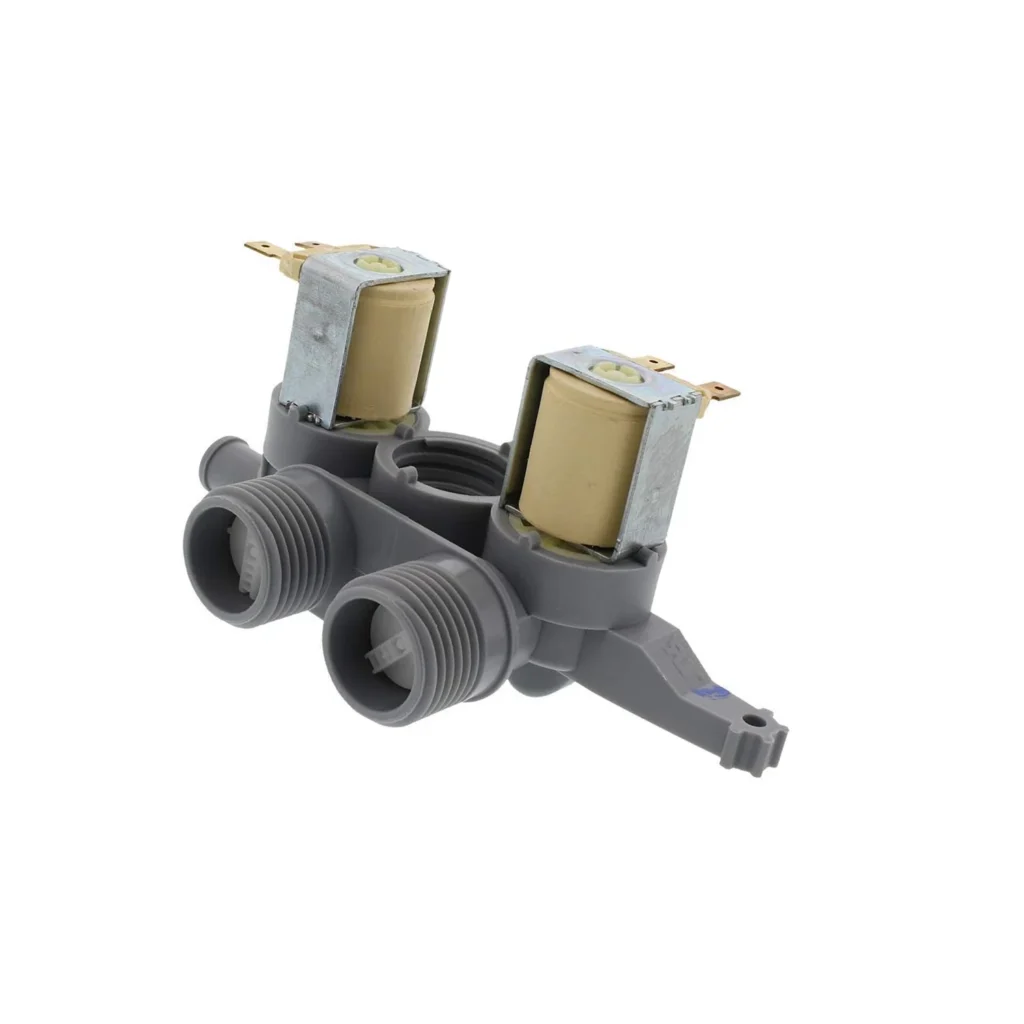
You start a warm wash cycle, but your GE washer fills with ice-cold water anyway. Or maybe you've noticed a constant drip from the back of the machine that's slowly flooding your laundry room floor. Both problems point to the same culprit: a failed triple water inlet valve.
This valve controls hot, warm, and cold water flow into your washer. When it fails — usually from mineral buildup or worn solenoids — it either sticks open (causing drips) or fails to open the hot water side (giving you cold-only fills). The good news? This is one of the easiest washer repairs you'll ever do.
Quick Symptom Check
Your GE washer needs a new inlet valve if you're experiencing:
- Only cold water fills — even when you select warm or hot cycles
- Constant dripping from the back of the washer when it's off
- Slow fill times — takes forever to fill the tub
- No water flow at all — valve solenoids completely failed
- Visible water pooling behind the washer
If you're only getting cold water, the hot water solenoid has likely failed. If it won't stop dripping, one or more valve seats have worn out and can't seal properly anymore.
Cause #1: Failed Hot Water Solenoid (70% of Cases)
Probability: Very High
The triple inlet valve has three separate solenoid coils — one for hot, one for cold, and one that mixes both for warm cycles. When the hot water coil burns out (which happens first because it's used less frequently and tends to collect more mineral deposits), your washer can only draw cold water.
How to diagnose:
- Unplug the washer and turn off both water supply valves
- Pull the washer away from the wall to access the back panel
- Look at the inlet valve — you'll see three electrical connectors
- Use a multimeter to test continuity across each solenoid coil (should read 500-1500 ohms)
- If one coil shows infinite resistance, that solenoid is dead
The fix: Replace the entire valve assembly. Individual solenoids aren't sold separately, and at $38.99 for the complete WH13X10053 valve, it's not worth trying to repair individual components.
Cost: $38.99 for the part, 15-30 minutes of your time
Cause #2: Worn Valve Seats Causing Leaks (20% of Cases)
Probability: Moderate
The rubber valve seats inside each inlet port wear down over time, especially if you have hard water. Once they can't seal completely, water keeps trickling through even when the valve is closed.
How to diagnose:
- Turn off water supply and unplug washer
- Check behind the washer for active dripping from the inlet valve
- Feel the valve body — if it's warm, water is constantly flowing through
- Remove one inlet hose at a time and inspect the screen filter for debris
The fix: Again, replacement is your only real option. As one repair tech told me, "The triple water inlet valve typically fails due to wear or debris causing it to leak or not shut off properly." Once those seats are compromised, there's no bringing them back.
Cost: Same $38.99 part
Cause #3: Clogged Inlet Screens (8% of Cases)
Probability: Low to Moderate
Before you replace the valve, check the mesh screens inside each water inlet connection. Sediment and mineral deposits can clog these screens, restricting water flow. This won't cause dripping, but it will cause slow fills or temperature issues.
How to diagnose:
- Turn off water supply
- Unscrew both inlet hoses from the back of the washer
- Look inside each inlet port — you'll see small mesh screens
- Use a flashlight to check for debris buildup
The fix: Carefully remove the screens with needle-nose pliers, rinse them under running water, and reinstall. If they're damaged or you can't get them clean, just replace the whole valve — those screens are integrated into the valve body.
Cost: Free if cleaning works, otherwise $38.99 for new valve
Cause #4: Bad Water Temperature Selection Switch (2% of Cases)
Probability: Very Low
Rarely, the temperature selection switch on the control panel fails instead of the valve itself. The valve only opens when it receives the proper electrical signal from the control board.
How to diagnose:
- Test different temperature settings during a cycle
- If NO temperature setting produces hot water, it's the valve
- If some settings work but others don't (and it's inconsistent), suspect the control board
- Use a multimeter to test voltage at the valve connector during a hot water cycle (should read 120V AC)
The fix: Control board replacement — much more expensive and complex than a valve swap. Only go this route if you've confirmed the valve solenoids test good with a multimeter.
Cost: $150-$300 for control board
How to Replace the Triple Inlet Valve
This repair works on GE models GTWN4250D0WS, GTWN4950D1WS, GTWN5650D0WW, GTWN5850D0WW, and dozens more that use the WH13X10053 valve.
What you'll need:
- 1/4" nut driver or socket
- Pliers
- Towel (for water spillage)
- WH13X10053 replacement valve
Step-by-step process:
- Unplug the washer and turn off both hot and cold water supply valves
- Pull washer forward about 2 feet to access the back
- Disconnect inlet hoses from the old valve (expect some water spillage)
- Remove the three 1/4" screws at the top of the back panel to release the control panel
- Tilt the control panel forward — the metal tabs will release
- Unplug the three electrical connectors from the valve
- Remove the two 1/4" screws holding the valve to the frame
- BE CAREFUL removing the internal hose — that hard plastic connector breaks easily as you slide off the hose clamp
- Install the new valve in reverse order, making sure all hose clamps are tight
- Reconnect everything, turn on water supply, and test for leaks
One DIYer described their experience: "The simplicity of this repair surprised me. From start to finish the whole process took less than half an hour." Another added, "I did not have to move machine. Was able to access everything from front of machine; however, I did need to reach behind control panel."
Total repair time: 15-30 minutes, even if it's your first time.
When to Call a Pro
This is genuinely one of the easiest washer repairs. If you can use a screwdriver and follow basic instructions, you can do this yourself. The part costs $38.99 — a service call will run you $150-$250 for the same repair.
That said, call a professional if:
- You've replaced the valve and still have the same symptoms (points to control board issues)
- You notice electrical burning smells near the valve area
- Your washer is still under warranty (some manufacturers void coverage for DIY repairs)
- You're not comfortable working around electrical connections
But honestly? This repair is so straightforward that most people surprise themselves with how easy it is.
Frequently Asked Questions
Can I repair just one solenoid instead of replacing the whole valve?
Individual solenoids aren't sold as replacement parts, and the valve is sealed — you can't disassemble it without destroying it. At $38.99 for a complete factory OEM valve, it's not worth trying to jury-rig a repair. Just replace the whole assembly.
Why does my washer work fine on cold cycles but fails on hot or warm?
The cold water solenoid is working, but the hot water solenoid has failed. The triple inlet valve has separate coils for each temperature, and they fail independently. Since cold washes are most common (and hot water creates more mineral deposits), the hot solenoid typically dies first.
How long do GE inlet valves typically last?
Most inlet valves last 7-12 years depending on water quality and usage. Hard water accelerates failure because mineral deposits wear out the valve seats and clog the solenoid mechanisms. If you're replacing a valve in a washer less than 5 years old, consider installing a whole-house water softener to prevent premature failure of the replacement.
Diagnosed the problem?
WH13X10053 · In Stock · Fast shipping