
GE Dishwasher Rack Wobbles or Falls Off Track — 5 Causes & How to Fix
You slide the lower rack out to load dinner plates, and it suddenly tilts sideways or jumps the track entirely. Maybe it's been getting progressively harder to pull in and out, scraping against the tub sides until yesterday when it finally derailed. On GE models like the CDT725SSF0SS or ADT521PGF series, this rack instability isn't just annoying—it prevents proper spray coverage and leaves your dishes half-cleaned.
Here's the thing: most rack issues come down to those small plastic carrier assemblies and rollers underneath. They're designed to handle thousands of cycles, but they wear faster if you overload the rack or constantly pull it out at an angle.
Quick Symptom Check
- Rack tilts to one side when you pull it out
- Grinding or scraping noise as rack moves
- Rack completely derails from track system
- One corner sits lower than the others when rack is closed
- Rollers don't spin freely or are visibly cracked
- Dishes come out dirty because rack position blocks spray arm
Cause #1: Worn or Cracked Roller Wheels (65% of cases)
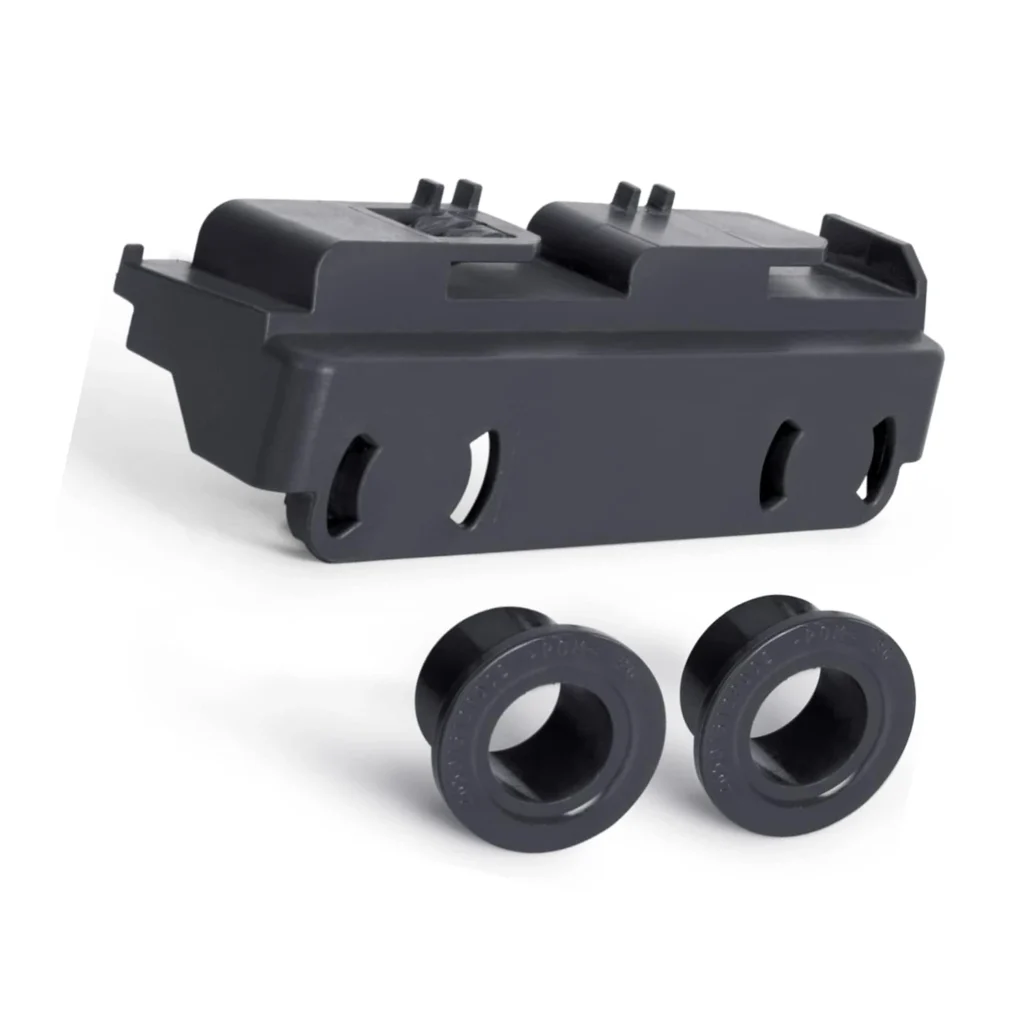
The roller wheels are small hard plastic components that bear the full weight of your dishes cycle after cycle. On GE dishwashers using the WD28X27241 carrier kit, these rollers typically fail after 5–8 years of regular use.
Diagnosis: Pull the lower rack completely out and flip it over. Spin each roller wheel with your finger. They should rotate smoothly and show no cracks or flat spots. If you see white stress marks, chunks missing, or the wheel doesn't spin at all, that's your problem.
Why it happens: Heat from the drying cycle makes the plastic brittle over time. Heavy pots and pans accelerate wear. If you've been yanking the rack out at an angle instead of pulling straight, you've been grinding those rollers against the track rails.
The fix: The WD28X27241 kit includes both carrier assemblies and fresh rollers. You'll need to remove the old carriers (they typically snap or screw onto the rack frame), pop out the worn rollers, and install the new set. Takes about 20 minutes per side once you figure out how the clips work.
Cause #2: Broken Carrier Housing (20% of cases)
The carrier is the plastic bracket that holds the roller wheels and attaches to your rack frame. These crack at the mounting points, especially on models like the PDT750SSF or GDT695SGJ series.
Diagnosis: With the rack removed, inspect where the carrier connects to the metal rack frame. Look for cracks radiating from screw holes or complete breaks in the plastic housing. The carrier might look fine but flex excessively when you press on it—that's a sign the internal structure has failed.
Why it happens: Overloading. That 15-pound Dutch oven you crammed in the corner? It puts sideways stress on the carriers every time the wash cycle runs. The plastic fatigues and eventually snaps.
The fix: You can't repair a cracked carrier—replacement is the only option. The WD28X27241 kit gives you fresh carrier housings with integrated mounting points. Match the old carrier orientation before removing it, because getting the angle wrong makes the rack sit crooked.
Cause #3: Bent or Damaged Rack Frame (8% of cases)
Sometimes the rack itself gets tweaked out of shape. This usually happens after a carrier breaks and you keep using the dishwasher anyway, or when you force a jammed rack instead of investigating why it won't close.
Diagnosis: Set the rack on a flat surface outside the dishwasher. It should sit level at all four corners. If one corner lifts up, or the whole thing rocks like a wobbly table, the frame is bent.
Why it happens: Physical damage—dropping the rack while cleaning it, hitting it with a heavy pan, or that time you tried to force it closed when a spatula was sticking up through the rack.
The fix: Minor bends in the wire frame can sometimes be straightened with pliers and patience. Severe damage means ordering a complete new rack assembly, which costs $60–$120 depending on your model. Before buying a new rack, make sure the track rails inside the tub aren't also damaged.
Cause #4: Dirty or Damaged Track Rails (5% of cases)
The metal or plastic rails that guide your rack can accumulate hard water deposits, food debris, or rust. On some GE models with plastic track systems, the rails themselves crack or develop rough spots.
Diagnosis: Run your finger along the inside of both track rails from front to back. You're feeling for rough patches, calcium buildup that looks like white crust, or visible cracks in plastic rail systems. Try sliding the rack manually with the dishwasher door open—it should glide smoothly without catching.
Why it happens: Hard water leaves mineral deposits. Rust forms if the porcelain coating inside your tub gets chipped. Food particles get wedged in there and bake on during the drying cycle.
The fix: For buildup, scrub the rails with white vinegar and a stiff brush. For damaged rails, check if they're replaceable on your model (many snap out). Some older GE models have welded rails that can't be replaced without major disassembly.
Cause #5: Incorrect Roller/Carrier Installation (2% of cases)
If you've already replaced the rollers or carriers and the rack still doesn't work right, there's a good chance they're installed backwards or at the wrong angle. The WD28X27241 kit fits dozens of models, but the exact mounting orientation varies.
Diagnosis: Compare your installation to the parts diagram for your specific model number (find it stamped inside the door frame). The carriers should angle slightly—if they're perfectly vertical, that's wrong.
Why it happens: The instructions that come with aftermarket parts are generic. What works for a CDT706 might not match your PDT845 exactly.
The fix: Take a photo of the original setup before you remove anything. If you already removed it, search for an installation video specific to your model series. Sometimes you need to rotate the carrier 180 degrees to get the roller positioned correctly.
When to Call a Pro
If you've replaced the rollers and carriers with the WD28X27241 kit and the rack still derails, you're likely dealing with a bent tub, damaged track system, or frame issue that requires professional diagnosis. Also call a tech if you find rust holes in the tub—that's a sign of bigger problems.
The carrier and roller replacement is genuinely DIY-friendly if you're comfortable removing the rack and using a screwdriver. But if your dishwasher is older than 12 years and having multiple issues, get a pro to evaluate whether repair makes sense versus replacement.
Frequently Asked Questions
Can I replace just the rollers without changing the carriers?
On some older GE models, yes—the rollers pop out of the carrier housing and you can replace them individually. But the WD28X27241 kit comes as a complete assembly because the carriers and rollers typically wear together. Trying to reuse 10-year-old carriers with new rollers often leads to premature failure of the new parts.
Why does my rack work fine when empty but derails when loaded?
This points to worn rollers that can't handle weight anymore. The plastic has developed flat spots or stress fractures that only show up under load. An empty rack might roll fine, but add 20 pounds of dishes and those compromised rollers can't maintain alignment on the tracks.
How long do replacement rollers typically last?
Quality replacement parts like the WD28X27241 should give you 5–8 years with normal use. Longevity depends on how you load your dishwasher—distributing weight evenly and avoiding overloading extends roller life. Also, letting the dishwasher cool before pulling out the rack reduces heat stress on the plastic.
Diagnosed the problem?
WD28X27241 · In Stock · Fast shipping