
Whirlpool Washer Won't Start or Door Won't Lock — 4 Causes & How to Fix
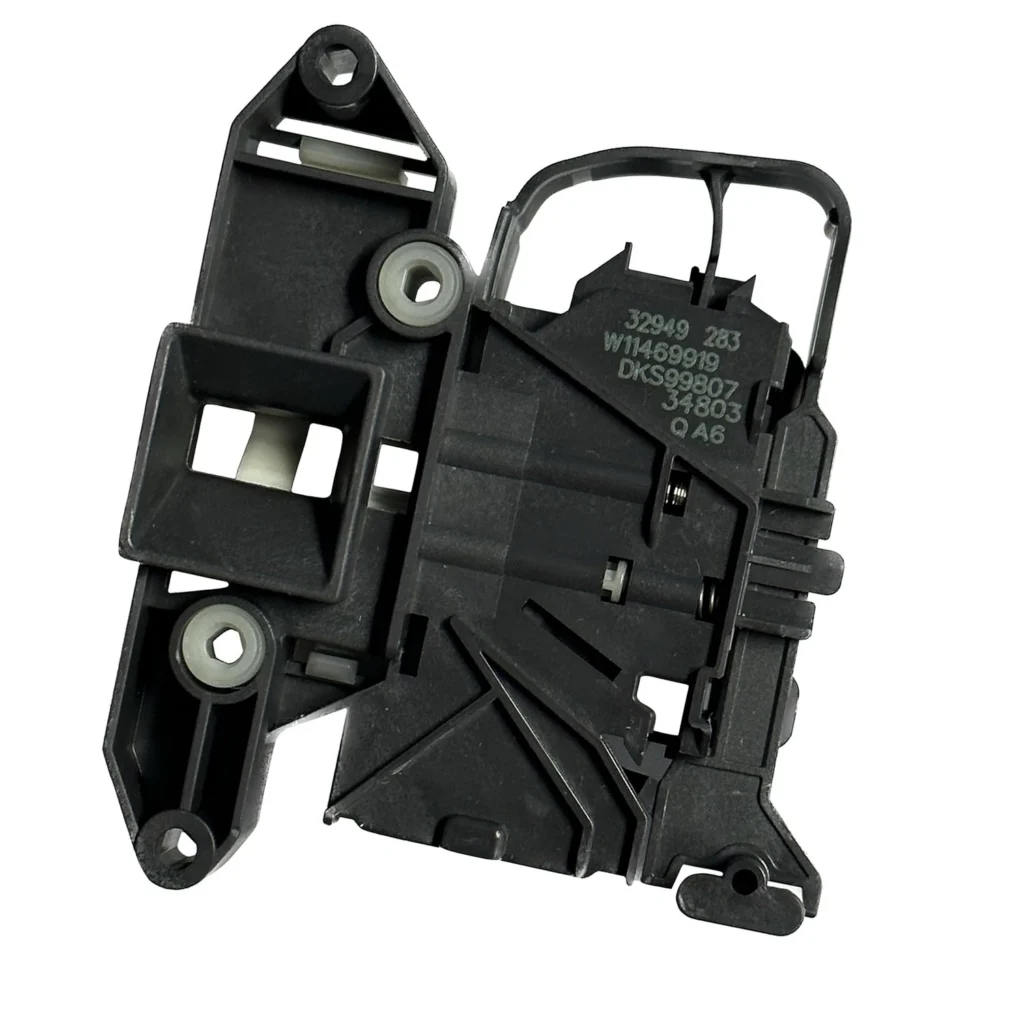
You load the washer, add detergent, press start, and... nothing. The door won't lock, the control panel lights up, but your Whirlpool front-load washer just sits there. You try closing the door harder. Still nothing. Before you assume the worst, there's a good chance it's the door latch assembly — specifically the W11565030, which fails on models like the WFW5620HW0, WFW6620HW0, and MHW5630HW0 after about 5-7 years of use.
Quick Symptom Check
Does your washer show any of these signs?
- Door won't lock — you hear no click when closing the door
- Washer won't start — control panel works but cycle doesn't begin
- Door unlatches mid-cycle — cycle stops unexpectedly with water inside
- Error code F5 E2 or F8 E1 — door lock failure codes
- Clicking sound from door area — latch attempts to engage but fails
Cause #1: Failed Door Latch Assembly (70% of Cases)
The W11565030 door latch assembly contains both the mechanical latch and the electronic lock mechanism. Over time, the plastic striker wears down or the solenoid that engages the lock burns out. This is the single most common reason a Whirlpool front-load washer won't start.
How to diagnose:
- Open and close the door firmly — listen for a solid click
- If no click or a weak click, the mechanical latch is worn
- If it clicks but washer won't start, the electronic lock failed
- Check for error codes: F5 E2 specifically points to latch failure
The fix: Replace the entire door latch assembly. The W11565030 costs $39.99 and takes about 30 minutes to install. You'll need a Torx T20 screwdriver and a flathead to release the wire harness clip. This part replaces older numbers W11316250 and W10804741, so if you've got an older Whirlpool or Maytag front-loader from 2015-2023, this is your part.
Probability: 70% — If your washer is 5+ years old and shows door lock symptoms, start here.
Cause #2: Misaligned Door Strike Plate (15% of Cases)
Sometimes the door itself hasn't failed — the metal strike plate on the door frame has shifted slightly. This happens if the washer has been moved recently or if the mounting screws have loosened over time.
How to diagnose:
- Open the door and look at the strike plate (the metal piece the latch grabs)
- Close the door slowly and watch if the latch lines up perfectly
- If there's a gap or the latch hits the edge of the strike, it's misaligned
The fix: Loosen the two screws holding the strike plate, close the door to find the natural alignment, then tighten while door is closed. No parts needed, just a Phillips screwdriver.
Probability: 15% — Check this first since it's free, but alignment issues are less common than outright latch failure.
Cause #3: Faulty Door Lock Wire Harness (10% of Cases)
The wire harness connecting the door latch to the control board can develop corrosion or break at the connector. This is more common in humid laundry rooms or if water has leaked near the door area.
How to diagnose:
- Unplug the washer
- Remove the top panel (two screws at the back)
- Locate the wire harness connected to the door latch (usually a white 6-pin connector)
- Check for green corrosion, burnt pins, or loose connections
The fix: If corroded, clean with electrical contact cleaner. If pins are burnt, you'll need a new wire harness (part WPW10340103, about $25). If it's just loose, reconnect firmly until it clicks.
Probability: 10% — Usually only happens after water exposure or in very old machines.
Cause #4: Control Board Misreading Door Lock Signal (5% of Cases)
Rarely, the main control board fails to recognize the door lock signal even when the latch works perfectly. This typically happens after a power surge or on machines over 10 years old.
How to diagnose:
- Enter diagnostic mode (hold Control Lock button for 3 seconds, then press Signal twice)
- Run the door lock test (varies by model — check service manual)
- If the door locks during diagnostic mode but not during normal use, it's the board
The fix: Replace the main control board (part W11223500 for most WFW models, $250-350). This is expensive, so confirm diagnosis before ordering.
Probability: 5% — Try everything else first. Control board failure is rare for door lock issues.
When to Call a Pro
Replacing the door latch assembly is straightforward — it's four screws and one wire connector. But call a technician if:
- You've replaced the latch and it still won't lock
- You're uncomfortable working with the top panel removed (there's electrical stuff up there)
- The control board needs replacing (labor cost is often similar to the part cost, so get both done)
- Water is leaking from the door area (could be a door boot issue requiring specialized tools)
Frequently Asked Questions
Will my Whirlpool washer work if the door latch is broken?
No. Modern front-load washers have a safety interlock that prevents operation unless the door is locked. This prevents the drum from spinning while the door is open, which would flood your laundry room. If the latch fails, the control board thinks the door is open and won't start any cycle. There's no bypass for this safety feature.
How long does a Whirlpool washer door latch last?
Most OEM door latches like the W11565030 last 5-8 years with normal use (about 8-10 loads per week). If you do more frequent loads or slam the door regularly, expect closer to 5 years. The mechanical striker wears down from repeated engagement, and the solenoid can burn out from electrical stress over time.
Can I use WD-40 on a sticky door latch?
Don't. WD-40 attracts lint and detergent residue, which will gum up the mechanism worse than before. If your latch is sticking but still works, use a dry silicone spray (not petroleum-based) on the mechanical parts only — avoid spraying near the electrical solenoid. But if it's already sticking, the latch is probably worn out and lubrication is just delaying the inevitable replacement.
Diagnosed the problem?
W11565030 · In Stock · Fast shipping