
Whirlpool Washer Shaking Violently During Spin — 5 Suspension Rod Failures & Fixes
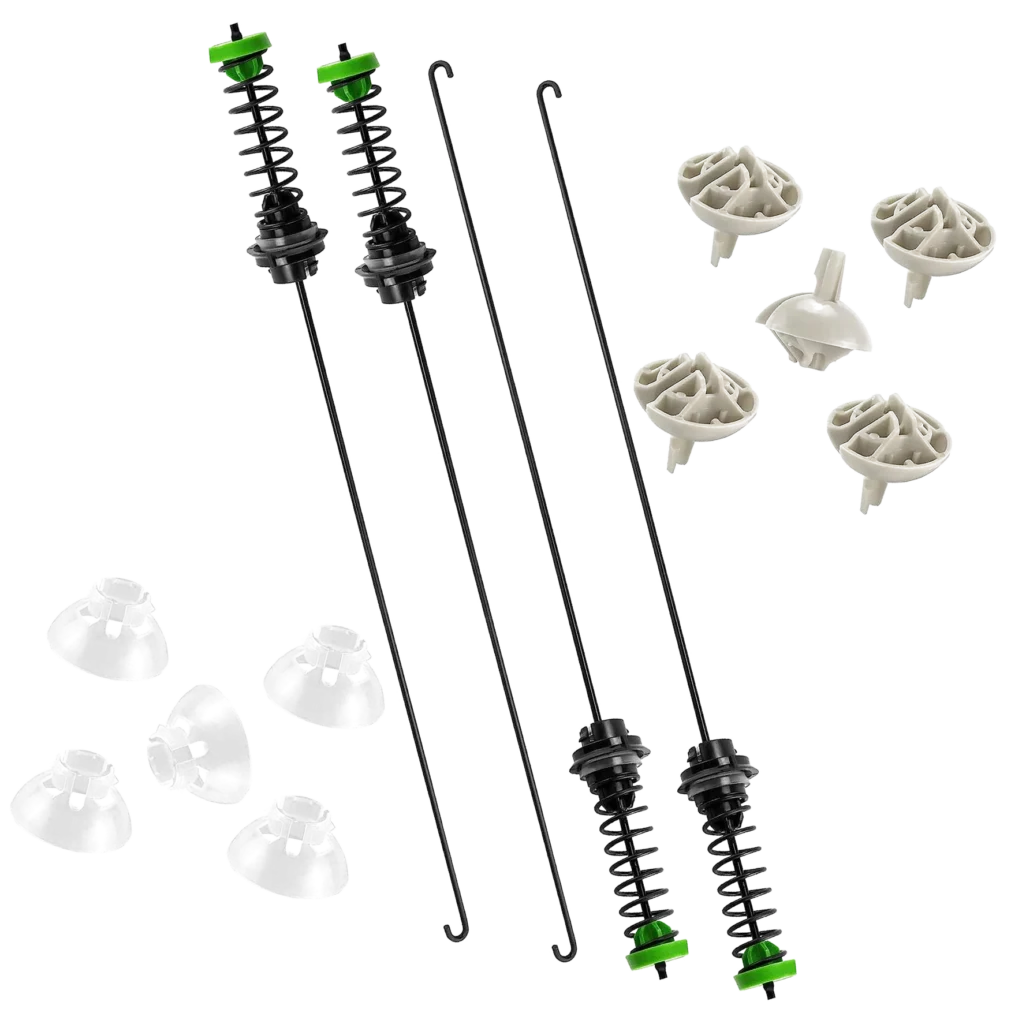
Your Whirlpool WTW5000DW was running fine last week. Now it sounds like it's trying to launch itself across the laundry room during spin cycle. The whole machine shakes so hard you can hear it from upstairs, and you've found it sitting six inches from the wall more than once.
This isn't normal wear and tear—it's almost always the suspension rod system failing. These four rods are what keep your washer drum stable during the violent forces of a 1200 RPM spin cycle. When even one starts to fail, the physics fall apart fast.
Quick Symptom Check
Your Whirlpool, Maytag, or Kenmore washer likely has suspension rod failure if you're seeing:
- Violent shaking during spin cycle — the entire cabinet rocks back and forth
- Washer walking across the floor — you find it several inches from its original position after each load
- Loud banging noises — metal-on-metal sounds as the drum hits the cabinet
- Uneven spinning — clothes come out soaking wet on one side
- Visible drum tilt — when you open the lid, the drum isn't level
These symptoms typically show up on WTW5000DW, MVWC565FW, and MVWX655DW series washers after 3-5 years of use. The suspension rods don't gradually wear out—they fail suddenly, often within weeks of the first symptoms appearing.
Cause #1: Worn Suspension Rod Bushings (Probability: 65%)
The rubber bushings at both ends of each suspension rod absorb vibration. After thousands of spin cycles, they compress, crack, or tear completely. When this happens, the metal rod starts moving inside the bushing socket instead of the drum staying centered.
How to diagnose: Unplug the washer and tilt it back against the wall (get help—these machines are heavy). Look at the four suspension rods running from the base to the drum. Grab each rod and try to move it side-to-side. If there's more than 1/4 inch of play, or if you see cracked rubber, that rod's bushing is shot.
The fix: You need to replace all four suspension rods as a complete set with the W11130362 kit. Replacing just one creates an imbalance that'll destroy the others within months. Budget 1-2 hours for the repair—you'll need to access the cabinet bottom, which means tilting or laying the washer on its front.
Cost reality: The W11130362 suspension rod kit runs $85.99. Professional installation adds $150-200 in labor, but this is actually a manageable DIY repair if you're comfortable with basic tools.
Cause #2: Broken Suspension Rod Brackets (Probability: 20%)
The mounting brackets where suspension rods attach to the base can crack, especially if the washer's been overloaded repeatedly. Heavy loads create forces these brackets weren't designed to handle long-term.
How to diagnose: With the washer tilted back, inspect where each rod attaches to the metal base frame. Look for cracks in the metal, bent brackets, or stripped mounting holes. Sometimes the bracket looks fine but the attachment point has stress fractures you can only feel by pressing on it.
The fix: If brackets are damaged, you'll need to address them before or during suspension rod replacement. Some bracket damage requires base frame replacement (call a pro at that point), but minor cracks can sometimes be reinforced with metal epoxy as a temporary solution.
Cause #3: Suspension Rod Ball Joint Failure (Probability: 10%)
Each suspension rod has ball-and-socket joints at both ends. These joints allow the drum to move in all directions while staying centered. The socket portion can crack or the ball stud can wear down, creating excessive play.
How to diagnose: With someone helping, manually rock the drum forward and back while watching the suspension rods. You're looking for any rod where the ball joint pops in and out of the socket, or where there's visible gap between the ball and socket housing.
The fix: Individual ball joint components aren't sold separately—you need the complete W11130362 rod kit. This is actually good news because mixing old and new components causes premature failure of the new parts.
Cause #4: Misaligned Suspension Rods (Probability: 3%)
If someone recently replaced the suspension rods but the shaking persists, they might not be installed at the correct angle. Each rod must be positioned precisely for the suspension geometry to work.
How to diagnose: Compare your rod angles to installation diagrams for your specific model. All four rods should angle symmetrically—if one looks different, it's probably in the wrong mounting hole or the bracket got bent during installation.
The fix: This requires removing and reinstalling the affected rod(s) in the correct position. Check the W11130362 installation guide for your model's specific mounting point locations.
Cause #5: Incorrect Washer Leveling (Probability: 2%)
Here's the thing nobody wants to hear: if your washer isn't perfectly level, even brand-new suspension rods will cause shaking. The suspension system assumes the base is level—when it's not, centrifugal forces don't distribute evenly.
How to diagnose: Put a carpenter's level on top of the washer cabinet (side-to-side and front-to-back). It needs to be level within 1 degree. Also check that all four feet are firmly on the ground—rock the washer corner-to-corner to verify.
The fix: Adjust the threaded leveling feet. Most Whirlpool washers have self-leveling rear feet and adjustable front feet. Turn the front feet clockwise to lower, counter-clockwise to raise. Once level, tighten the lock nuts so the feet can't turn.
When to Call a Pro
Suspension rod replacement is DIY-friendly if you're mechanically inclined and have basic tools. However, call a technician if:
- The base frame mounting brackets are cracked or broken
- You've replaced the rods but shaking continues (indicates deeper cabinet damage)
- The drum has visible impact damage from banging into the cabinet
- You're not comfortable tilting a 200+ pound appliance
Cabinet or frame damage often costs $300-500 to repair professionally. At that point, you're better off evaluating whether a new washer makes more financial sense, especially if your machine is 8+ years old.
Preventing Future Suspension Rod Failure
Want your new W11130362 suspension rods to last? Don't overload the washer. That "extra large capacity" rating assumes you're not cramming it to the top with soaking wet towels. A good rule: the drum should be no more than 3/4 full of dry clothes. Heavy, wet loads create forces that destroy suspension components years ahead of schedule.
Also, if you hear any new rattling or notice slight shaking starting, address it immediately. Ignoring early suspension problems leads to cabinet damage that costs 10x more to fix than simply replacing the rods when symptoms first appear.
Frequently Asked Questions
Can I replace just one suspension rod instead of all four?
You technically can, but don't. Suspension rods wear at similar rates—if one failed, the others are close behind. Replacing just one creates an imbalance that'll destroy your new rod within months and potentially damage the drum basket. The W11130362 kit includes all four rods for a reason. Save yourself the repeat repair and do them all at once.
Will this part work for my Kenmore washer model?
The W11130362 suspension rod kit is compatible with many Whirlpool-manufactured Kenmore washers, but you need to verify your specific model number. Kenmore used multiple manufacturers over the years. Check your model number against the compatibility list—if you see your model like MVWC565FW or WTW5000DW variants, you're good to go. When in doubt, remove one existing rod and compare part numbers.
How long should suspension rods last before needing replacement?
Expect 5-8 years under normal use conditions. Heavy users who run multiple loads daily might see failure at 3-4 years. Consistent overloading can cut that to 2-3 years. If your suspension rods failed in less than 5 years, examine your loading habits—you're probably putting too much weight in the drum or washing heavy items like rugs too frequently.
Diagnosed the problem?
W11130362 · In Stock · Fast shipping