
Whirlpool Washer Won't Agitate or Spin — 6 Causes & How to Fix W10006355
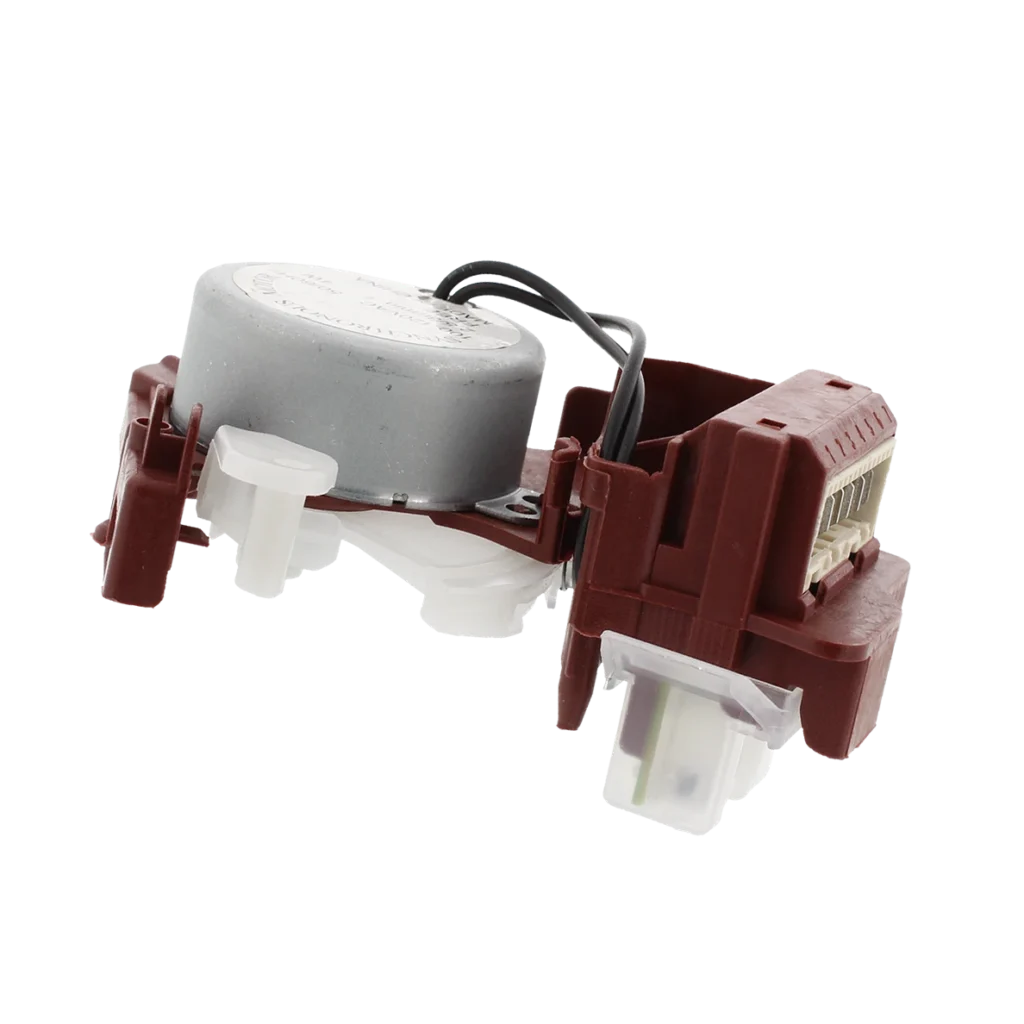
Your Whirlpool WTW4800BQ0 fills with water just fine, but when it's time to agitate, nothing happens. The drum sits there, full of soapy water and dirty laundry, completely motionless. You've got a shift actuator problem — and you're not alone. This is one of the most common failures on Whirlpool, Maytag, Kenmore, and Amana top-load washers built between 2007 and 2015.
The shift actuator (part W10006355) controls the mechanical shift between agitate and spin modes. When it fails, your washer can't transition between cycles properly. Sometimes it won't agitate. Sometimes it won't spin. Sometimes it just sits there doing absolutely nothing while the timer keeps running.
Quick Symptom Check — What's Your Washer Doing?
Before you pull anything apart, identify exactly what's happening. Check all that apply:
- Won't agitate: Fills with water but drum doesn't move back and forth during wash cycle
- Won't spin: Completes wash cycle but won't spin water out of clothes
- Spins slowly: Drum rotates but never reaches full spin speed, clothes stay soaked
- Won't start: Powers on but cycle never begins, no movement at all
- Cycle not advancing: Gets stuck in one phase, timer runs but nothing changes
- Won't drain: Water stays in tub, pump runs but actuator hasn't shifted to drain position
If you checked two or more of these, the shift actuator is your prime suspect. This component has a 70% failure rate when these symptoms appear together.
Cause #1: Failed Shift Actuator Motor (Most Likely — 65% of Cases)
The actuator contains a small motor that physically moves the shift mechanism inside your transmission. After 5-8 years and thousands of cycles, this motor burns out. You'll hear it trying to work — a clicking, buzzing, or humming sound during cycle transitions — but the mechanical shift never completes.
How to diagnose:
- Unplug the washer
- Remove the front panel (two screws at bottom, lift up and pull forward)
- Locate the shift actuator — it's mounted on the left side of the transmission, cylindrical shape, about 4 inches long
- Plug washer back in and start a cycle
- Watch and listen to the actuator during the transition from fill to agitate
If you hear clicking or buzzing but see no movement of the actuator shaft, the motor's dead. This is the issue on models like the WTW4750YQ0, 7MWTW1500AQ0, and NTW4600YQ0 — they all use the same actuator design that's prone to motor burnout.
The fix: Replace the shift actuator assembly (W10006355). Don't try to repair the motor itself — it's sealed and not serviceable. New actuator runs about $80 and takes 30-45 minutes to install.
Cause #2: Stripped Actuator Gear (20% of Cases)
Inside the actuator, a plastic gear connects the motor to the shift mechanism. If your washer was overloaded repeatedly or if something jammed the transmission mid-shift, this gear strips out. The motor runs fine, but nothing moves because the mechanical connection is broken.
How to diagnose:
With the actuator exposed (see steps above), start a cycle and watch the motor shaft. If the shaft spins but the output shaft (the part that connects to the transmission) doesn't move, you've got a stripped gear.
You might also notice the actuator gets hot quickly — the motor's working hard against no load because the gear can't transfer power.
The fix: Same solution — replace the entire actuator assembly. The gear isn't sold separately, and even if it were, opening the sealed actuator voids any remaining reliability. This failure is common on the ATW4675YQ0 and ATW4675YQ1 models.
Cause #3: Corroded Electrical Connector (8% of Cases)
The actuator receives power through a multi-pin connector. Water leaks, high humidity, or years of detergent vapor can corrode these pins. The motor's fine, the gear's fine, but the actuator isn't getting the signal to move.
How to diagnose:
- Unplug washer and remove front panel
- Disconnect the wire harness from the actuator
- Inspect both the actuator pins and the harness socket for white/green corrosion or burned contacts
- Check for water marks or rust around the connector
If you see corrosion but the actuator itself looks fine, clean the connector with electrical contact cleaner and a small wire brush. If the pins are badly corroded or the plastic housing is melted, you'll need to replace the actuator — even if the motor works, unreliable connections cause intermittent failures.
Cause #4: Broken Shift Fork in Transmission (4% of Cases)
The actuator connects to a shift fork inside the transmission. If this fork breaks (usually from metal fatigue), the actuator can't engage or disengage the agitate/spin mechanisms. The actuator will move through its full range, but the transmission stays stuck in neutral.
How to diagnose:
This one's harder. You'll see the actuator shaft moving normally, but the washer still won't agitate or spin. To confirm, you'll need to remove the tub and inspect the transmission shift mechanism — which is honestly a job for a tech unless you're very comfortable with washer disassembly.
One clue: if you manually rotate the drum while watching the actuator, and the actuator shaft doesn't move at all, the shift fork connection is broken.
The fix: If the fork is broken but the transmission otherwise works, some techs replace just the fork assembly. But honestly, if you're that deep into the washer, consider the transmission's age. On a 10-year-old machine, replace the whole transmission or evaluate whether repair costs justify keeping the washer.
Cause #5: Failed Motor Control Board (2% of Cases)
The control board tells the actuator when to shift. Board failures are rare, but they happen — usually from power surges or water damage. If the board's shift control circuit is fried, the actuator never gets the command to move.
How to diagnose:
With the front panel off and washer plugged in, use a multimeter to check for voltage at the actuator connector during a cycle transition. You should see voltage change when the cycle shifts from fill to agitate. No voltage change means the board isn't sending signals.
Also check for burn marks on the control board itself, particularly around the relay that controls the actuator.
The fix: If the board's bad and the actuator tests fine, replace the control board. But here's the thing: boards cost $150-250. On models like the 7EWTW1300YM0 or 1CWTW4740YQ0, that's approaching the cost of a used replacement washer. Make sure you've ruled out the cheaper actuator fix first.
Cause #6: Mechanical Jam in Transmission (1% of Cases)
Something's physically stuck in the shift mechanism — a sock, a wire, a broken spring. The actuator tries to shift but can't overcome the obstruction. You'll hear the motor straining, possibly a grinding noise.
How to diagnose:
Manually try to rotate the drum. Does it turn freely in both directions? Now try rotating it while the actuator is attempting to shift. If you feel binding or hear grinding, something's jammed.
The fix: Remove the tub and transmission for inspection. This is major disassembly. If you find a jam, clear it and reassemble. If the transmission is damaged from the jam, you'll need to replace it.
When to Call a Pro
Replacing the shift actuator is straightforward if you're comfortable with basic tools and following disassembly instructions. It's accessible from the front panel, doesn't require tub removal, and there are good videos showing the process for models like the 7MWTW1501AW0 and 2DWTW5500XW0.
Call a tech if:
- You replaced the actuator but symptoms persist (transmission problem)
- The actuator is fine but you're seeing control board issues
- There's a mechanical jam requiring tub removal
- You're not comfortable working with the washer plugged in for diagnosis
Expect to pay $180-280 for a professional actuator replacement, including parts and labor. That's fair pricing for what's typically a 45-minute job.
Frequently Asked Questions
Can I keep using my washer if it won't agitate but still spins?
Technically yes, but your clothes won't get clean. Agitation is what scrubs the dirt out. If the actuator's stuck in spin mode, you're essentially running clothes through a rinse-and-spin cycle every time. Plus, continuing to run it puts extra strain on the motor and control board as they keep trying to command a shift that won't happen. Fix it soon before you create additional problems.
Will a generic actuator work, or do I need the Whirlpool OEM part?
The W10006355 is already the standard replacement for several OEM numbers (WPW10006355, AP6014711, PS11747977). Quality aftermarket versions work fine on models like the WTW4800XQ0 and 7EWTW1409YM0. Just make sure it's rated for your specific transmission type — not all shift actuators are universal. Cross-reference your model number before ordering.
My actuator clicks three times then stops — what does that mean?
That's the motor trying to shift but hitting resistance. Could be a stripped gear, could be a jam in the transmission, could be a broken shift fork. The actuator's safety circuit limits how hard it'll try before giving up to prevent motor burnout. You need to determine whether the actuator shaft is moving when it clicks. If yes, the problem's downstream in the transmission. If no, the actuator itself is failing.
Diagnosed the problem?
W10006355 · In Stock · Fast shipping