
Air Fryer or Microwave Won't Start — 5 Door Switch Causes & How to Fix
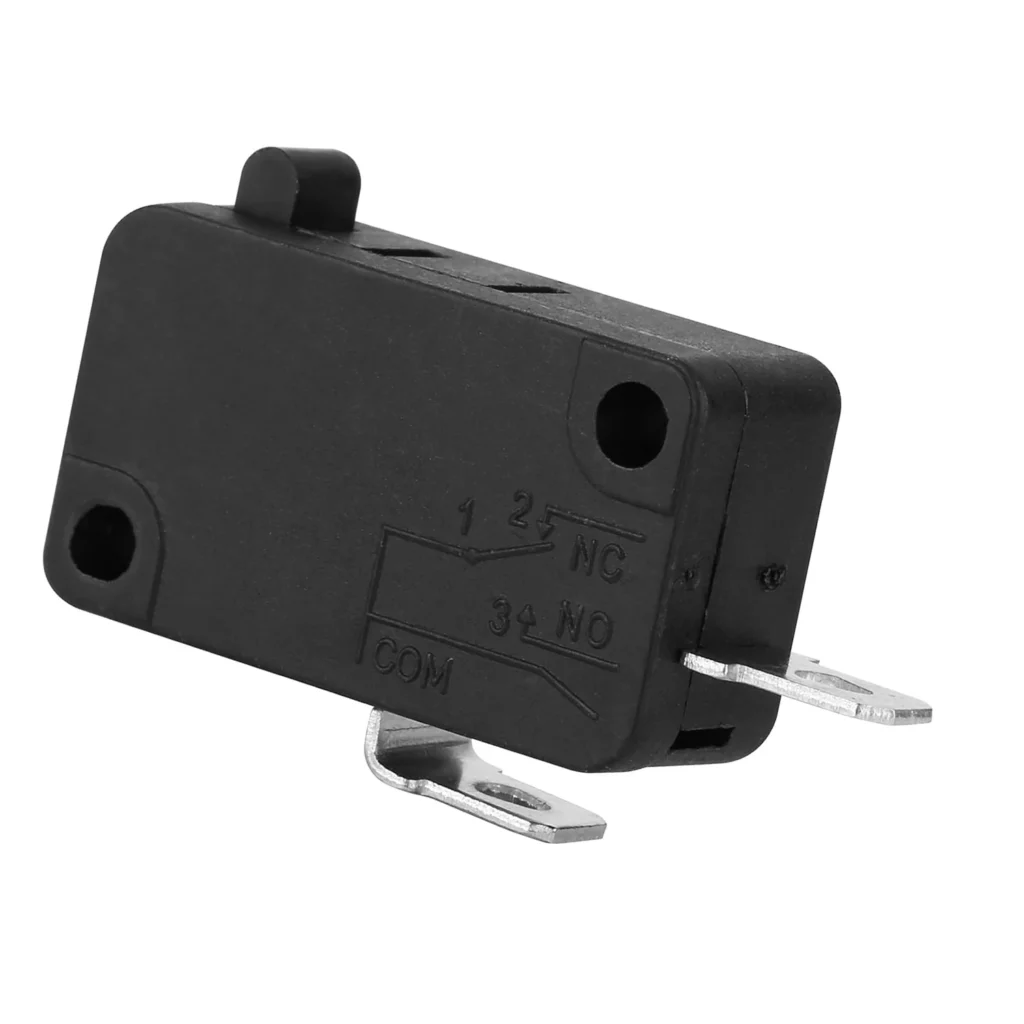
You load up your COSORI air fryer with marinated chicken wings, close the door, hit start... and nothing happens. No beep, no lights, no hot air. The display might be lit, but the unit refuses to run. Before you haul it to the curb, there's a 70% chance a tiny $8 switch is your problem.
The KW7-0 micro switch — that little clicking mechanism in the door latch assembly — fails constantly in air fryers, microwaves, and induction cookers. It's a mechanical safety interlock that tells your appliance "door closed, okay to operate." When it dies, your machine thinks the door's wide open even when it's fully shut.
Quick Symptom Check
Your appliance likely has a failed door switch if you're experiencing:
- Unit won't start — display works but heating/cooking cycle won't begin
- Intermittent operation — works if you press hard on the door or jiggle the handle
- No click sound — door closes silently instead of that satisfying "click"
- "Door open" error — message appears even with door fully closed
- Runs with door open — extremely dangerous, immediate repair needed
Cause #1: Worn Mechanical Contacts (65% of Cases)
The KW7-0 switch contains thin metal contacts that physically touch each time the door closes. After 5,000–8,000 cycles, these contacts wear down or develop carbon buildup from electrical arcing. This is the natural lifespan of these switches in high-use appliances.
How to diagnose: Remove the switch (unplug first!) and press the actuator button manually. You should hear a crisp click and feel definite resistance. If it's mushy, silent, or clicks but doesn't make electrical contact, the internals are worn.
Testing with a multimeter: Set to continuity mode. With the button unpressed, you should see infinite resistance (open circuit). Press the button — you should get a beep and near-zero resistance. No change? Dead switch.
The fix: Replace with KW7-0 (also sold as KW7-0A, KW7-1, or KW7-2 — they're functionally identical). Takes 10 minutes. Don't attempt to repair the switch itself — replacement switches cost $6–$10.
Cause #2: Broken Actuator Arm (20% of Cases)
The door latch has a plastic arm that physically presses the micro switch button when you close the door. On Power XL Vortex and COSORI models especially, this arm snaps off from repeated door slams or wear.
Visual check: Open the door and look at the latch assembly on the unit (not the door itself). You should see a small lever or tab that moves when you manually operate the latch. If it's missing, broken off, or doesn't move freely, that's your problem.
The fix: Sometimes you can replace just the latch assembly. Other times you'll need to replace the switch mounting bracket as a unit. Check if the switch itself still clicks properly — you might need both parts.
Cause #3: Misaligned Door Catch (8% of Cases)
The door catch (the part on the door that engages the latch) can shift over time, especially on units that get moved frequently. If it's misaligned by even 2–3mm, it won't press the switch fully.
Quick test: While the door is closed, press firmly on the door near the latch area. If the unit suddenly starts working, alignment is your issue.
The fix: The catch usually has two screws with slotted holes allowing adjustment. Loosen them slightly, shift the catch toward the latch side by 1–2mm, tighten, and test. You're looking for that definite "click" when the door closes.
Cause #4: Corroded Wire Connections (5% of Cases)
The spade terminals on the KW7-0 can corrode, especially in humid kitchens or if liquids have leaked into the control area. This creates intermittent connection that gets worse over time.
Look for: Green or white crusty buildup on the metal terminals where wires connect. The wire insulation might also look discolored near the connection point.
The fix: If the switch itself works but connections are bad, you can clean terminals with contact cleaner and fine sandpaper. Better solution: replace the switch and crimp on new terminal connectors to the wires. Use heat-shrink tubing for a permanent fix.
Cause #5: Failed Control Board (2% of Cases)
Rarely, the control board itself stops recognizing the switch signal even though the switch works perfectly. This usually follows a power surge or means the board is failing in multiple ways.
How to test: Replace the switch first (it's cheaper). If a known-good switch still doesn't work, and you've verified wire continuity from switch to control board, the board's the culprit.
Cost reality: Control boards run $60–$150 depending on model. At that point, compare repair cost to replacement unit cost, especially for budget air fryers.
When to Call a Pro
This is genuinely a DIY-friendly repair if you're comfortable with a screwdriver and can follow basic safety (unplug the unit!). Call a pro if:
- You find burned or melted wiring near the switch — indicates a short circuit
- The unit has other issues beyond not starting (burning smell, sparking, damaged heating elements)
- You're dealing with a high-end built-in microwave where cabinetry removal is needed
- Your appliance is still under warranty — DIY repairs void most warranties
For countertop air fryers and microwaves under $150, the service call often costs more than replacement. But for quality units or built-ins, switch replacement is absolutely worth it.
Frequently Asked Questions
Will any micro switch work as a replacement for the KW7-0?
Not safely. The KW7-0 is rated for 16A at 250VAC, which matches the power requirements of air fryers and microwaves. Generic micro switches from hobby electronics stores are typically rated for 5A or less and can overheat or cause fires in appliance applications. Stick with appliance-rated switches — the KW7-0, KW7-0A, KW7-1, and KW7-2 are all interchangeable and properly rated.
Can I bypass the door switch to make my appliance work?
Technically yes — you'd jumper the two wires together. But this is illegal in most jurisdictions and incredibly dangerous. The door switch prevents microwaves from irradiating your kitchen and stops air fryers from burning you. Appliances without functioning interlocks have caused house fires and serious injuries. Replace the $8 switch.
Why do these switches fail so often in air fryers?
Air fryers get used 3–5 times more frequently than traditional ovens, and that door gets opened and closed constantly to check food. A micro switch rated for 100,000 cycles sounds like a lot until you realize that's only 13 months of daily use in a busy kitchen. Add in the heat cycling and vibration from the convection fan, and you've got a part operating at its absolute limits. The switch isn't poorly made — it's just a consumable part like brake pads.
Diagnosed the problem?
KW7-0 · In Stock · Fast shipping