
Samsung Dishwasher Not Cleaning Dishes — 5 Causes & How to Fix
You unload your Samsung dishwasher expecting sparkling dishes, but instead you're staring at crusted-on food and cloudy glasses. The cycle completed — you heard it running — but somehow nothing actually got clean. Before you start hand-washing everything or calling for an expensive service visit, let's walk through what's actually happening inside that machine.
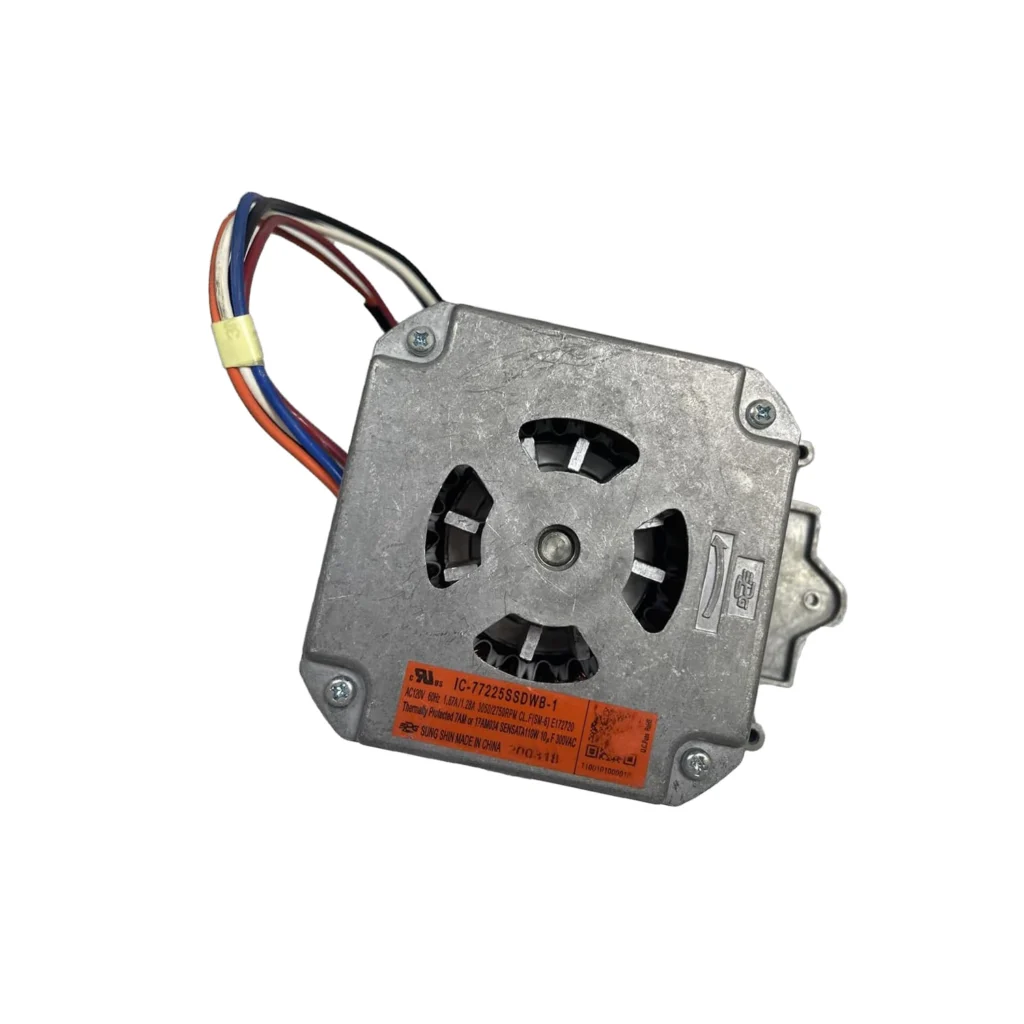
Most cleaning failures trace back to water circulation issues. Your dishwasher needs powerful spray arms hitting dishes from multiple angles, and that only happens when the circulation pump is functioning properly. On Samsung models like the DW80F600UTB, DW80K5050US, and DW80F800UWS series, the circulation pump motor (part DD81-01640A) is the heart of the washing system.
Quick Symptom Check
Before diving into repairs, confirm what you're actually experiencing:
- Dishes on top rack clean, bottom rack dirty — upper spray arm working, lower circulation weak
- Everything comes out dirty — no water pressure reaching spray arms
- Detergent pod still intact after cycle — water isn't circulating to dissolve it
- Quiet cycle with no washing sounds — pump not running at all
- Clean dishes but standing water in bottom — separate drain issue, not circulation
- Food particles redistributed on dishes — pump running but not filtering properly
The location and pattern of dirty dishes tells you a lot about what's failing.
Cause #1: Failed Circulation Pump Motor (Most Likely)
Probability: 40-50% of cleaning failures
The circulation pump motor does the heavy lifting — it pulls water from the sump, pressurizes it, and forces it through the spray arms. When this motor fails, you'll have weak spray or no spray at all. On Samsung dishwashers, these motors typically last 5-8 years before the bearings wear out or the motor windings fail.
How to diagnose:
- Start a wash cycle and listen carefully during the wash phase (not the drain phase)
- You should hear a strong humming/whirring sound — that's the circulation pump
- If you hear clicking, buzzing, or nothing at all, the motor's likely dead
- Open the door mid-cycle (it'll pause) — spin the lower spray arm by hand
- If there's no resistance and no water drips out, the pump isn't circulating
The DD81-01640A motor assembly is what fails here. It includes the pump housing, impeller, and motor unit. You'll need to access it from underneath the dishwasher, which means pulling the unit out from the cabinet.
Repair difficulty: Moderate — requires removing the dishwasher from cabinet
Cost: $175.99 for the motor assembly
Time: 60-90 minutes
Cause #2: Clogged Spray Arms
Probability: 25-30% of cleaning failures
Even with a working pump, your dishes won't get clean if the spray arm holes are plugged with food debris or hard water deposits. This is especially common if you're on well water or have high mineral content.
How to diagnose:
- Remove both spray arms (they typically twist off counterclockwise)
- Hold them up to a light — you should see light through every spray hole
- Use a toothpick or wire to clear any blocked holes
- Run them under hot water to flush out debris
- Check that the spray arms spin freely when reinstalled
If the holes are clear but the arms still don't spin during a cycle, you're back to a circulation pump problem — there's not enough water pressure being generated.
Repair difficulty: Easy — no tools required
Cost: Free
Time: 10 minutes
Cause #3: Blocked Circulation Pump Filter Screen
Probability: 15-20% of cleaning failures
Your Samsung dishwasher has a filter assembly at the bottom that catches food particles before they reach the circulation pump. When this filter gets clogged, water flow drops dramatically. You'll notice gradually worsening cleaning performance over several weeks.
How to diagnose:
- Remove the lower dish rack
- Twist and lift out the cylindrical filter assembly in the floor of the tub
- Separate the coarse filter from the fine mesh filter
- Look for trapped food, broken glass, or buildup
- Run both parts under hot water while scrubbing with a soft brush
Even a partially blocked filter reduces pump efficiency by 30-40%. Samsung recommends cleaning this filter monthly, but most people forget it exists until cleaning performance tanks.
Repair difficulty: Very easy
Cost: Free (regular maintenance)
Time: 5 minutes
Cause #4: Faulty Circulation Pump Check Valve
Probability: 10-15% of cleaning failures
The check valve prevents water from flowing backward when the pump cycles off. When this rubber valve deteriorates, water pressure drops and spray arm performance suffers. You might hear water sloshing around but see weak spray patterns.
How to diagnose:
This requires accessing the pump assembly (same access as replacing the motor). Look for a rubber flapper valve in the pump housing. If it's torn, cracked, or doesn't seal properly, it needs replacement. Often when the motor fails, the check valve is also degraded — they age together.
The good news: the DD81-01640A motor assembly includes a new check valve, so replacing the motor solves both problems.
Repair difficulty: Moderate
Cost: Included with motor assembly
Time: Same as motor replacement
Cause #5: Low Water Fill Level
Probability: 5-10% of cleaning failures
If not enough water enters the tub during the fill cycle, the circulation pump can't generate proper pressure even when it's working perfectly. This usually indicates a failing water inlet valve or kinked fill line.
How to diagnose:
- Start a cycle and open the door after it fills (before wash starts)
- Water should cover the heating element and reach about 1-2 inches up the tub sides
- If you see less than an inch of water, you have a fill problem
- Check the water supply valve under the sink — make sure it's fully open
- Inspect the fill line for kinks where it connects to the dishwasher
The circulation pump needs adequate water volume to function. Low water also makes the motor work harder, which can accelerate its failure.
Repair difficulty: Easy to moderate
Cost: $40-80 for inlet valve
Time: 30-45 minutes
When to Call a Pro
Here's my honest take after 20 years fixing appliances: if you've cleaned the filters and spray arms but dishes still aren't getting clean, you're looking at a circulation pump replacement. That's a pull-out-the-dishwasher job.
Call a pro if:
- You're not comfortable disconnecting water lines and pulling the unit out
- Your dishwasher is hardwired (not just plugged in) and you're unsure about electrical
- You've replaced the pump motor but still have the same problem (possible control board issue)
- You notice water leaking from underneath after reassembly
The pump replacement itself isn't rocket science, but accessing it requires care. If you crack a water line connection or cross-thread a mounting bolt, you're looking at additional problems.
For models DW80F600UTB/AA, DW80F600UTS/AA, DW80F600UTW/AA, DW80K5050UB/AA, DW80K5050US/AA, and similar Samsung dishwashers from 2013-2018, the DD81-01640A motor is the correct replacement. Double-check your model number on the sticker inside the door frame.
Frequently Asked Questions
Why does my Samsung dishwasher sound like it's washing but dishes come out dirty?
You're probably hearing the drain pump, not the circulation pump. The drain pump runs at the beginning and end of cycles and sounds similar. If the circulation pump motor has failed, you'll only hear draining sounds but never hear strong water spray during the wash phase. Open the door during a wash cycle — you should hear rushing water and see spray arm movement. If it's silent except for a hum, the circulation motor is dead.
How long should a Samsung dishwasher circulation pump last?
Expect 5-8 years with normal use. Heavy use (2+ cycles daily) or hard water can shorten this to 4-5 years. If your dishwasher is 7+ years old and the pump fails, also budget for a potential control board or door latch replacement in the next 1-2 years — components tend to age together. The pump itself is a wear item with bearings and seals that deteriorate over time.
Can I run my dishwasher if the circulation pump is weak but still working?
You can, but you're wasting water, detergent, and electricity while getting poor results. A failing pump also puts extra load on the control board, potentially shortening its life. More importantly, you're not actually sanitizing your dishes — the wash cycle needs 120°F+ water under pressure to kill bacteria. Hand-wash until you replace the pump, or you're just running dirty dishes through warm water baths.
Diagnosed the problem?
DD81-01640A · In Stock · Fast shipping