
Samsung Dryer Won't Heat or Overheats — 5 Causes & How to Fix
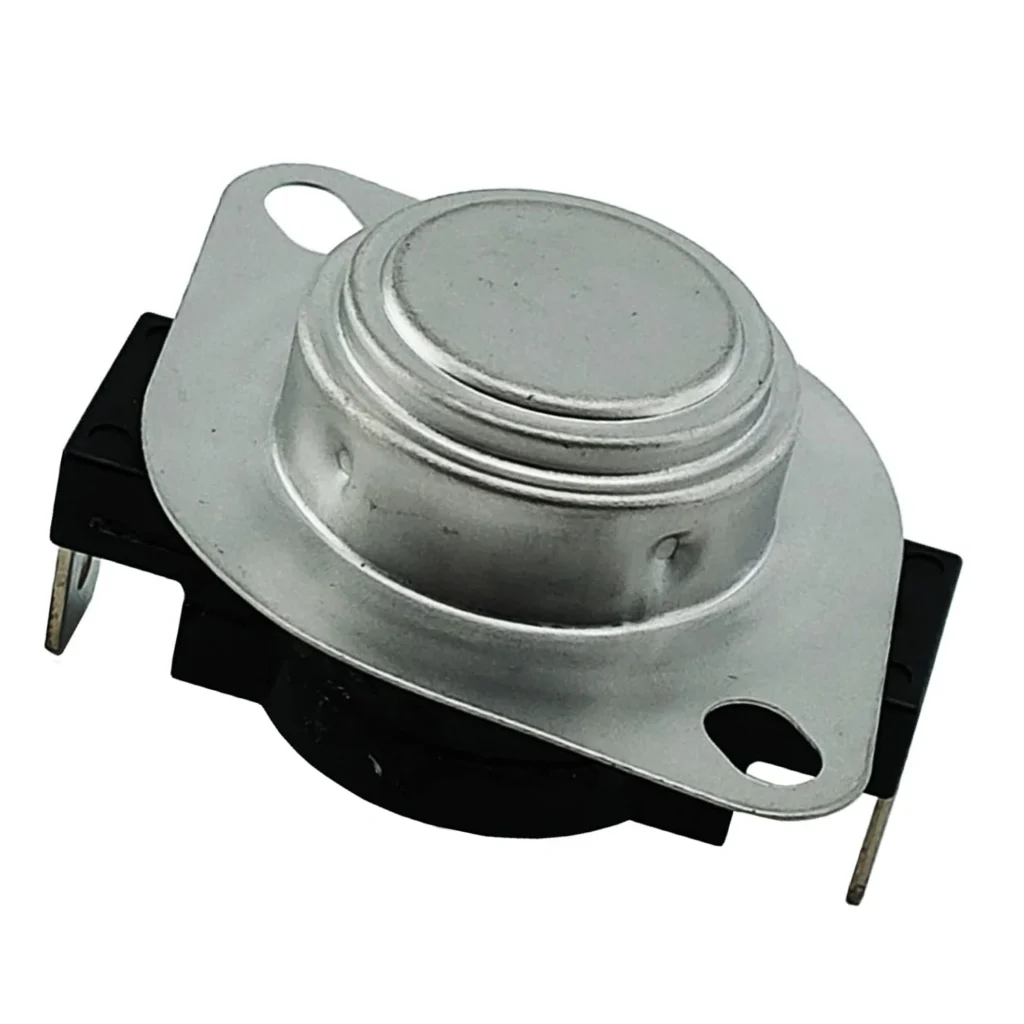
You throw a load of towels in your Samsung dryer, set it for 60 minutes, and come back to find them still damp and cold. Or worse — you open the door mid-cycle and get hit with a wave of scorching heat that shouldn't be there. Both scenarios point to the same culprit: your high-limit thermostat has either failed open (no heat) or is cycling erratically (overheating).
The DC47-00018A high-limit thermostat acts as your dryer's emergency brake. When temperatures climb past 280°F, it cuts power to prevent fires. Problem is, once it trips, many don't reset properly — leaving you with a dead heating element or a dryer that's way too aggressive.
Quick Symptom Check
Your Samsung dryer might have a bad high-limit thermostat if you're seeing:
- No heat at all — drum spins, timer counts down, but clothes stay cold
- Intermittent heating — works for 10 minutes, then goes cold, then heats again
- Overheating — clothes come out scorching hot or with burn marks
- Thermal fuse blown — complete power loss, won't start (thermostat failure caused secondary damage)
- Takes 2-3 cycles to dry — heating element cycles off too frequently
Here's the critical part: if your dryer overheated once, the high-limit thermostat has likely already tripped. These thermostats are designed as one-time safety devices. Unlike cycling thermostats that reset automatically, the high-limit stays open once it blows.
Cause #1: Thermostat Tripped Due to Blocked Vent (Probability: 60%)
This is the most common scenario. Your vent line accumulated enough lint that exhaust temperatures spiked above 280°F. The thermostat did exactly what it's supposed to do — it cut power to the heating element. But now it won't reset.
How to diagnose:
- Disconnect power and pull the dryer away from the wall
- Disconnect the vent hose — check for lint blockages
- Go outside and check the vent hood — make sure the flapper opens freely
- Use a multimeter to test the thermostat for continuity (it should read 0 ohms when cool; infinite resistance means it's blown)
The thermostat is located on the heating element housing, usually held by two screws. On models like the DV218AEW or DV219AEB, you'll access it from the rear panel.
The fix: Replace the DC47-00018A thermostat and clean your entire vent system. If you only replace the part without clearing the blockage, you'll blow the new thermostat within a week.
Cost: $39.99 for the thermostat + $0 if you DIY the vent cleaning, or $150-$200 for professional vent cleaning.
Cause #2: Cycling Thermostat Failed, Caused High-Limit to Trip (Probability: 25%)
The cycling thermostat regulates normal operating temperature (around 140-160°F). When it fails stuck-closed, the heating element runs continuously until the high-limit thermostat emergency-stops everything.
How to diagnose:
- Test the cycling thermostat (usually the larger of two thermostats on the blower housing)
- At room temperature, it should show continuity
- When heated with a hairdryer to ~150°F, it should open (no continuity)
- If it shows continuity at all temperatures, it's stuck closed
On Samsung models like the DV316BEW or DV331AGW, you'll find the cycling thermostat on the blower housing, accessible from the front lower panel.
The fix: Replace both the cycling thermostat AND the high-limit thermostat. The high-limit has already tripped and won't reset. Replacing just one leaves you vulnerable to the same failure.
Cost: Cycling thermostat runs $15-$25, plus the $39.99 high-limit.
Cause #3: Heating Element Grounded to Housing (Probability: 10%)
A heating element that's touching the metal housing creates a direct short, causing massive heat spikes. The high-limit thermostat trips almost immediately.
How to diagnose:
- Visually inspect the heating element coils through the rear access panel
- Look for any coils touching the metal housing or visibly broken
- Test element resistance: should read 8-12 ohms between terminals, infinite ohms from each terminal to ground
- If you get ANY continuity to ground, the element is shorted
The fix: Replace the heating element assembly and the high-limit thermostat. On models like the DV209AEW or DV210AEW, the element pulls straight out after disconnecting the wire harness.
Cost: Heating element assembly $35-$60 + $39.99 thermostat.
Cause #4: Blower Wheel Clogged with Lint (Probability: 3%)
Less common but devastating when it happens. Lint builds up on the blower wheel fins, reducing airflow to a trickle. Even with a clear external vent, internal temperatures skyrocket.
How to diagnose:
- Remove the front panel and lower access panel
- Inspect the blower wheel (usually on the right side behind the drum)
- Spin it by hand — it should rotate freely with no resistance
- Check for felt-like lint buildup between the fins
This failure is more common if you dry pet bedding or heavily-soiled work clothes. The fine lint gets past the lint screen and accumulates inside the cabinet.
The fix: Remove the blower wheel, clean it thoroughly with compressed air and a brush, replace the high-limit thermostat, and vacuum the entire interior cabinet.
Cost: Just the thermostat if the blower wheel cleans up; $40-$70 for a new blower assembly if the plastic is cracked.
Cause #5: Defective Thermostat Out of the Box (Probability: 2%)
Rare, but it happens. The thermostat arrives defective or fails during installation due to improper handling.
How to diagnose:
- Brand new installation with all other components testing good
- No vent blockages, no element shorts, no blower issues
- Thermostat shows no continuity even when completely cool
The fix: Test the new thermostat before installation. Touch your multimeter probes to the terminals — you should get a reading of 0-1 ohms at room temperature. If it's open circuit, don't install it.
When to Call a Pro
You can handle this repair if you're comfortable with a multimeter and basic hand tools. The thermostat itself is a simple two-screw replacement.
Call a technician if:
- You're getting continuity readings that don't make sense
- The dryer still won't heat after replacing the thermostat AND clearing all vents
- You find melted wiring or scorched components (indicates a more serious electrical fault)
- Your dryer uses 220V and you're not confident working with high-voltage appliances
A service call runs $150-$250 depending on your area. The thermostat replacement itself takes about 30 minutes once you have the panels off.
The Part You Need
The DC47-00018A high-limit thermostat works across dozens of Samsung and Kenmore dryer models, including the DV218AEW, DV219AEB, DV316BEW, DV331AGW, and DV400E series. It replaces part numbers AP4201898, PS4205217, and 35001092.
At $39.99, it's a straightforward fix that'll save you $200+ versus a service call — assuming you address the root cause that made it trip in the first place.
Frequently Asked Questions
Can I reset a high-limit thermostat instead of replacing it?
No. High-limit thermostats are one-time safety devices. Once they trip at 280°F, the internal contacts open permanently. There's no reset button. Some people try jumping it with a wire to test if it's the problem — that's dangerous and defeats the safety mechanism. Replace it.
Why did my dryer overheat if the high-limit thermostat is supposed to prevent that?
The high-limit prevents catastrophic overheating (fire risk), but your clothes can still get too hot before it trips. If the cycling thermostat fails first, temperatures can climb to 250-270°F before the high-limit cuts in at 280°F. That's hot enough to scorch fabrics but not hot enough to trip the safety. You need both thermostats working correctly.
How often should I replace the high-limit thermostat?
Never, unless it trips. These thermostats should last the life of the dryer if you maintain proper airflow. If you're replacing one, figure out WHY it tripped. Clean your vents annually, replace your flexible vent hose every 5 years, and don't overload the dryer. Most thermostats fail because of neglected maintenance, not defective parts.
Diagnosed the problem?
DC47-00018A · In Stock · Fast shipping