
Frigidaire Dishwasher Not Filling with Water — 4 Causes & How to Fix
You load the dishes, add detergent, hit start — and nothing happens. The cycle begins but no water flows in. Your Frigidaire dishwasher just sits there humming quietly, or worse, it starts the wash cycle bone-dry and leaves you with detergent caked onto dirty plates.
I've seen this exact scenario dozens of times with models like the FGID2466QF series. Most people assume it's a catastrophic failure, but honestly? It's usually a $50 part and 15 minutes of your time.
Quick Symptom Check
Before you start pulling panels, confirm what you're dealing with:
- No water enters the tub during fill cycle — pump runs but dishwasher stays dry
- Dishwasher fills slowly — takes 5+ minutes to fill when it should take 1-2 minutes
- Water pooling under the unit — visible leak near the front left corner under the door
- Error codes displayed — some models show error lights or beep patterns
- Clicking sound but no water — you hear the valve trying to open but nothing flows
If you're nodding along to any of these, keep reading. We'll go from most likely to least likely causes based on actual field failure data.
Cause #1: Clogged Water Inlet Valve (65% of Cases)
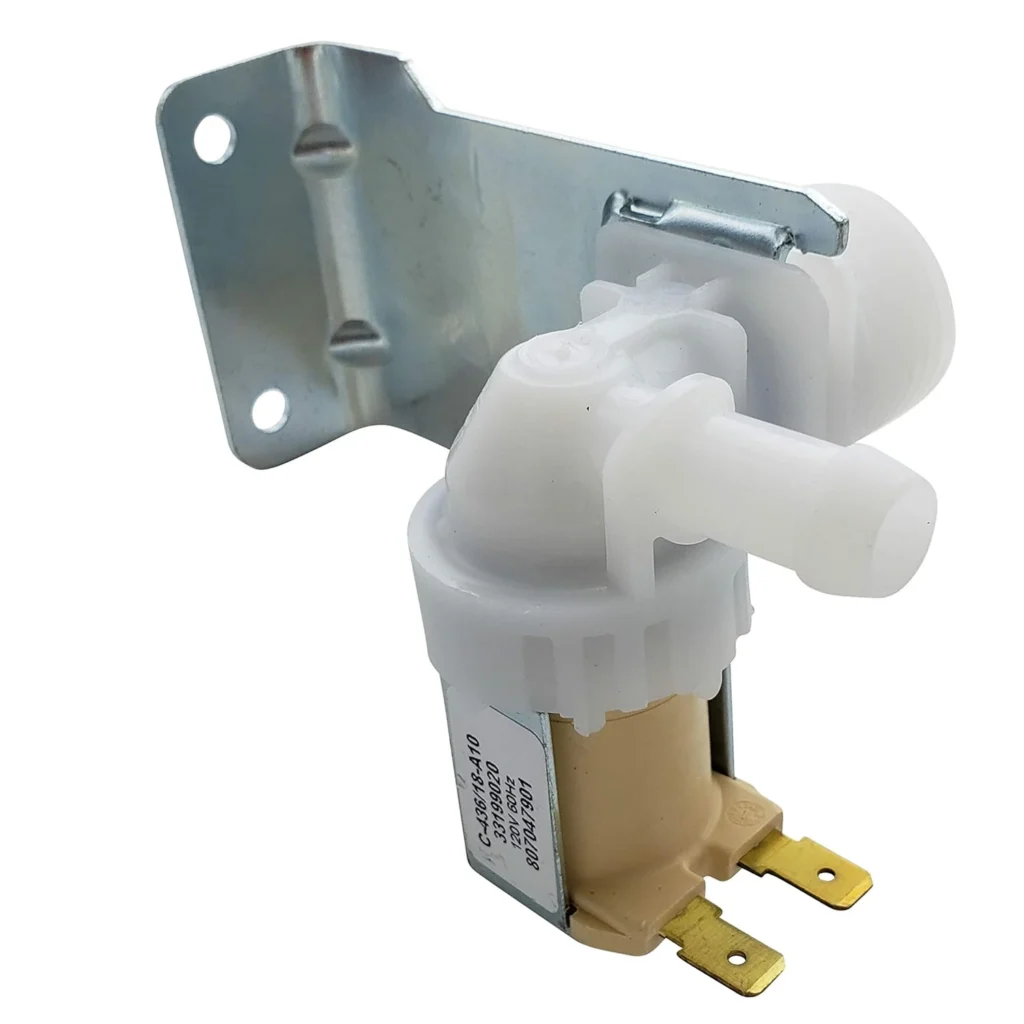
Here's what happens: the inlet valve has a small mesh screen that filters incoming water. Over time, mineral deposits, sediment, and that white chalky buildup clog this screen. One customer told me, "Replacing the inlet valve solved the problem. The old valve was somehow clogged with white sediment."
How to diagnose:
- Shut off water supply and power to the dishwasher
- Remove the lower front access panel (two screws at bottom corners)
- Locate the water inlet valve — it's on the left side, where the water line connects
- Disconnect the water line with an adjustable wrench
- Check the valve's inlet screen for white sediment or debris
If the screen looks crusty or discolored, that's your problem. The valve itself can't be cleaned effectively — mineral buildup hardens and restricts flow even after scrubbing.
The fix: Replace with part number 807047901. As one DIYer put it, "Simple replacement. Only took about 10 minutes." You'll need an adjustable wrench, pliers, and a screwdriver. Cost: $49.99 for the valve, zero for the 10-minute install.
Cause #2: Leaking Water Inlet Valve (20% of Cases)
Sometimes the valve doesn't clog — it just starts leaking. You'll notice water pooling under the dishwasher, usually on the left side. The leak typically happens at the valve connection points where the rubber seals deteriorate.
Diagnosis: Run a cycle and look under the unit with a flashlight during the fill phase. If water drips from the inlet valve connections, the internal seals have failed. One user reported: "The valve was leaking. So I ordered the correct part from appliance parts pros & now it works perfectly."
Internal valve leaks cause two problems: you lose water pressure (so the tub fills slowly or not at all), and you risk water damage to your flooring.
The fix: Same part — 807047901 replaces the entire valve assembly including all seals. Don't try to replace just the seals; they're not sold separately and wouldn't solve the underlying valve body wear anyway.
Cause #3: Faulty Water Supply Line (10% of Cases)
Before you blame the dishwasher, check what's feeding it. The supply line valve under your sink might be partially closed, kinked, or clogged. I've found this issue more often than I'd like to admit — usually after someone did plumbing work and didn't fully reopen the valve.
Quick test:
- Locate the water shut-off valve under your sink (usually a small quarter-turn valve)
- Disconnect the line from the inlet valve
- Place the end in a bucket and turn on the supply valve
- You should get strong, immediate flow
Weak flow or dribbling? The problem isn't your dishwasher — it's the supply plumbing. Check for kinks in the braided supply line or replace it entirely if it's old.
Cause #4: Failed Electronic Control Board (5% of Cases)
Least likely but still possible: the control board isn't sending power to the inlet valve. The valve is controlled by a 120V solenoid — when the board calls for water, it energizes the valve to open.
How to test: You'll need a multimeter. With the dishwasher in fill mode, test for 120V AC at the valve's wire connections. No voltage? The board's relay has failed.
This scenario is rare with inlet valve issues because you'd typically see other problems too — the dishwasher wouldn't start at all, or multiple functions would fail simultaneously.
The fix: Control board replacement runs $150-300 plus labor. Get a proper diagnosis before going this route.
When to Call a Pro
Be honest with yourself: this is genuinely an easy repair if the valve is the problem. You're working with cold water, low voltage, and basic hand tools. The repair time is 10-20 minutes according to technicians who do this daily.
Call someone if:
- You can't identify the inlet valve location (though it's always on the left side at the front)
- You've replaced the valve and still have no fill
- You see multiple error codes or the control panel is malfunctioning
- There's active flooding and you can't locate the leak source
Otherwise? Save the $150 service call. You've got this.
Frequently Asked Questions
Can I clean the inlet valve screen instead of replacing the whole valve?
You can try, but it rarely works long-term. The white sediment is calcium carbonate buildup that's chemically bonded to the metal screen. Even if you scrub it clean, the valve body itself often has internal mineral deposits that restrict flow. Plus, if the valve is leaking, cleaning won't fix failed seals. At $49.99 for a new valve that takes 10 minutes to install, replacement is the smarter move.
Will a clogged inlet valve cause other dishwasher problems?
Absolutely. If the valve allows some water through but not enough for a proper fill, you'll get poor cleaning results, detergent that doesn't dissolve, and potentially a burned-out wash pump trying to circulate water that isn't there. Some models also throw error codes when they detect insufficient water levels. Fix the valve first — it often resolves multiple symptoms at once.
My dishwasher is filling but very slowly — is that the inlet valve too?
Most likely, yes. Normal fill time is 60-90 seconds for a standard wash cycle. If yours takes 3-5 minutes, the valve screen is partially clogged. It's restricting flow but not completely blocked yet. This will get progressively worse as more sediment accumulates. Replace the valve now before it fails completely, ideally when you've got time to do it yourself rather than during an emergency when you need the dishwasher working for guests tomorrow.
Diagnosed the problem?
807047901 · In Stock · Fast shipping