
Whirlpool Ice Maker Not Making Ice — 5 Causes & How to Fix
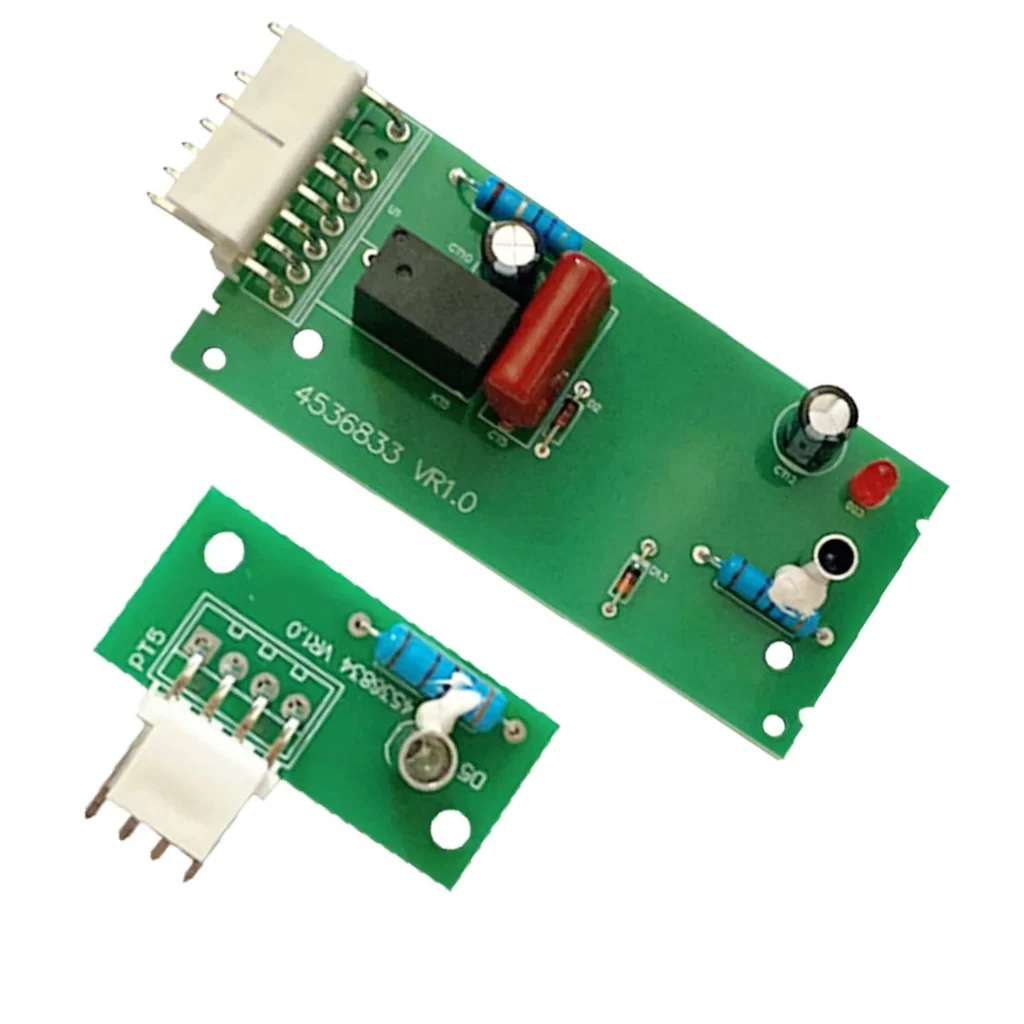
You open the freezer expecting ice cubes for your afternoon drink, but the bin's empty. Again. Your Whirlpool ED5FHAXSL02 or KitchenAid KSRS27IKSS02 ice maker has been sitting idle for days, and you're left wondering if you need to call someone or if there's a quick fix.
Here's the thing: most ice maker failures aren't about the mechanical parts wearing out. They're about the optical system that tells your ice maker when to cycle. That little optic emitter and receiver board — the "eyes" of your ice maker — fails more often than anything else.
Let's walk through the five most common reasons your ice maker stopped working, starting with the usual suspect.
Quick Symptom Check
Before you start troubleshooting, confirm what you're actually dealing with:
- Zero ice production — the ice maker isn't cycling at all
- Partial production — you get a few cubes, then nothing for hours
- Frozen fill tube — water isn't reaching the mold
- No ejection — ice forms but won't drop into the bin
- Overfilling — ice maker doesn't stop when bin is full
If you're dealing with complete silence from the ice maker and the bin detection seems off, you're looking at an optic control issue 80% of the time.
Cause #1: Failed Optic Emitter and Receiver Board (Most Likely)
Probability: 75%
The optic emitter and receiver board (part 4389102) is the brain that detects whether your ice bin is full. It shoots an infrared beam across the bin opening. When ice blocks that beam, the system stops making ice. When the board fails, your ice maker thinks the bin is perpetually full — even when it's bone dry.
How to diagnose:
- Open your freezer and locate the ice maker assembly
- Find the small rectangular board with two sensors facing the ice bin
- Check for visible damage, corrosion, or moisture around the board
- Remove the ice bin completely — if the ice maker still won't cycle after 2 hours, the optic board isn't registering the empty bin
The fix: Replace the optic emitter and receiver board. This is a straightforward swap — disconnect power, remove two mounting screws, unplug the wire harness, and install the new 4389102 board. Takes about 15 minutes.
Cost: The OEM board runs around $45-65. You'll save $150-200 in service call fees doing it yourself.
Cause #2: Frozen Water Fill Tube
Probability: 15%
If your freezer's running too cold or the defrost cycle isn't working properly, the water fill tube that supplies the ice maker can freeze solid. You'll see the ice maker trying to cycle, but no water enters the mold.
How to diagnose:
- Listen for the ice maker motor attempting to cycle
- Check if the fill tube (small aluminum or plastic tube at the back of the ice maker) has ice buildup
- Feel the tube — if it's rock solid, it's frozen
The fix: Thaw the tube with a hair dryer on low heat (never high — you'll crack plastic components). Once thawed, check your freezer temperature. It should be 0-5°F. If it's colder, adjust your thermostat. If this keeps happening, you've got a defrost system problem that needs separate attention.
Cause #3: Faulty Water Inlet Valve
Probability: 5%
The water inlet valve controls water flow to both your ice maker and water dispenser. If it fails in the closed position or gets clogged with sediment, no water reaches the ice mold.
How to diagnose:
- Test your water dispenser — if it's also not working, the inlet valve is likely the culprit
- Listen during an ice maker cycle — you should hear water flowing for 7-8 seconds
- Check water pressure to your fridge — needs at least 20 PSI to open the valve
The fix: Replace the water inlet valve. It's located at the bottom back of your refrigerator. Shut off water supply, disconnect water lines, remove mounting screws, and swap the valve.
Cause #4: Ice Maker Module Motor Failure
Probability: 3%
The motor module is what actually ejects the ice. When it burns out, ice forms but never drops into the bin. You'll see frozen cubes stuck in the mold tray indefinitely.
How to diagnose:
- Manually advance the ice maker with a screwdriver in the test hole
- If nothing moves or you hear grinding, the motor's shot
- If ice ejects during manual test but not automatically, check the optic board first
The fix: Replace the complete ice maker assembly. At this point, you're looking at $80-120 for the part, so you might as well get everything new rather than piecing together old components.
Cause #5: Defective Door Switch (Rare but Possible)
Probability: 2%
Some models disable the ice maker when the freezer door is open. If that door switch fails in the "open" position, your ice maker won't cycle even though everything else works fine.
How to diagnose:
- Check if your freezer light stays on with door closed
- Listen for clicking when you open and close the door
- Test continuity across the switch with a multimeter
The fix: Replace the door switch. Usually $10-15 and takes 5 minutes.
When to Call a Pro
Look, if you've tested the optic board, checked for frozen tubes, verified water flow, and you're still getting nothing — there might be a control board issue deeper in the refrigerator's system. That's when you call someone.
Also, if you're uncomfortable working with electrical connections or don't have a multimeter to test components, there's no shame in bringing in a tech. The diagnostic fee is usually $75-125, which gets credited toward repair if you proceed.
But honestly? The optic board swap is so simple that most people can handle it. If you can change a light fixture, you can replace this board.
Frequently Asked Questions
Will a bad optic board stop ice production completely?
Yes. When the optic emitter and receiver board fails, your ice maker thinks the bin is full even when it's empty. The system won't cycle at all because it believes there's nowhere for new ice to go. Replacing the 4389102 board typically restores normal operation within one freeze cycle (about 90 minutes).
How do I know if my ice maker problem is the optic board or something else?
Remove your ice bin completely and wait 2 hours. If the ice maker still doesn't attempt to cycle with an obviously empty bin, that's a dead giveaway the optic board isn't detecting the empty space. You should also check for power to the ice maker — if the green indicator light is off, you've got an electrical supply issue instead.
Can I use my refrigerator normally while waiting for the replacement part?
Absolutely. A non-functioning ice maker doesn't affect your refrigerator's cooling performance at all. You just won't have ice until you replace the failed component. Some people disconnect the ice maker entirely if they're not planning to fix it right away — just flip the wire shut-off arm up or turn the power switch to OFF.
Diagnosed the problem?
4389102 · In Stock · Fast shipping