
Bosch Dishwasher Lower Rack Hard to Pull Out — 5 Causes & How to Fix
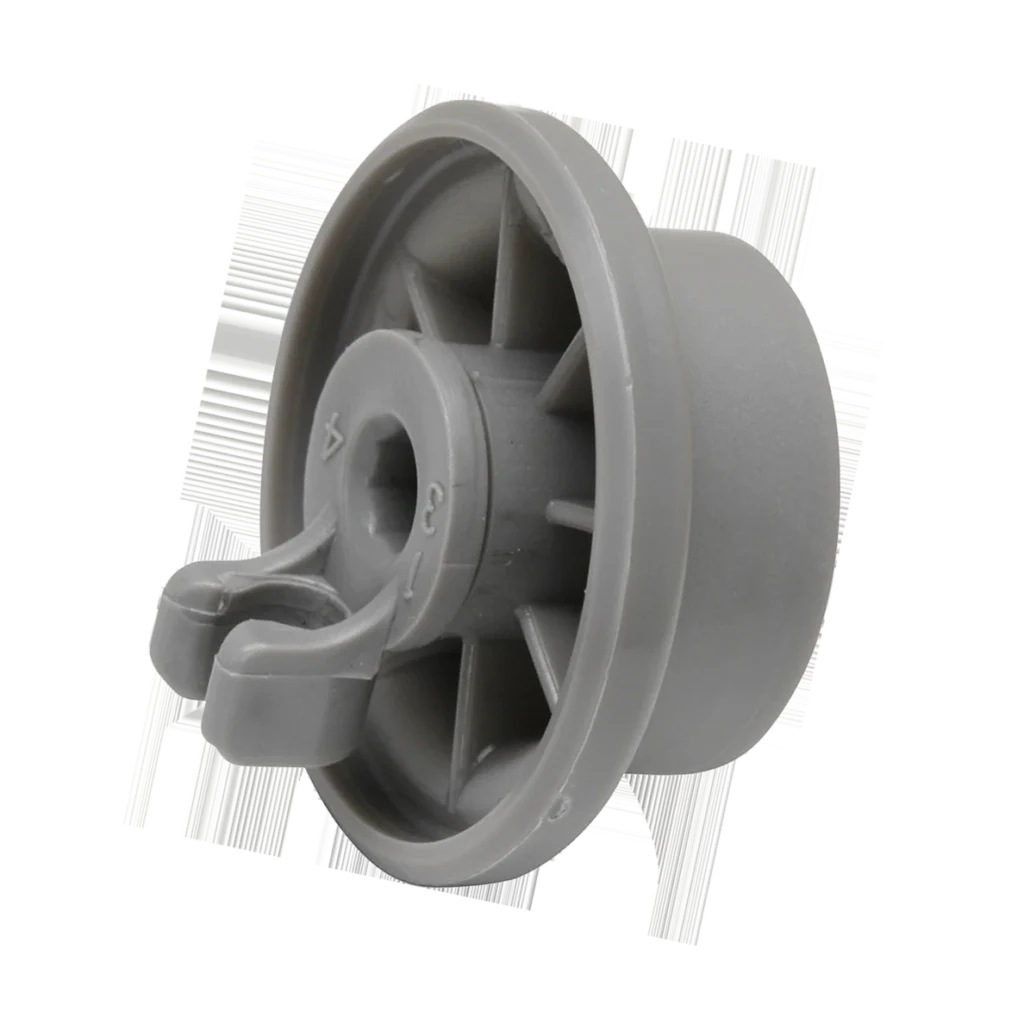
You load the dinner plates, push the lower rack in, and feel that familiar grinding sensation. The rack catches, sticks, then jerks forward with uneven resistance. If you're wrestling with your Bosch dishwasher's lower rack every single load cycle, you're dealing with worn or damaged rack wheels — and it only gets worse from here.
The lower rack in Bosch dishwashers like the SHX46A05UC, SHU43C05UC, and SHV46C03UC rolls on eight small wheels (part 165314) that take constant abuse from heavy dish loads and track debris. When these wheels crack, flatten, or seize up, the rack drags instead of glides.
Quick Symptom Check
Your lower rack wheels need attention if you notice:
- Rack requires excessive force to pull out or push in
- Grinding or scraping noise when moving the rack
- Rack tilts to one side or sits unevenly on the rails
- Visible cracks or flat spots on wheel surfaces
- Wheels don't spin freely when touched
- Rack catches or jumps at certain positions
Cause #1: Cracked or Broken Wheel Housing
Probability: 45%
The plastic housing that holds the wheel assembly cracks from repeated stress, especially if you've been forcing a stuck rack for weeks. The SHX46B05UC and SHU66C05UC models are particularly prone to this because of their heavy-duty rack design.
How to diagnose: Pull the lower rack completely out. Flip it over and inspect each wheel mount. Look for hairline cracks radiating from the mounting hole or complete breaks where the wheel hangs loose. Press on each wheel — if the housing flexes or the wheel wobbles excessively, it's fractured.
The fix: Replace all eight wheels as a set. Mismatched old and new wheels create uneven rolling resistance. The 165314 wheel pops into the rack mounting slots without tools — just align the square shaft, push firmly until it clicks, and verify it spins freely. Budget 15 minutes for all eight wheels.
Cause #2: Debris Jamming the Wheel Axle
Probability: 30%
Food particles, broken glass fragments, and mineral deposits wedge into the wheel axle, preventing rotation. This is especially common in homes with hard water.
How to diagnose: Remove the lower rack and try spinning each wheel with your finger. A healthy wheel spins several rotations with a single flick. If it barely moves or stops immediately, debris is likely packed in the axle sleeve. Look for white crusty buildup around the wheel center — that's mineral scale.
The fix: For wheels that still have intact housings, try cleaning first. Soak the entire rack in a tub with 2 cups white vinegar and hot water for 30 minutes. Use a toothpick or small brush to clear the wheel axle opening. If wheels still bind after cleaning, replacement is necessary. The 165314 wheel is designed as a replace-not-repair part because the sealed bearing can't be serviced.
Cause #3: Worn Flat Spots on Wheel Surface
Probability: 15%
Constant weight in the same position wears flat spots into the wheel circumference. The rack then "bumps" over these flat areas instead of rolling smoothly.
How to diagnose: Roll each wheel slowly while watching the point where it contacts the track. You'll see the wheel shape change from circular to slightly D-shaped if flat spots exist. Run your finger around the wheel edge — smooth wheels have consistent texture, worn wheels have distinct smooth patches.
The fix: There's no repair here. Once the wheel profile is compromised, replacement is the only solution. The 165314 wheels use a harder plastic compound than earlier Bosch wheels, so they'll last longer. When installing new wheels, make sure you're not overloading the lower rack beyond the 45-pound capacity — that accelerates wear.
Cause #4: Misaligned Rack Rail Assembly
Probability: 7%
The metal rails that guide the rack can bend or shift, forcing wheels to work against misalignment rather than rolling naturally.
How to diagnose: With the rack removed, sight down each rail from front to back. Rails should be parallel and level. Place a straightedge along the rail — any bowing or twist indicates damage. Also check that both rails are the same distance from the tub walls.
The fix: Minor rail bends can sometimes be corrected by loosening the mounting screws and repositioning, but severely damaged rails need replacement. If your rack has new wheels and still binds, this is likely your issue. Models like the SHE43M02UC have adjustable rail mounts that can be realigned without part replacement.
Cause #5: Wheels Installed Backwards or Incompletely
Probability: 3%
The 165314 wheel has a specific orientation. Installing it backwards or not seating it fully creates wobble and resistance.
How to diagnose: Look at the wheel from the side. The wheel should be flush against the rack bottom with no gap at the mounting point. If you can see the square axle shaft extending beyond the wheel face, it's not fully seated. The wheel should also spin in a plane parallel to the rack frame — tilted wheels indicate backwards installation.
The fix: Remove and reinstall following the correct orientation. The squared mounting shaft goes into the rack first, with the wheel facing outward. Push straight in with firm pressure until you hear/feel a distinct click. Test spin immediately — it should rotate 3-4 times from a single finger flick with no wobble.
When to Call a Pro
Wheel replacement is genuinely DIY-friendly — no tools required, no disassembly beyond removing the rack. However, call a technician if:
- New wheels don't solve the problem (indicates rail or tub damage)
- You find cracks in the rack frame itself near the wheel mounts
- The rack still binds after confirming rails are straight and wheels are correct
- You're uncomfortable removing and reinstalling the entire rack assembly
Service call cost: $120–$180. Just the wheels: $6–$9 per wheel, so roughly $50–$70 for a complete set of eight.
Frequently Asked Questions
Do I need to replace all eight lower rack wheels at once?
Yes, replace them as a complete set. Mixing worn and new wheels creates uneven rolling resistance that'll damage the new wheels faster. If two wheels failed, the other six aren't far behind — they've all carried the same loads for the same amount of time.
Will 165314 wheels fit my Kenmore or Thermador dishwasher?
The 165314 is the correct wheel for Bosch-manufactured dishwashers sold under Bosch, Thermador, and Gaggenau branding, plus certain Kenmore Elite models built by Bosch. Check your model number against the compatibility list — if it's SH-series Bosch or DWHD-series Thermador, you're good. Kenmore models in the 630.1xxxx range (Bosch-made) use this wheel.
How long do replacement rack wheels typically last?
Expect 5–8 years with normal use, which is about 3–5 wash cycles per week. Heavy users running the dishwasher daily may see 3–4 years. Overloading the lower rack or letting debris accumulate in the wheel axles shortens lifespan significantly. The 165314 superseded older part numbers (00165314, 420198) with improved materials that resist cracking better.
Diagnosed the problem?
165314 · In Stock · Fast shipping