
How to Extend Your Whirlpool Dryer Idler Pulley Life — Maintenance Guide
Always unplug dryer before inspection. Never reach into cabinet while dryer is plugged in. Belt and pulley are under spring tension.
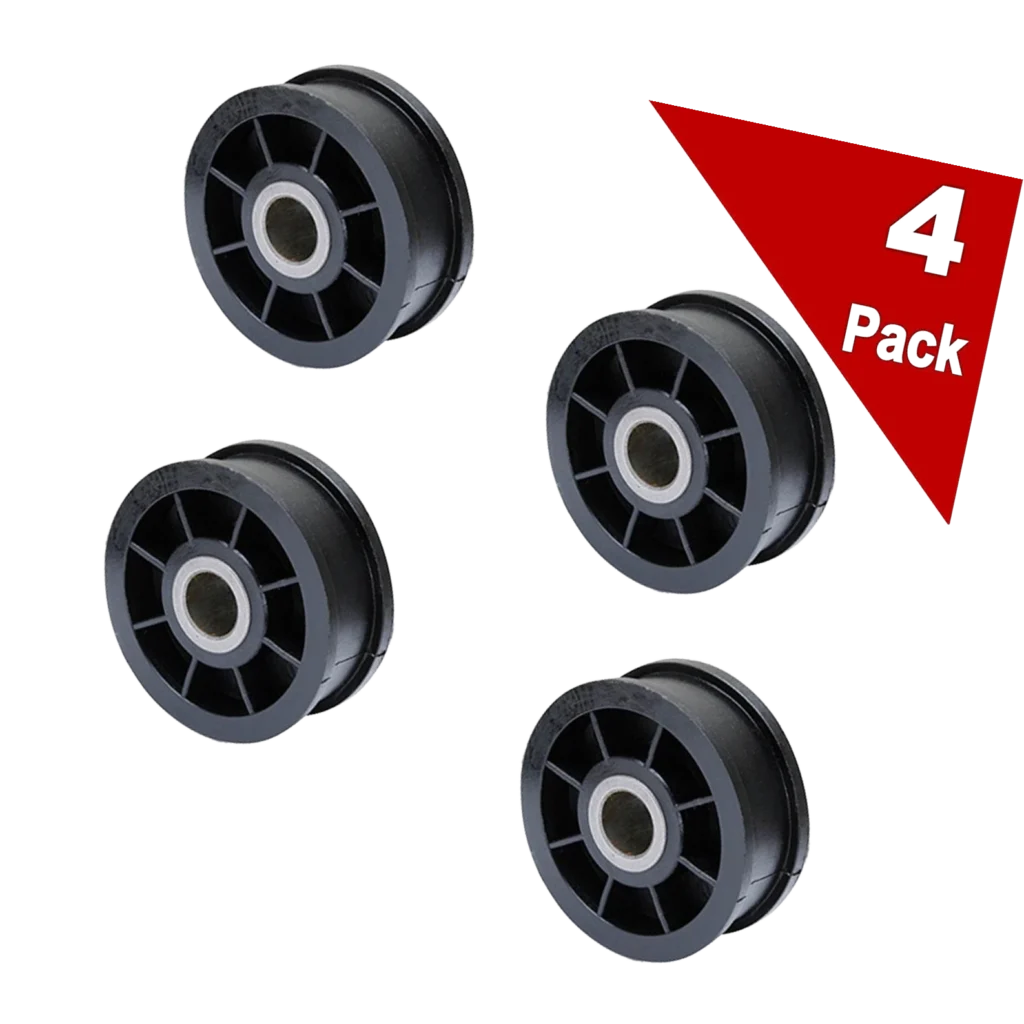
Most dryer idler pulleys fail between 8-12 years, but I've seen them last 20+ years with proper care. The difference? How hard your dryer works and whether you catch the warning signs early. If your Whirlpool, Maytag, or Amana dryer is making noise during cycles, that pulley bearing is probably telling you something.
How Long Should It Last?
The Y54414 idler pulley is designed for 10-15 years of normal use — that's about 3,000-4,500 drying cycles. Heavy users who run multiple loads daily might see 6-8 years. Light users can stretch it to 20 years.
Here's what kills them early:
- Lint buildup around the bearing — acts like sandpaper
- Belt tension problems — causes uneven wear on the wheel
- Running the dryer overloaded — puts extra strain on the pulley
- Ignoring early noise — damaged bearings accelerate wear
Models like the LER4634EQ2, WED5000DW0, and MEDC400VW0 all use this same pulley design. It's a workhorse part, but it needs attention.
Signs It's Wearing Out
Your dryer will tell you when the idler pulley needs attention. Don't wait until it seizes completely.
Squealing or Screeching During Operation
High-pitched noise that changes with drum speed means the bearing is dry or damaged. It'll start as a faint squeak during startup, then become constant. If you hear it on your SDG3606AWW or MGD5000DW0, the bearing's running without proper lubrication.
Thumping or Rattling Sound
A rhythmic thump every drum rotation suggests the pulley wheel has flat spots or the bearing has play. This happens when people keep running the dryer after the squealing starts. The damaged bearing allows the pulley to wobble.
Drum Not Spinning Properly
If your drum hesitates or won't turn at all, the pulley might be seized. The motor runs, you hear it humming, but nothing happens. On models like the NDE2330AYW and SDE3606AYW, this is often the idler pulley locked up from neglect.
Belt Keeps Slipping Off
A worn pulley wheel creates a groove that no longer holds the belt properly. You'll replace the belt thinking that's the problem, then it slips off again in a week.
Simple Maintenance That Extends Life
After Each Use — Keep Lint Away
Clean your lint trap every load. Sounds basic, but lint that escapes into the cabinet settles on the idler pulley and bearing. Over months, this creates a gritty paste that destroys bearings.
Every 3 Months — Visual Inspection
Unplug the dryer. Pull off the lower front panel (two screws on most Whirlpool models). Look at the idler pulley while manually rotating the drum:
- Does it spin freely with the drum?
- Any wobble or rough spots?
- Lint buildup around the shaft?
- Belt tracking centered on the wheel?
Use a flashlight and vacuum out any lint you see near the pulley. Don't use compressed air — you'll just blow lint deeper into the bearing.
Every 6 Months — Belt Tension Check
The idler pulley maintains belt tension. If the tension spring weakens, the pulley works harder and wears faster. Press down on the drum. It should have about 1 inch of play. More than that, and your belt's getting loose.
Annually — Deep Clean the Cabinet
Pull the dryer away from the wall. Remove the lower panel completely. Vacuum everything — the blower housing, around the motor, behind the drum. Lint accumulation here affects airflow, which makes the dryer run longer, which wears the pulley more.
When to Replace vs Maintain
Here's the honest truth: sealed bearings can't be lubricated or rebuilt. Once the Y54414 bearing starts making noise, you're on borrowed time. Maintenance prevents the damage, but it can't reverse it.
Replace immediately if:
- Constant squealing noise (bearing is gone)
- Pulley wheel has visible grooves or flat spots
- Bearing has any side-to-side play
- You see rust or corrosion on the shaft
You can maintain it if:
- No noise during operation
- Pulley spins smoothly by hand
- Belt tracks centered on the wheel
- No visible wear or damage
Don't try to "get a few more months" out of a noisy pulley. When it seizes completely, it can damage your belt, motor, and drum bearing. The Y54414 costs $18.99. Motor replacements run $200-300.
What Actually Works vs Internet Myths
Myth: You can lubricate the bearing with oil or grease.
Reality: The bearing is sealed. Adding lubricant just attracts more lint and makes things worse.
Myth: Belt dressing spray will stop the squealing.
Reality: If it's squealing, it's the bearing, not the belt. Belt dressing is a temporary cover-up.
Myth: You need special tools to inspect it.
Reality: A screwdriver and flashlight. That's it.
Frequently Asked Questions
How often should I replace the dryer idler pulley?
With proper maintenance, expect 10-15 years on average residential use. Heavy users (5+ loads weekly) should inspect it every 6-8 years. If you hear any noise, replace it immediately — don't wait for a scheduled interval.
Can I run my dryer if the idler pulley is making noise?
You can, but you shouldn't. A noisy pulley means the bearing is damaged and will fail soon. When it seizes, your belt can snap or your motor can overheat trying to turn the drum. Running it speeds up the damage and increases repair costs.
Will replacing just the pulley fix my noisy dryer?
Usually yes, if you catch it early. But inspect the belt at the same time — if the pulley damaged it (fraying, glazing, or uneven wear), replace both together. Also check that the drum bearings aren't worn. Sometimes what sounds like a bad idler pulley is actually the rear drum bearing.
Element showing wear?
Y54414 · Replace before it fully fails