
How to Extend Your GE Condenser Fan Motor Life — WR60X10358 Maintenance Guide
Always unplug the refrigerator before cleaning near the condenser fan motor. The fan can start unexpectedly when the compressor cycles on, and the blades spin at high speed.
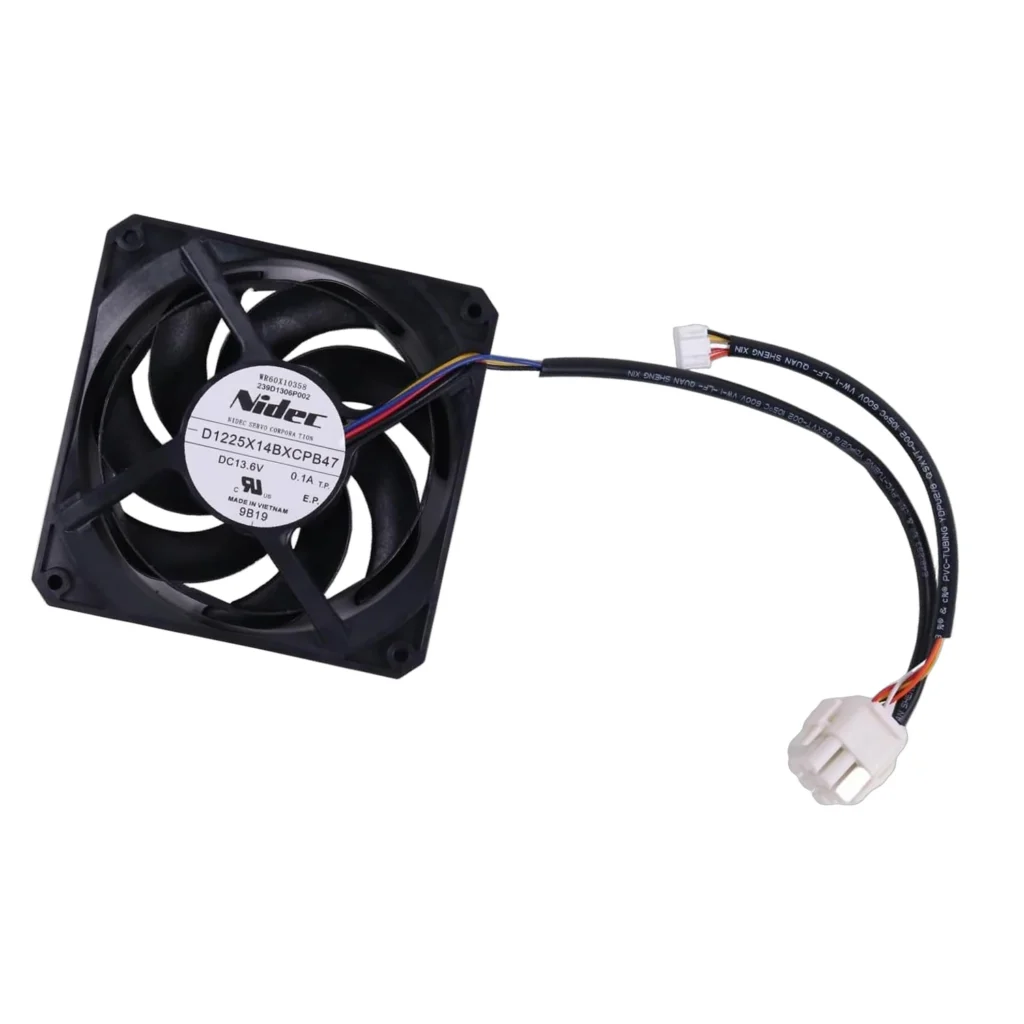
Most GE refrigerator condenser fan motors fail between years 8 and 12, but yours doesn't have to. The WR60X10358 motor runs constantly whenever your compressor's active — that's potentially 12-16 hours per day in a typical household. What kills it early isn't age, it's what accumulates around it.
I've replaced hundreds of these motors in French door models like the CFE28TSHBSS and CYE23TSDBSS. The pattern's always the same: coils caked with dust and lint, debris wrapped around the fan blade, and a motor that's been working twice as hard as it should for the past three years.
How Long Should It Last?
Under normal conditions, the WR60X10358 condenser fan motor should give you 10-15 years of service. That's the design lifespan. But here's what actually happens in real kitchens:
If your refrigerator sits in a spot where pet hair circulates, you're looking at 6-8 years maximum without intervention. If you've got a kitchen that generates cooking grease in the air (and every kitchen does), that greasy film acts like flypaper for dust on your condenser coils. The motor has to spin harder to move air through the restricted coils, and the bearings wear out faster.
Refrigerators installed in garages face even harsher conditions. Temperature swings, higher dust loads, and extended runtime during summer months can cut motor life to 5-7 years.
The fan blade itself matters too. If something (a twist tie, a chunk of packaging material, even a dead bug) gets caught in the blade, it creates vibration. That vibration translates directly to bearing wear. I've seen motors fail at year 3 because nobody noticed the slight wobble that started at year 1.
Signs It's Wearing Out
Your condenser fan motor will tell you it's struggling long before it quits completely. You just need to know what to listen and look for.
The Motor Runs But Makes Noise
This is your earliest warning. A healthy WR60X10358 is nearly silent — you might hear a gentle whoosh of air, but the motor itself shouldn't be audible from more than a couple feet away. When bearings start to wear, you'll hear grinding, squealing, or a rhythmic clicking. That clicking is the motor shaft wobbling in worn bearings.
Don't ignore this. A noisy motor isn't going to heal itself. The bearing clearances are only going to get worse, and eventually the motor will seize or the compressor will overheat because it's not getting adequate cooling.
Refrigerator Running Warmer Than Normal
Your condenser fan's job is to pull air across the condenser coils to dissipate heat. When the motor starts failing, it spins slower or intermittently. The compressor keeps generating heat, but that heat isn't being removed efficiently. You'll notice the refrigerator section creeping from 37°F to 40-42°F. The freezer might still seem okay initially, but eventually it'll soften too.
If you put your hand near the compressor area (bottom back of the fridge on most GE French door models), it'll feel excessively hot. That's your confirmation.
Motor Stops and Starts Randomly
This happens when internal motor windings are breaking down or when the motor's thermal overload keeps tripping. You might hear the motor kick on, run for 30 seconds, then go silent. Five minutes later it tries again. This intermittent operation means the motor's drawing too much current — it's working against internal resistance it wasn't designed for.
At this stage, you're days or weeks from complete failure. Start shopping for a replacement.
Complete Silence When Compressor Runs
If your compressor is running (you'll hear it humming and feel vibration) but there's no air movement from the condenser fan area, the motor's done. Either the bearings seized, the windings failed, or the capacitor (if equipped) died. Either way, you're running on borrowed time. The compressor will overheat and shut off on its thermal protector, the fridge will warm up, and you'll be scrambling to save your food.
When to Replace vs Maintain
Here's the honest truth: condenser fan motors aren't really repairable. You can't rebuild the bearings, and you can't rewind the motor. What you can do is maximize the lifespan through maintenance, or replace it when it's clearly failing.
Maintain it if: The motor runs quietly, temperatures are normal, and you're just doing preventive care. Clean the coils every 6 months, keep the area around the compressor clear, and you'll get your full 12-15 years.
Replace it if: You're hearing any abnormal noise, seeing temperature issues, or the motor's running intermittently. Don't try to nurse a failing motor along — the diagnostic time and potential food loss aren't worth the $93 you're trying to save. The WR60X10358 is a direct replacement for AP5781519 and WR60X10339, so you know you're getting the right part.
One exception: if your motor stopped completely, check the wiring connector first. I've seen connector terminals corrode and create an open circuit. Pull the connector, inspect the pins, and reconnect. If the motor still doesn't run, then replace it.
Frequently Asked Questions
How often should I clean the condenser coils to protect the fan motor?
Every six months minimum, quarterly if you have pets. Pull the fridge out, vacuum the coils with a brush attachment, then use a coil cleaning brush to get between the fins. The cleaner the coils, the less work the motor does, and the longer it lasts. If you live in a dusty area or have multiple pets, go to every three months. It takes 15 minutes and can double your motor's lifespan.
Can I replace the WR60X10358 with a different brand or universal motor?
Don't. The WR60X10358 is engineered for specific voltage, CFM rating, and mounting dimensions for GE refrigerators. Generic motors might physically fit but often run at wrong speeds or draw incorrect current, which can damage your control board. Stick with OEM or this exact compatible replacement. It's designed for models from CFE28TSHBSS to DFE29JGDABB and dozens of others — the engineering's already done.
Why does my new condenser fan motor run louder than the old one?
If you just installed a WR60X10358 and it's louder than expected, check three things: make sure the fan blade is tight on the motor shaft (loose blades vibrate), confirm nothing's touching the fan blade as it spins (shipping material, wire ties), and verify the motor's mounted securely to its bracket. New motors have tighter bearing tolerances and actually spin slightly faster than worn motors, so some increase in air noise is normal — but grinding or rattling isn't. That indicates an installation issue, not a defective motor.
Element showing wear?
WR60X10358 · Replace before it fully fails