
How to Extend Your GE Dual Defrost Heater & Thermostat Life — Maintenance Guide
Always unplug your refrigerator before performing any maintenance near electrical components. Defrost heaters carry line voltage and can cause severe shock. Never touch the heater element or thermostat while the unit is plugged in.
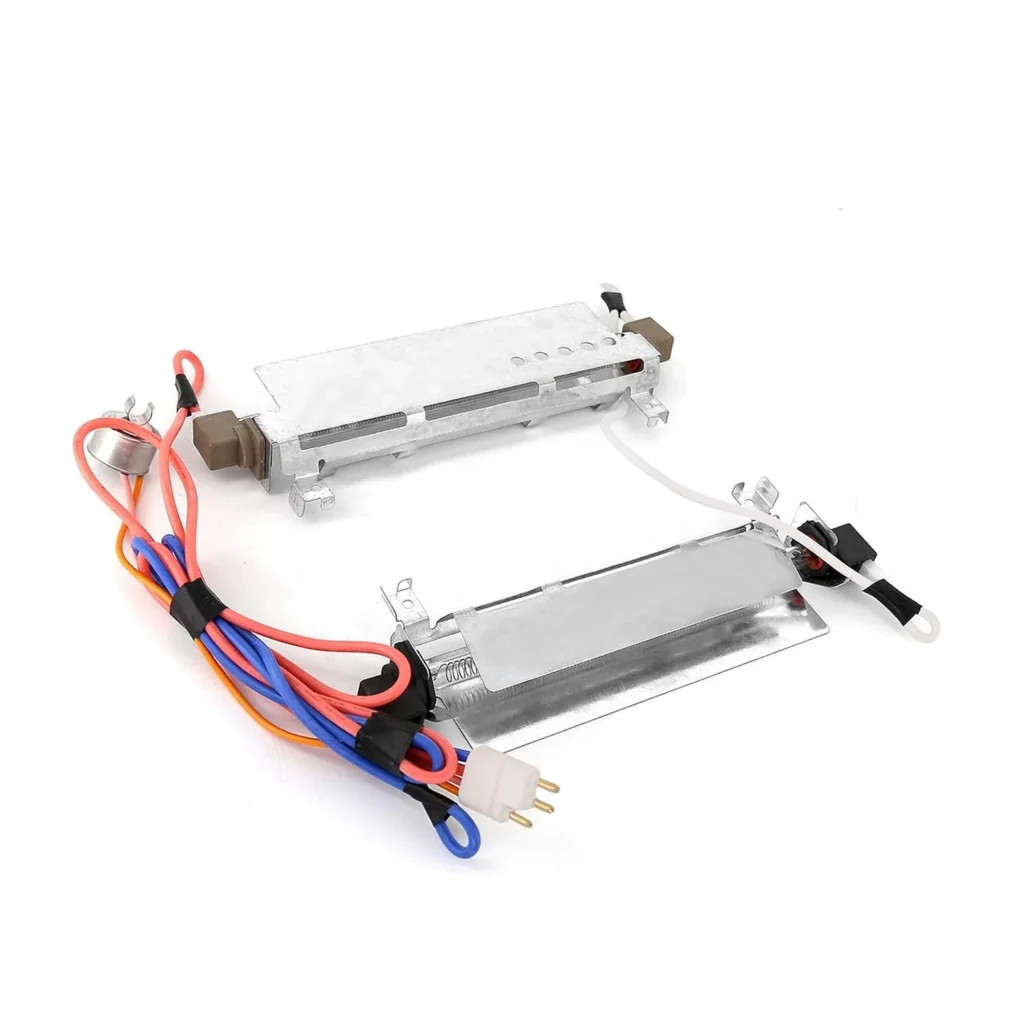
Here's a reality check: the defrost heater and thermostat combo in your GE fridge should last 8–12 years, but most homeowners replace them every 5–7 years. The difference? Usually just a few simple maintenance habits that prevent the early failures I see constantly — frost buildup forcing the system to overwork, moisture intrusion from neglected door seals, and debris blocking airflow.
The WR51X442 dual defrost kit controls one of your fridge's most critical jobs: preventing ice from choking out your freezer. When it fails prematurely, you'll notice your freezer section getting too warm first, then frost appearing where it shouldn't, and eventually your entire fridge struggling to maintain temperature. Let's talk about keeping this system healthy.
How Long Should It Last?
Under normal conditions, a defrost heater and thermostat setup will give you 8–12 years of reliable service. But here's what actually happens in real kitchens:
- Average lifespan: 5–7 years (with typical use and neglect)
- Well-maintained systems: 10–14 years (yes, longer than the manufacturer estimate)
- Prematurely failed units: 3–4 years (usually from preventable causes)
The biggest killer isn't the heater itself burning out — it's moisture and frost forcing it to cycle constantly. Every time your defrost system kicks on unnecessarily because you've got ice buildup from a worn door seal, you're burning cycles off its lifespan. Think of it like running your car's AC full blast with the windows down.
Compatible models like the LAT1000AAE and units using the WR51X342 or AP2071464 all share this vulnerability. The thermostat monitors coil temperature, and when frost keeps insulating those coils, it never reaches the proper temperature to signal the heater to shut off.
Signs It's Wearing Out
Your fridge will tell you when the defrost system is struggling. Pay attention to these specific warnings:
Freezer Section Too Warm
This seems backwards, but it's often the first sign. When the defrost heater starts failing, ice builds up on the evaporator coils. That ice blocks airflow, and suddenly your freezer can't pull heat out efficiently. You'll notice ice cream getting soft or frozen vegetables developing ice crystals. The thermostat might be stuck sensing cold temperatures from the ice itself while the actual freezer space warms up.
Frost Buildup in Unusual Places
A little frost on the back wall? Normal during defrost cycles. But when you're seeing frost accumulating on the ceiling, around air vents, or creeping onto food packages, your defrost system isn't keeping up. This happens when the heater is weak — it's firing, but not melting all the ice before the next cooling cycle starts. Each cycle leaves a bit more frost behind.
Fridge and Freezer Both Too Warm
When both compartments warm up together, you've usually got complete defrost system failure. The evaporator coils are completely iced over, blocking all airflow between the freezer and fridge sections. Your compressor is running constantly, working hard but accomplishing nothing because air can't flow across those frozen coils. This is the "I'm about to lose all my food" stage.
Fridge Too Warm While Freezer Works Fine
Sometimes the symptom is isolated to just the refrigerator section getting too warm. This can indicate the defrost thermostat is cycling incorrectly, affecting the temperature balance between compartments. The freezer hogging all the cold air because the defrost timing is off.
Preventive Maintenance That Actually Works
Most of this isn't about the defrost heater directly — it's about reducing the conditions that make it work overtime.
After Each Grocery Trip
Check your door seals every time you unload groceries. Wipe away any spills or debris on the gasket. A compromised seal lets humid room air into your freezer, creating frost faster than your defrost system was designed to handle. Run your hand around the closed door — if you feel cold air leaking, that seal needs attention or replacement.
Monthly Inspection
Open your freezer and look at the back wall and ceiling. You should see either no frost, or a thin, uniform layer that disappears during defrost cycles. If you're seeing thick frost, irregular patterns, or ice chunks, your defrost system is struggling. Don't wait — identify what's causing the excess moisture now.
While you're in there, check that nothing is blocking the air vents. I've seen defrost systems fail early simply because someone stacked frozen pizzas against the back wall, blocking airflow and creating frost pockets.
Quarterly Deep Check
Every three months, pull your fridge away from the wall (unplug it first). Vacuum the condenser coils underneath or on the back. Dirty coils make your compressor work harder, which makes the cooling system work harder, which creates more frost, which makes your defrost heater work harder. It's all connected.
While it's pulled out, check the drain pan and defrost drain tube. When that tube clogs, melt water from defrost cycles can't drain properly. It refreezes, creating ice dams that block the next defrost cycle. Clear it with hot water and a turkey baster.
Annual System Test
Once a year, manually initiate a defrost cycle to verify the system is working. On most GE models, you'll turn the thermostat to "Off," wait 30 seconds, then turn it back on while holding the door light switch. Listen for the defrost heater to click on. You should hear water dripping within 10–15 minutes as ice melts off the coils.
If you don't hear anything or the heater clicks on but shuts off immediately, you've got a problem developing. Catching it now means a $82 part replacement. Waiting until complete failure might mean losing $300 worth of food plus emergency service charges.
When to Replace vs Maintain
Here's the honest decision framework I use: If your defrost system has failed completely (continuous frost buildup, both compartments warm, heater not heating), maintenance won't save it. You need the WR51X442 kit.
But if you're catching early warning signs — occasional frost, one compartment slightly warm, inconsistent performance — you've got time to address the underlying causes first. Fix that door seal, clean those coils, clear that drain tube. Give your existing defrost system a fighting chance.
The exception: if you're already 10+ years in on your original defrost heater, and you're seeing any symptoms, just replace it. You've gotten your money's worth, and the thermostat has likely degraded even if the heater itself still works. Don't nickel-and-dime a 10-year-old component.
One more consideration: if you've replaced this defrost system once already, and it's failing again in under 5 years, something else is wrong. You've got a chronic moisture problem, an airflow issue, or possibly a failed sealed system creating excess frost. Fix the root cause or you'll be replacing WR51X442 kits every few years forever.
The Real Cost of Neglect
Let's put numbers to this. The WR51X442 kit costs about $82. Typical installation by a tech runs another $150–200. So you're looking at roughly $250 total for a repair.
Now consider: if basic maintenance (cleaning coils, checking seals, clearing drain tubes) extends your defrost system life by just 3 years, you've saved $250. But the real cost isn't the part — it's the emergency situation. Failed defrost system means potentially losing hundreds in groceries, often discovering the problem at the worst possible time, and paying emergency service rates because it can't wait.
Spending 15 minutes quarterly on prevention beats spending $250–500 on emergency repairs, every single time.
Frequently Asked Questions
How Often Should My Defrost System Cycle?
Most GE refrigerators run a defrost cycle every 8–12 hours of compressor run time, lasting about 20–30 minutes. You won't usually notice it happening. If you're hearing it cycle more frequently, or cycles are lasting longer than 30 minutes, you've got excess frost formation that needs attention. The defrost system is working overtime to keep up with a problem you haven't identified yet.
Can I Clean the Defrost Heater Element Itself?
No, and you shouldn't try. The defrost heater is mounted directly on the evaporator coils behind panels in your freezer. Accessing it means disassembling significant portions of your freezer interior, and once you're in there, you're better off just replacing it if there's a problem. The maintenance that matters happens outside those panels — door seals, drain tubes, condenser coils, and airflow management.
Will a Smart Plug or Timer Help Extend Defrost System Life?
Not really, and it might hurt. Some people try forcing manual defrost by unplugging their fridge on a schedule. Don't. Your GE's defrost system is designed to cycle based on actual compressor run time and coil temperature, not a clock. Forcing it with a timer creates temperature fluctuations that can actually cause more frost formation, not less. Trust the built-in system — just keep the conditions around it optimized and it'll manage itself fine.
Element showing wear?
WR51X442 · Replace before it fully fails