
How to Extend Your GE Refrigerator Compressor Inverter Board Life — Maintenance Guide
Always disconnect power at the circuit breaker before inspecting the compressor compartment. Capacitors can retain lethal voltage even when unplugged.
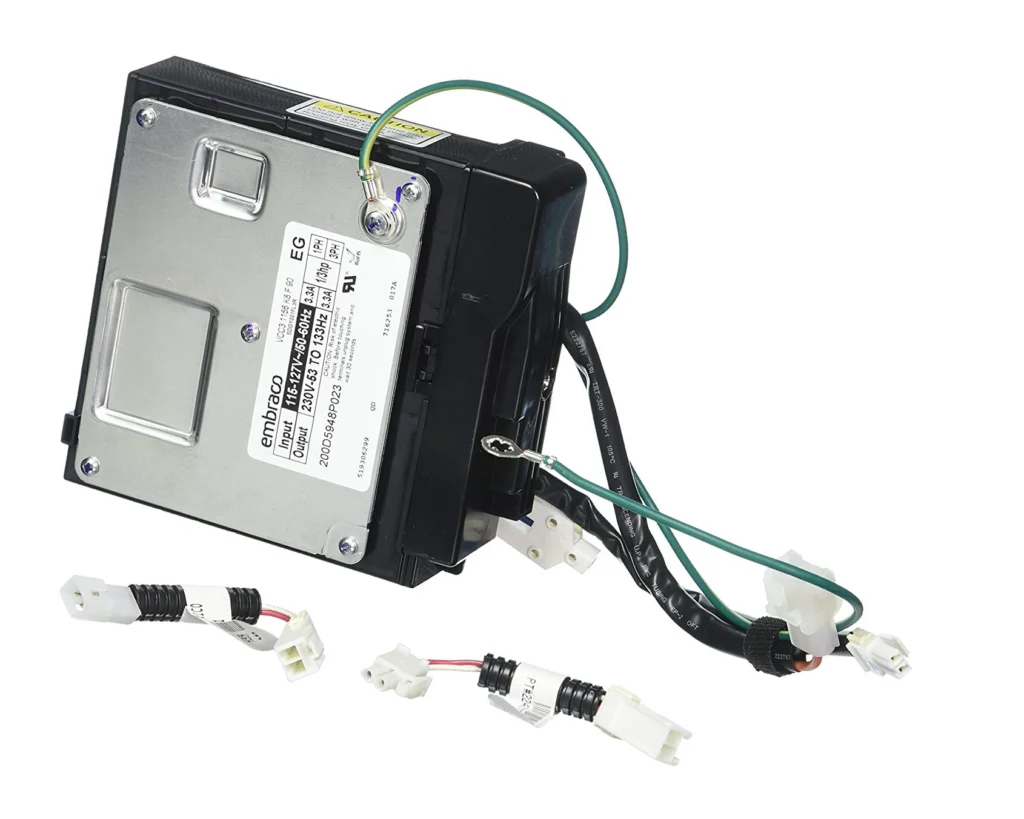
Here's the thing about compressor inverter boards in GE Monogram refrigerators: they're designed to last 10-12 years, but most fail around year 6 or 7. The difference? How well you protect them from the three things that kill electronics in refrigeration systems — heat buildup, voltage spikes, and moisture infiltration.
This $220 board controls your compressor's speed and efficiency. When it fails, you're looking at food spoilage, weird temperature swings, and a compressor that either won't start or runs constantly. Let's talk about keeping it alive longer.
How Long Should Your Inverter Board Last?
GE rates the WR49X10283 inverter control board for 10-12 years under normal conditions. But "normal" assumes stable voltage, proper ventilation, and a clean environment. In reality, here's what affects lifespan:
- Power quality — Voltage surges from HVAC systems or lightning can fry sensitive components instantly
- Ventilation — The board generates heat during operation; blocked airflow around the compressor compartment accelerates component degradation
- Humidity exposure — Condensation in the compressor area can corrode solder joints and create shorts
- Compressor stress — A failing compressor draws excessive current, overworking the inverter board
Models like the ZISS420DRISS, ZISS480DRHSS, and ZIS480NRH are particularly sensitive because they're built-in units with tighter ventilation tolerances.
Signs Your Inverter Board Is Wearing Out
Inverter boards don't just die overnight. They give you warnings if you know what to listen for. These symptoms tell you it's struggling:
Compressor Starts Then Stops Within Seconds
You'll hear the compressor kick on, run for maybe 3-5 seconds, then shut off. This cycle repeats every few minutes. The board's trying to start the compressor but can't maintain stable power delivery. This is often the first sign of failing capacitors on the control board.
Temperature Fluctuations Between Zones
Your fresh food section reads 42°F one hour, then 38°F the next, even though you haven't opened the door. The inverter board regulates compressor speed based on temperature sensors — when it's failing, those calculations go haywire. Check models like the ZISS360DXBSS where dual zones make this more obvious.
Error Codes or Blinking Lights
On GE Monogram units, you might see continuous blinking on the control panel or error codes that won't clear after power cycling. The board knows something's wrong internally and is trying to tell you.
Compressor Runs Constantly Without Cycling
The opposite problem — your compressor never stops. The inverter board has lost its ability to modulate compressor speed, so it's stuck at full throttle. Your electric bill will spike before the compressor burns out.
Protecting Your Investment
The inverter board sits in the compressor compartment at the bottom rear of your refrigerator. It's hot, cramped, and vulnerable. Here's how to protect it:
Install a whole-appliance surge protector — Not a basic power strip. Get a proper surge protector rated for refrigerators. This is your cheapest insurance policy against the #1 killer of inverter boards.
Maintain proper clearance — Built-in Monogram units need their specified ventilation gaps. If you've got a ZISS420DRGSS or ZISS480DRJSS installed too tight against cabinetry, heat buildup will cook the board's components prematurely.
Check the compressor compartment annually — Pull the lower grille and look for dust buildup on the condenser coils and around the compressor area. Dust acts as insulation, trapping heat right where you don't want it.
Listen to your compressor — A struggling compressor (grinding, clicking, or laboring sounds) puts extra load on the inverter board. If your compressor sounds wrong, address it before it takes out the board too.
When to Replace vs Maintain
Be honest with yourself here. If your refrigerator is 8+ years old and the inverter board is showing symptoms, replacement might be your play. These boards can't be "repaired" in any meaningful way — there are no user-serviceable parts.
However, if your unit is 3-5 years old and you're seeing early warning signs, aggressive maintenance (surge protection, cleaning, ventilation check) can buy you several more years.
One more thing: if you're replacing the board on a unit that's had compressor issues, fix the compressor problem too. A new board paired with a failing compressor is just throwing money away.
Frequently Asked Questions
Can I test the inverter board myself before replacing it?
Not really. These boards require specialized diagnostic equipment to test properly. You can check for obvious damage (burn marks, blown capacitors, corrosion), but without a multimeter and schematic, you're guessing. If you've got symptoms and have ruled out other causes (bad thermistor, compressor relay), the board is usually the culprit.
Will a surge protector really make a difference?
Absolutely. Voltage spikes are responsible for about 60% of inverter board failures in the first 7 years. A quality surge protector (not a cheap power strip) absorbs those spikes before they reach your board. It's a $40-60 investment protecting a $220 part.
Is this board compatible with all GE Monogram refrigerators?
No — it's specifically for models using the variable-speed compressor system, primarily the ZISS and ZIS series. Check your model number against the compatibility list. Using the wrong inverter board can damage your compressor or create a safety hazard. The WR49X10283 replaces part numbers WR55X10490, WR55X10685, WR55X10979, and WR55X11029, so if your original board has any of those numbers, you're good.
Element showing wear?
WR49X10283 · Replace before it fully fails