
How to Extend Your GE Washer Water Inlet Valve Life — Maintenance Guide
Always disconnect power and turn off water supply before servicing inlet valves. Water and electricity don't mix.
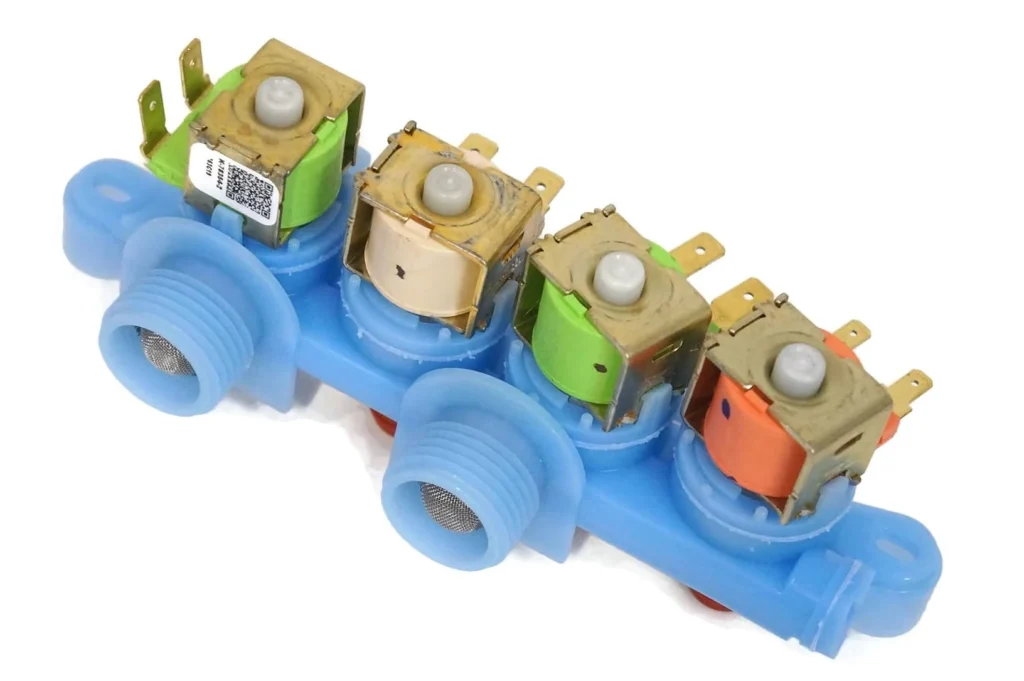
Most GE washer water inlet valves fail between 5-8 years, but yours doesn't have to. The WH13X26637 quad valve assembly controls water flow to four separate compartments in your washer — and when sediment builds up or screens clog, you'll know it fast. Your washer either won't fill, fills too slowly, or keeps filling when it shouldn't.
Here's the thing: most inlet valve failures aren't actually valve failures. They're maintenance failures.
How Long Should It Last?
Under normal conditions, the WH13X26637 should give you 7-10 years of service. But "normal" assumes your home's water pressure stays between 20-120 PSI and you don't have hard water or sediment issues.
Reality check: if you've got hard water or older pipes, you're looking at 5-6 years — sometimes less. High water pressure (above 80 PSI) wears out the solenoids faster. Sediment clogs the screens, forcing the valve to work harder. And mineral deposits? They'll lock up those tiny filter screens in no time.
The valve assembly itself consists of four separate solenoid valves, each controlling water flow to different dispenser compartments. When one solenoid fails, you'll notice specific issues with certain wash cycles.
Signs It's Wearing Out
Your washer will tell you when this valve's struggling. You just need to know what to listen for.
Water Fills Extremely Slowly or Not at All
This is symptom number one. You start a cycle, walk away, come back 20 minutes later — and the drum's barely got water in it. Or worse, bone dry. Check your inlet screens first before assuming the valve's dead. Nine times out of ten, it's clogged screens restricting flow.
Pull the hoses off the back of the machine. You'll see small mesh screens inside the valve inlets. If they're brown, crusty, or packed with sediment, that's your problem right there.
Washer Overfills or Won't Stop Filling
The opposite problem: water keeps coming. The valve's supposed to close when it gets the signal from the control board, but a failing solenoid might stick open. You'll see water continuously flowing into the drum, potentially overflowing if you don't catch it.
This usually means the solenoid coil has weakened or the valve seat has worn down and won't seal properly anymore. Once you're at this point, cleaning won't fix it — you need a replacement.
Only Hot or Only Cold Water Enters
The quad valve has separate inlets for hot and cold water. If only one temperature's working, that specific solenoid has likely failed. You might notice your whites aren't getting clean (no hot water) or your delicates are getting damaged (no cold water mixing in).
This is actually one of the clearer diagnostic signs that the valve assembly itself — not just the screens — has a problem.
Preventive Maintenance That Actually Works
You can't prevent every failure, but you can definitely push that lifespan toward the 10-year mark instead of the 5-year mark.
Check and clean inlet screens every 6 months. Turn off the water supply, disconnect the hoses, and pull out those little mesh screens. Rinse them under running water, use an old toothbrush if needed. Takes five minutes. Saves you hundreds.
Install a whole-house water filter if you have sediment issues. If your screens are getting clogged every few months, the problem's upstream. A basic sediment filter costs $30-50 and installs in minutes.
Test your water pressure. Grab a pressure gauge from any hardware store (under $10). Screw it onto an outdoor spigot and turn on the water. If you're over 80 PSI, install a pressure regulator. High pressure doesn't just wear out valves — it destroys hoses, pumps, and seals throughout the machine.
Run a cleaning cycle monthly if you have hard water. Use a washing machine cleaner or white vinegar. This prevents mineral buildup inside the valve body and throughout the water distribution system.
When to Replace vs Maintain
Be honest with yourself here. If your screens are clogged, clean them. That's a five-minute fix. But if you've got actual valve failure symptoms — won't stop filling, makes buzzing sounds, only one temperature works — cleaning won't help.
Testing the valve requires a multimeter to check solenoid resistance (should read 500-1500 ohms typically) and verifying it opens when 120V is applied. If you're not comfortable with electrical testing, just replace it. At $51.99 for the WH13X26637, it's not worth spending an hour troubleshooting a marginal valve.
Also consider replacement if your valve is more than 8 years old and you're experiencing any performance issues. You're on borrowed time anyway, and you don't want it failing mid-cycle three months from now.
The WH13X26637 fits dozens of GE and Hotpoint models including the GTW680 and GTW685 series washers. Verify your model number matches before ordering — it's printed inside the door or on the back panel.
Frequently Asked Questions
Can I clean the valve internally if it's sticking?
Technically yes, but it's rarely worth it. You'd need to disassemble the valve body, clean the solenoid plungers and seats with vinegar, then reassemble with new gaskets (which you won't have). By the time you've invested two hours into this, you could've installed a new valve and moved on with your life. Clean the screens — replace the valve if it's actually malfunctioning.
Why does my valve make a loud buzzing noise?
That buzzing means the solenoid coil is energized but the plunger isn't moving smoothly. Usually it's mineral buildup on the plunger or a weakening coil. Sometimes low voltage from the control board. The buzzing itself won't hurt anything immediately, but it indicates the valve's struggling and will likely fail soon. Check your inlet screens first — restricted flow can cause this. If screens are clean and it still buzzes, plan on replacing the valve assembly.
Do I need to replace all four valves if only one fails?
The WH13X26637 is a complete quad valve assembly — all four solenoids are built into one unit. You can't replace just one. But that's actually good news because if one solenoid's failing, the others aren't far behind. They've all experienced the same water conditions and operating hours. Replace the whole assembly and you're done for another 7-10 years.
Element showing wear?
WH13X26637 · Replace before it fully fails