
How to Extend Your GE Microwave Magnetron Life — Maintenance Guide
Magnetrons operate with high voltage (over 3000V) even when unplugged due to capacitor charge. Discharge the high-voltage capacitor before any internal work. Microwaves can cause serious burns — never bypass door interlocks or operate with the cabinet open.
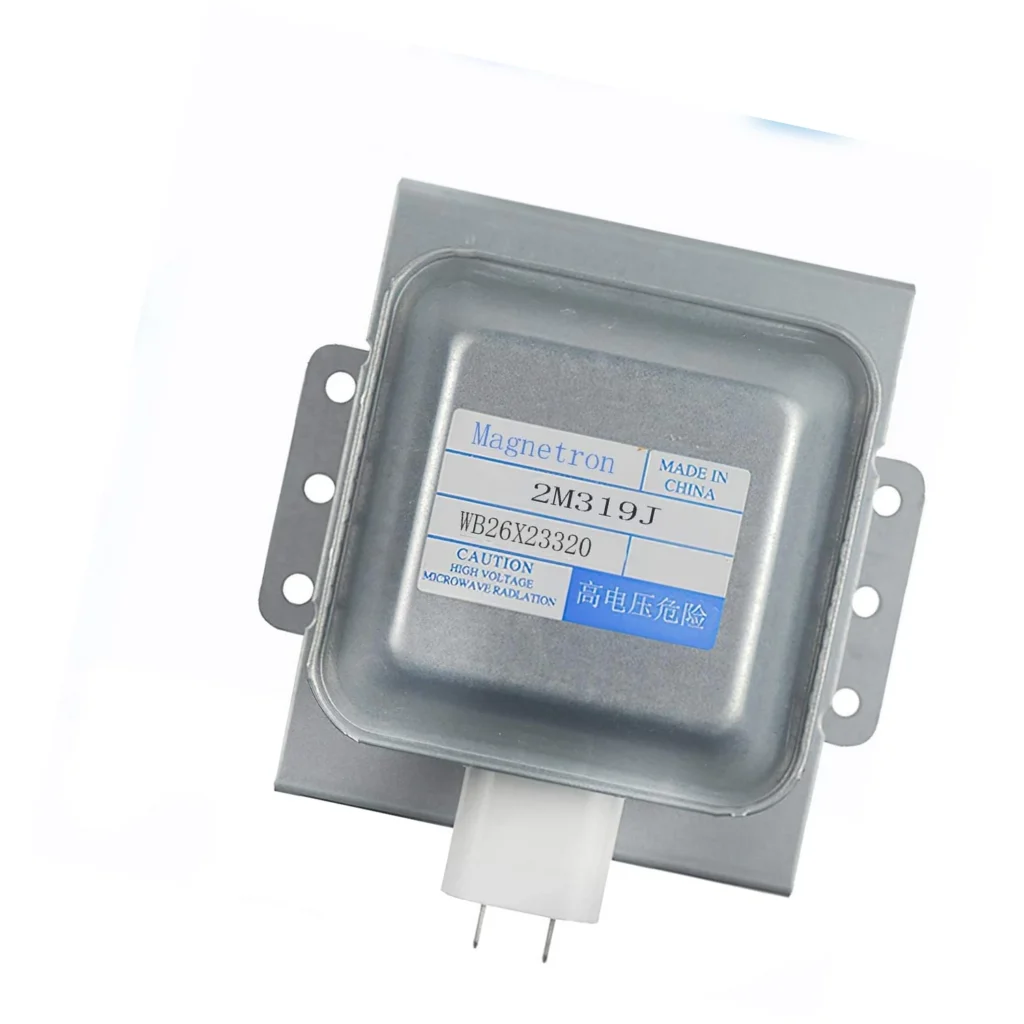
Most microwave magnetrons fail between 5-8 years, yet the component itself is rated for 2,000+ hours of operation. That's roughly 10 years at typical household usage. So why do so many die early? Because we're slowly killing them with bad habits and neglected maintenance. The WB27X11211 magnetron in GE and Hotpoint microwaves like the JVM3160DF series isn't cheap at $313, so understanding what shortens its life is worth your time.
How Long Should Your Magnetron Last?
Here's the reality: a magnetron in models like the JNM3161DF or AVM4160DF should give you 8-12 years under normal use. That's heating leftovers, cooking the occasional dinner, maybe popcorn twice a week. But I've seen them fail at year 3.
What affects lifespan:
- Running empty — Even once can permanently damage the magnetron. The microwaves bounce back with nowhere to go, overheating the antenna dome.
- Ventilation blockage — These units pull cooling air through side vents. Block them and the magnetron runs 30-40°F hotter than designed.
- Voltage fluctuations — The high-voltage circuit feeding your magnetron hates power surges. One bad storm can weaken it.
- Dirty waveguide cover — That mica sheet inside the cooking cavity protects the magnetron opening. When it's caked with food splatter, arcing begins.
The JVM3160DF1BB and similar over-the-range models have an additional challenge: they're mounted in tight cabinets where heat builds up faster than countertop units.
Signs Your Magnetron Is Wearing Out
Magnetrons don't just quit overnight. They give warnings, but most people miss them until the microwave won't heat at all.
Food Heats Unevenly or Takes Longer
Your coffee takes 2 minutes instead of 90 seconds. The edges of your plate are hot but the center's cold. This happens when the magnetron's output drops below spec — it's still generating microwaves, just not at full power. The antenna dome inside is degrading, reducing efficiency by 20-30%.
Buzzing or Humming Gets Louder
All magnetrons hum during operation — that's normal. But when the hum becomes a harsh buzz or changes pitch, the internal magnets are weakening or the filament is failing. On the WB27X11211, this often happens around year 6-7. If you hear it, you've got maybe 6-12 months left.
Burning Smell When Running
Not food burning — a sharp, electrical smell. This indicates the magnetron's antenna is arcing or the internal insulation is breaking down. Sometimes you'll see a flicker of light inside the waveguide opening (right side wall in most GE models). That's the magnetron essentially self-destructing.
Microwave Trips the Breaker
A failing magnetron draws erratic current. The high-voltage capacitor tries to compensate, but eventually the whole circuit pulls too many amps and your breaker pops. This isn't always the magnetron — could be the capacitor or diode — but it's in that power system.
Extending Magnetron Life: What Actually Works
You can't service a magnetron — it's a sealed vacuum tube. But you can protect it.
Never Run It Empty
Not even for 5 seconds to test if it works. Always have a cup of water inside. The microwaves need something to absorb into, or they reflect back into the magnetron and superheat the antenna. I've seen magnetrons destroyed in under 30 seconds of empty operation.
Keep the Waveguide Cover Clean
That rectangular or square mica sheet on the right interior wall (in most GE models) covers the magnetron's waveguide opening. When grease and food buildup on it, electrical arcing starts. The arc burns through the mica, then burns the waveguide, and eventually damages the magnetron antenna.
Clean it every 2-3 months: wipe with a damp cloth and mild detergent. If it's already burned or warped, replace it. It's a $6 part that protects your $313 magnetron.
Don't Block Ventilation
The JNM3161MF and similar models have intake vents on the bottom and sides. Exhaust is typically through the top. Stack cookbooks on top? Shove it tight against the wall? You're trapping heat. The magnetron relies on that airflow to stay within its 150°C operating limit. Check vents monthly — pull out any dust buildup.
Use a Surge Protector
Microwaves pull 1000-1200 watts, so most people plug them directly into the outlet. But that high-voltage transformer and capacitor feeding your magnetron are vulnerable to voltage spikes. A basic surge protector ($15-20) rated for 1500+ watts is cheap insurance.
Let It Cool Between Heavy Use
Running it continuously for 15-20 minutes (like cooking a whole meal) heats up the magnetron significantly. If you're doing back-to-back cooking, let it sit 3-5 minutes between cycles. The cooling fan keeps running after you stop it — let it finish before starting again.
When to Replace vs. Maintain
Here's the honest answer: if your magnetron is failing, you're replacing it. There's no repair. The question is whether you replace just the magnetron or the whole microwave.
Replace the magnetron (WB27X11211) if:
- The microwave is less than 10 years old
- The control board, door, and turntable all work fine
- It's a built-in or over-range model (labor to remove/reinstall is already a sunk cost)
- The model (like JVM3160DF4WW or JNM3161DF3WW) is still supported with parts
Replace the whole microwave if:
- It's over 12 years old (other components are near end-of-life)
- Multiple parts are failing (magnetron + control board + door switches)
- The cavity interior is rusted or heavily damaged
- You can find a comparable new unit for under $400 (given the magnetron alone is $313 plus labor)
For the JVM3160DF and JNM3161DF series, these are solid microwaves worth repairing if the failure is isolated to the magnetron.
Frequently Asked Questions
Can I Test If My Magnetron Is Failing Before It Dies Completely?
Yes, but it's not precise. Heat a cup of water for 1 minute — it should be near boiling. If it's just warm, your magnetron is outputting maybe 40-60% power. You can also listen for the hum changing pitch or volume during operation. A magnetron either works at roughly full power or it's failing — there's no graceful degradation.
Does Using Lower Power Settings Extend Magnetron Life?
Not really. Lower power on most microwaves (including GE models) just cycles the magnetron on and off. So "50% power" means it runs full blast for 15 seconds, then off for 15 seconds. The magnetron doesn't know the difference. What does help is avoiding continuous full-power operation for extended periods — that's about heat buildup, not power level.
Why Did My Magnetron Fail After Only 3 Years?
Most likely: running it empty (even once), blocked ventilation causing overheating, or a bad power surge. Manufacturing defects happen, but they're rare. The WB27X11211 is a robust component. Nearly every early failure I've diagnosed traces back to environmental factors — something in how it was used or where it was installed.
Element showing wear?
WB27X11211 · Replace before it fully fails