
How to Extend Your GE Microwave Magnetron Life — Maintenance Guide
DANGER: Magnetrons and microwave high-voltage components can retain lethal electrical charge even when unplugged. Discharge the high-voltage capacitor before any service. If you're not trained in high-voltage appliance repair, hire a qualified technician.
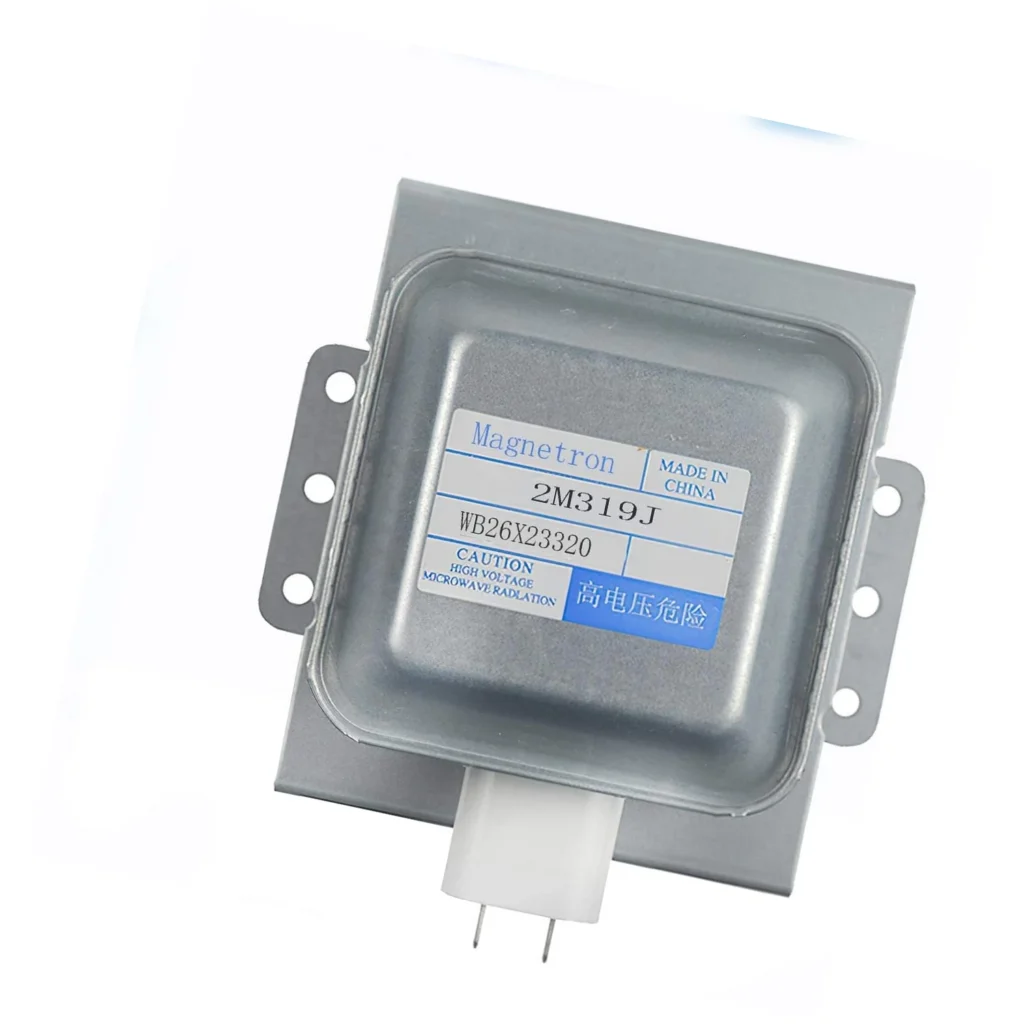
Here's a number that'll surprise you: the magnetron in your GE microwave should last 8–10 years, but most fail between years 5 and 7. That $236.99 replacement part isn't cheap, and the truth is, most magnetron failures happen because of how we use our microwaves, not because the part itself is defective.
The magnetron is the heart of your microwave — it's what generates those microwaves that heat your food. Think of it like the compressor in your fridge. When it goes, the whole appliance is essentially dead. Your JVM3160DF1WW or AVM4160DF1BS will turn on, light up, spin the turntable, but won't heat anything.
How Long Should It Last?
A typical magnetron like the WB26X23320 is rated for about 2,000 hours of operation. If you use your microwave 30 minutes a day, that's roughly 10–11 years of service. But here's the catch: running it empty, heating low-moisture foods, or using metal containers can cut that lifespan in half.
Temperature matters too. The magnetron operates at extreme heat — we're talking over 300°F internally. When the cooling fan fails or vents get blocked, that heat has nowhere to go. I've seen magnetrons on models like the JNM3161DF1BB fail at just 4 years because lint buildup choked the ventilation.
Here's what affects longevity:
- Voltage stability: Power surges damage the magnetron's filament over time
- Moisture content of food: Dry loads make it work harder
- Ventilation: Blocked vents cause overheating
- Run time per cycle: Short, frequent cycles are better than one long marathon session
- Empty operation: Running it with nothing inside is magnetron murder
Signs It's Wearing Out
Magnetrons don't just die overnight. They give you warnings, and if you catch them early, you might squeeze another few months out of the part while you budget for replacement.
Inconsistent Heating or Cold Spots
Your coffee comes out scalding on one side, lukewarm on the other. You rotate the cup halfway through and it doesn't help. This is often the first sign the magnetron is weakening. It's still producing microwaves, but not at full power or not consistently. On models like the CEB1590SJ1SS, this symptom can appear 6–12 months before total failure.
Longer Heating Times
You used to reheat pizza in 45 seconds. Now it takes 90 seconds to get the same result. The magnetron's output is declining. It's like a light bulb dimming before it burns out. If your normal routine suddenly requires 50% more time, the magnetron is on borrowed time.
Loud Humming or Buzzing
A healthy magnetron makes a steady hum. When you hear a louder, grinding buzz or a rattling sound during operation, the internal components are degrading. The filament might be failing, or the magnetron's cooling fins are vibrating loose. This noise usually appears in the final weeks before complete failure.
Burning Smell During Operation
Any burning odor is bad news. If it smells electrical or metallic, the magnetron's insulation might be breaking down. This is a stop-using-it-now situation. I've seen this on JVM3160RF1SS units where the magnetron overheated repeatedly.
Sparking Inside the Cavity
Small arcs or flashes inside the microwave (not from food or metal) can indicate the magnetron's antenna is damaged or its waveguide cover has burned through. This often happens after years of grease buildup or moisture exposure.
Maintenance That Actually Works
You can't rebuild a magnetron. Once it's worn out, it's done. But you can absolutely prevent premature failure.
Never Run It Empty
This is the single biggest killer. When there's no food or liquid to absorb the microwaves, that energy reflects back into the magnetron. Keep a microwave-safe cup of water inside if you're testing the unit. Seriously — this one habit will add years.
Keep the Waveguide Cover Clean
That small rectangular cover on the right wall inside your microwave? It protects the magnetron opening. When it gets splattered with food or grease, it can overheat or even catch fire. Wipe it down weekly with a damp cloth. If it's burned or cracked, replace it immediately — it's a $12 part that protects a $236 magnetron.
Clean or Replace Grease Filters Monthly
On over-the-range models like your AVM4160DF2BS, blocked grease filters restrict airflow. The magnetron depends on that cooling air. Pull the filters monthly, wash them in hot soapy water, and let them dry completely before reinstalling.
Check Rear Ventilation Quarterly
Pull your microwave out (if it's countertop) or inspect the exterior vents (if it's mounted). Dust, lint, and grease accumulate in the cooling vents. A can of compressed air or a vacuum with a brush attachment works great. I do this every time I deep-clean my kitchen — takes five minutes.
Use Microwave-Safe Covers
Those plastic splatter covers aren't just about keeping your microwave clean. They trap moisture, which makes heating more efficient and reduces stress on the magnetron. Less time running equals longer life.
Add Moisture to Dry Foods
Reheating bread, pizza, or fried foods? Place a small cup of water in the microwave alongside them. The moisture helps distribute heat and prevents the magnetron from working overtime. Your food comes out better too.
When to Replace vs Maintain
Let's be realistic. If your microwave is 8+ years old and the magnetron fails, you're better off replacing the entire unit in most cases. A new microwave costs $150–400, and you're getting fresh electronics, updated features, and everything is under warranty.
Replace the magnetron if:
- Your microwave is less than 5 years old
- It's a high-end model or built-in unit (where replacement cost would be $800+)
- Everything else works perfectly
- You're comfortable with DIY appliance repair (magnetrons involve high voltage)
Buy a new microwave if:
- It's more than 8 years old
- Other components are also failing (turntable motor, control board, door switches)
- The repair cost approaches 60% of a new unit's price
- You're not experienced with high-voltage repairs
Here's the thing about magnetron replacement: it's not the part cost that gets you, it's the labor and risk. This repair involves discharging a high-voltage capacitor that can hold a lethal charge even when unplugged. Unless you know what you're doing, hire a tech or replace the appliance.
What About Power Surges?
Magnetrons are sensitive to voltage spikes. If you live in an area with frequent brownouts or power fluctuations, consider plugging your microwave into a surge protector. Not one of those $12 power strips — get an actual surge protector rated for appliances. It's a $40 investment that protects a $236 part.
I've seen entire subdivisions where microwaves failed prematurely after a summer of rolling blackouts. The magnetrons couldn't handle the voltage swings. One customer replaced three magnetrons in five years before finally installing a whole-house surge protector.
The Bottom Line
Your GE magnetron doesn't need much maintenance because you can't actually service it. What it needs is for you to avoid the behaviors that kill it early. Don't run it empty. Keep it clean. Ensure proper ventilation. Use surge protection. Do those things and you'll get your full 10 years, maybe more.
And when it finally does fail — and it will, because all magnetrons eventually do — you'll know you got every possible hour out of it.
Frequently Asked Questions
Can I test if my magnetron is working without opening the microwave?
Put a microwave-safe cup of water inside and run it for 60 seconds on high. If the water doesn't get noticeably hot, the magnetron likely isn't producing microwaves. If it heats but takes much longer than normal, the magnetron is weakening. There's no safe way to test the actual magnetron without disassembling the unit and using specialized equipment.
Is it normal for the magnetron to make noise?
A steady, low hum is normal — that's the sound of it generating microwaves. A loud buzz, rattle, or intermittent grinding is not normal and indicates the magnetron is failing. High-pitched squealing or clicking sounds might be the cooling fan or other components, but any unusual noise warrants investigation.
Will using the microwave for just 10–15 seconds at a time damage it?
No, short cycles are actually easier on the magnetron than long ones. The component heats up during operation, and shorter cycles let it cool between uses. What damages it is running it empty or for extended periods (10+ minutes straight) without adequate cooling, especially with low-moisture foods.
Element showing wear?
WB26X23320 · Replace before it fully fails