
How to Extend Your GE Microwave Door Latch Life — WB06X10610 Maintenance Guide
This is a safety interlock component. Never operate your microwave with a damaged latch housing, and never bypass the door switch. Microwave energy leakage can cause serious injury.
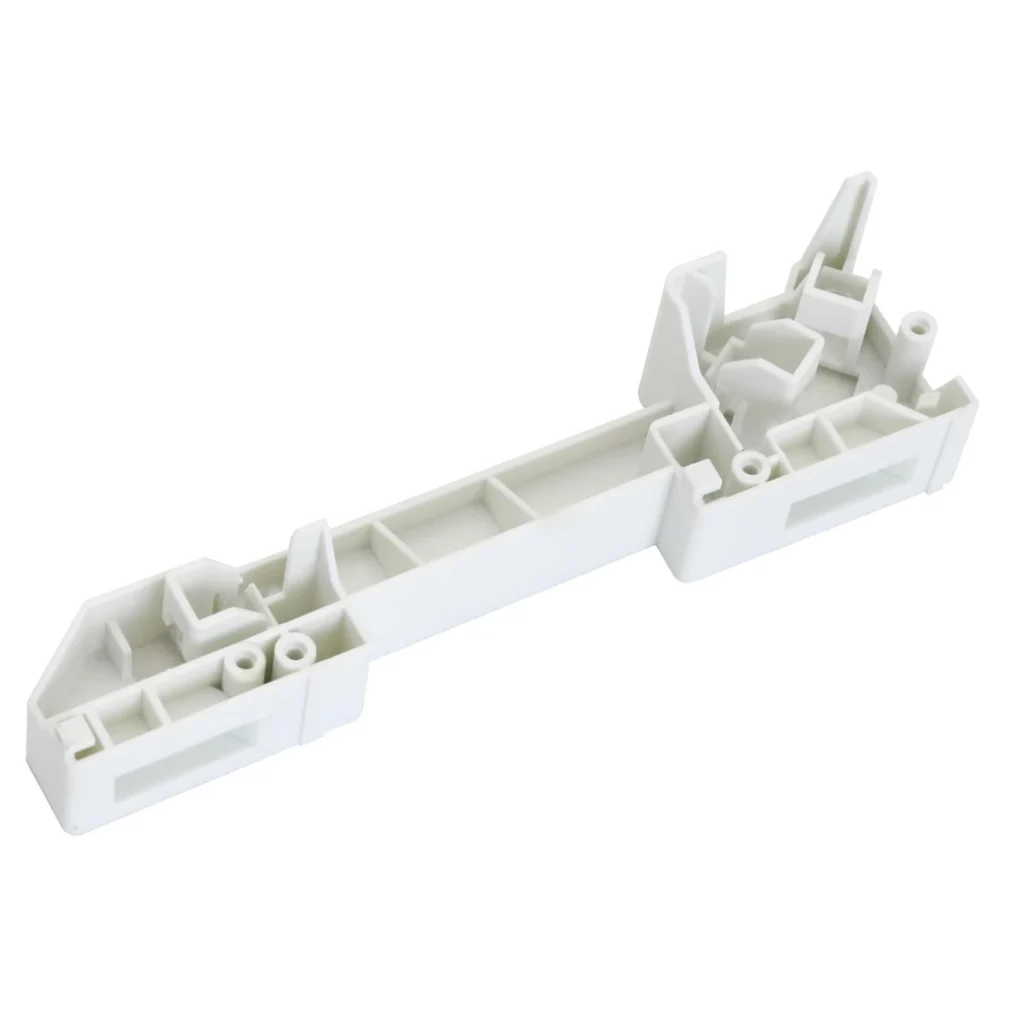
Your GE microwave's door latch housing (WB06X10610) should last 8–12 years, but most fail around the 5-year mark. The difference? How you close that door every single day.
This latch assembly handles hundreds of open-close cycles per year. On models like the JVM1630BK01 or JVM3160DF1BB, it's the critical component that tells your microwave "the door is secure, okay to start." When it fails, you'll get the most frustrating symptom: the microwave won't turn on at all.
How Long Should It Last?
Under normal conditions, the WB06X10610 latch housing is engineered for 10–12 years of service. That's roughly 3,650 door closures per year — about 10 times daily. But here's what actually happens in real kitchens:
The plastic housing cracks from impact. Every time someone slams the door or pushes it closed with their hip while carrying a hot plate, stress concentrates at the mounting points. Over time, hairline fractures develop.
Spring tension weakens gradually. The internal springs lose their compression strength, especially if the door's frequently left hanging open. This changes the engagement angle with the door hooks.
Temperature cycling affects the polymer. Your microwave runs hot, then cools down. That expansion-contraction cycle makes the plastic brittle after about 2,000 heating cycles — usually around year five.
Signs It's Wearing Out
The latch doesn't fail suddenly. You'll notice warning signs weeks or even months before complete failure.
Won't Turn On (Intermittent at First)
This is the primary symptom with latch failure. You close the door, press start, and nothing happens. At first, you can jiggle the door and it'll work. That's the latch hooks barely making contact with worn engagement points. Within weeks, jiggling stops working.
On models like the JNM3161DF1BB, you might hear the transformer hum for a split second before it cuts out. That's the safety interlock doing its job — it senses the door isn't fully latched.
Door Requires Extra Force to Close
If you're pushing harder than usual to get that satisfying click, the latch mechanism is binding. The plastic housing may have shifted slightly on its mounting screws, or the spring-loaded catch is sticking.
Don't ignore this. The extra force you're applying accelerates the cracking process.
Visible Cracks Around Screw Holes
Open your microwave door and look at the latch housing on the right side (or left on some models). If you see white stress marks or actual cracks radiating from the mounting screws, you're on borrowed time.
These cracks typically start at the top mounting hole because that's where closing force concentrates. The housing flexes slightly with each closure, and that flex point fatigues first.
When to Replace vs Maintain
Here's the honest truth: this part doesn't really "maintain" in the traditional sense. There's no lubrication point, no adjustment, no cleaning procedure that extends its life. What you can do is prevent premature failure.
Replace immediately if:
- The microwave won't start even after door adjustments
- You see visible cracks in the housing
- The latch catch broke off (you'll see the piece in the door cavity)
- The door feels loose when closed, like it's not fully secured
Focus on prevention if:
- The latch is working normally but you want maximum lifespan
- You just installed a new WB06X10610
- You're in a high-use household (multiple daily users)
The maintenance approach here is really about operational habits. Treat this like you'd treat a phone screen — handle it deliberately every time. That behavioral change can add 3–5 years to the part's life.
Frequently Asked Questions
Can I repair a cracked latch housing instead of replacing it?
Not safely. Some people try epoxy or plastic welding, but this is a safety interlock component. Any repair compromises the latch's ability to hold the door secure during operation, which could allow microwave energy to leak. At $47.99, the WB06X10610 replacement is cheaper than the risk.
Why does my microwave work fine for weeks, then suddenly won't start?
Temperature and humidity affect the plastic's dimension slightly. On a cold morning or after sitting unused for days, the latch housing contracts just enough that worn contact points no longer engage. Once the kitchen warms up or you've cycled it a few times, expansion brings things back into alignment. This intermittent behavior means you're within a month of total failure.
Will a door latch problem affect cooking performance?
No — until it fails completely. The latch is purely a safety switch. When it works, your microwave operates normally. When it doesn't, the microwave won't energize at all. There's no middle ground where it "sort of works" or heats inconsistently. That's actually good design: fail-safe rather than fail-dangerous.
Element showing wear?
WB06X10610 · Replace before it fully fails