
How to Extend Your Whirlpool Washer Suspension Rod Life — Maintenance Guide
Always unplug the washer before working on suspension components. The drum can drop suddenly if rods are removed improperly, causing crush injury.
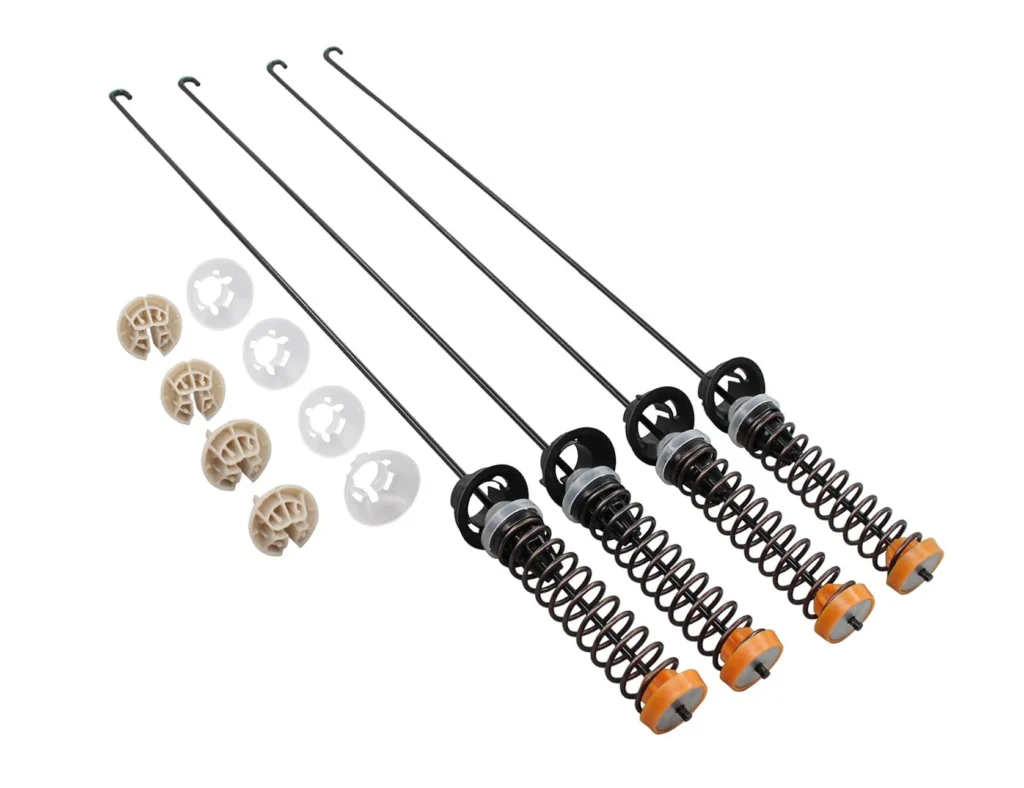
Here's the thing about suspension rods: they're supposed to last 8-10 years, but most only make it 4-6 years before you're hearing that telltale banging during spin cycles. The W11130359 suspension rod kit in your Whirlpool, Maytag, or Kenmore top-loader is basically doing the job of a car's shock absorbers — absorbing thousands of pounds of force every single wash cycle.
When these rods start failing, you'll know it. Your washer starts walking across the laundry room floor like it's got somewhere to be. But here's what most people don't realize: you can usually double the lifespan of these rods with some basic preventive maintenance.
How Long Should Suspension Rods Last?
Under normal conditions, the W11130359 suspension rod kit should give you 8-10 years of service in models like the WTW7000DW series or WTW7300DW. But "normal conditions" is doing a lot of heavy lifting in that sentence.
What actually affects their lifespan:
- Load size matters more than you think: Consistently maxing out your washer's capacity puts 2-3x more stress on the suspension system. Those oversized comforter loads? They're aging your rods in dog years.
- Unbalanced loads are killers: When you throw in one heavy towel with a bunch of light clothes, the drum wobbles violently during spin. Each wobble is micro-damage to the rod bushings.
- Floor stability: If your washer sits on an uneven floor, the rods compensate unevenly. One rod does 60% of the work while the others coast.
- Water hardness: Hard water causes mineral buildup that can stiffen the rod movement over time, though this is less common than mechanical wear.
The good news? Most premature failures come from overloading and unbalanced loads — both completely preventable.
Signs Your Suspension Rods Are Wearing Out
Suspension rods don't fail overnight. They give you weeks or months of warning signs. Here's what to watch for:
Excessive Shaking or Vibrating During Wash Cycles
Early-stage rod wear shows up as increased vibration during the spin cycle. Your washer used to sit still, now it's rattling the detergent bottles on top. This happens because the rods aren't dampening movement as effectively — the rubber bushings inside have compressed or the springs have weakened.
At this stage, you've still got time. The rods are working, just not at 100%. This is your window to either replace them proactively or at least stop overloading until you can.
Loud Banging or Thumping Noises
When you hear metal-on-metal banging during spin, that's the drum hitting the cabinet because the suspension can't control it anymore. One user described it as "sounds like someone throwing a wrench in there every few seconds."
This is advanced wear. The rod bushings are shot, the springs are stretched, or the mounting hardware has loosened. You're probably a week or two away from the drum actually damaging something else.
The Washer Moving or 'Walking' During Operation
If your WTW7500GC has migrated six inches from where you left it, your suspension rods are toast. This walking happens because the drum is swinging so violently that it's creating momentum that moves the entire machine.
People try to fix this by putting rubber mats underneath or wedging the washer between walls. That's treating the symptom, not the cause. The suspension system is mechanically unable to do its job.
The Drum Appearing to Be Off-Balance or Sagging
Open the lid and look at the drum. Is it sitting level, or does one side appear lower? If you can physically push down on one side of the drum and it stays there, your suspension rods on that side have failed.
This visual test works because the rods should hold the drum centered with tension. When they can't, gravity wins.
When to Replace vs Maintain
Here's the honest truth: suspension rods aren't really serviceable parts. Unlike filters you can clean or belts you can tension, once the internal components wear out, you're replacing the whole assembly.
But — and this is important — you can massively extend their life before they reach that point.
Replace immediately if:
- You hear metal-on-metal banging every spin cycle
- The washer has walked more than 2 inches from its original position
- The drum visibly sags or sits unevenly
- You've already replaced them once in the past 3 years (means something else is causing premature failure)
Maintain and monitor if:
- Vibration is slightly worse than it used to be but not violent
- You occasionally hear thumping during unbalanced loads only
- The washer is 4+ years old but symptoms are mild
- You've been overloading regularly and just stopped
The W11130359 kit runs about $91, and you're looking at 30-60 minutes to install if you're handy. Many people report this being an easy DIY job — "Replaced the lid and the 4 suspension rods" is a common weekend project.
Compare that to the $450 service call or the $800 new washer if you let failed rods damage the drum bearings or motor.
Frequently Asked Questions
Can I Replace Just One Suspension Rod Instead of All Four?
Technically yes, functionally no. If one rod has failed, the others have the same amount of wear and miles on them. Replacing just one means you'll be back in there in 6 months replacing the next one. The W11130359 is sold as a kit specifically because manufacturers know you need to do all four. Plus, having mismatched rod tension will create new balance problems.
How Do I Know If It's the Suspension Rods or Something Else Causing the Noise?
Run a spin cycle with the lid open (if your model allows, or bypass the lid switch temporarily). Watch the drum movement. If it's swinging wildly side-to-side or front-to-back, that's suspension. If it's spinning fine but making grinding noises, that's more likely bearings. If it's bouncing up and down aggressively, could be worn shock absorbers in addition to rods. The key test: does the noise happen during spin specifically, or during agitation too?
Will Leveling My Washer Fix Suspension Rod Problems?
Leveling fixes problems caused by an unlevel washer — it doesn't fix worn suspension rods. However, if your washer has been unlevel for years, that absolutely contributed to uneven rod wear. So level it when you replace the rods, not instead of replacing them. Use a bubble level front-to-back and side-to-side, adjust the feet until it's perfect, then lock the feet with the locknuts. This prevents future uneven wear on your new W11130359 kit.
Element showing wear?
W11130359 · Replace before it fully fails