
How to Extend Your Whirlpool Washer Drain Pump Life — Maintenance Guide
Always unplug washer before accessing pump area. Standing water may be present — keep towels ready.
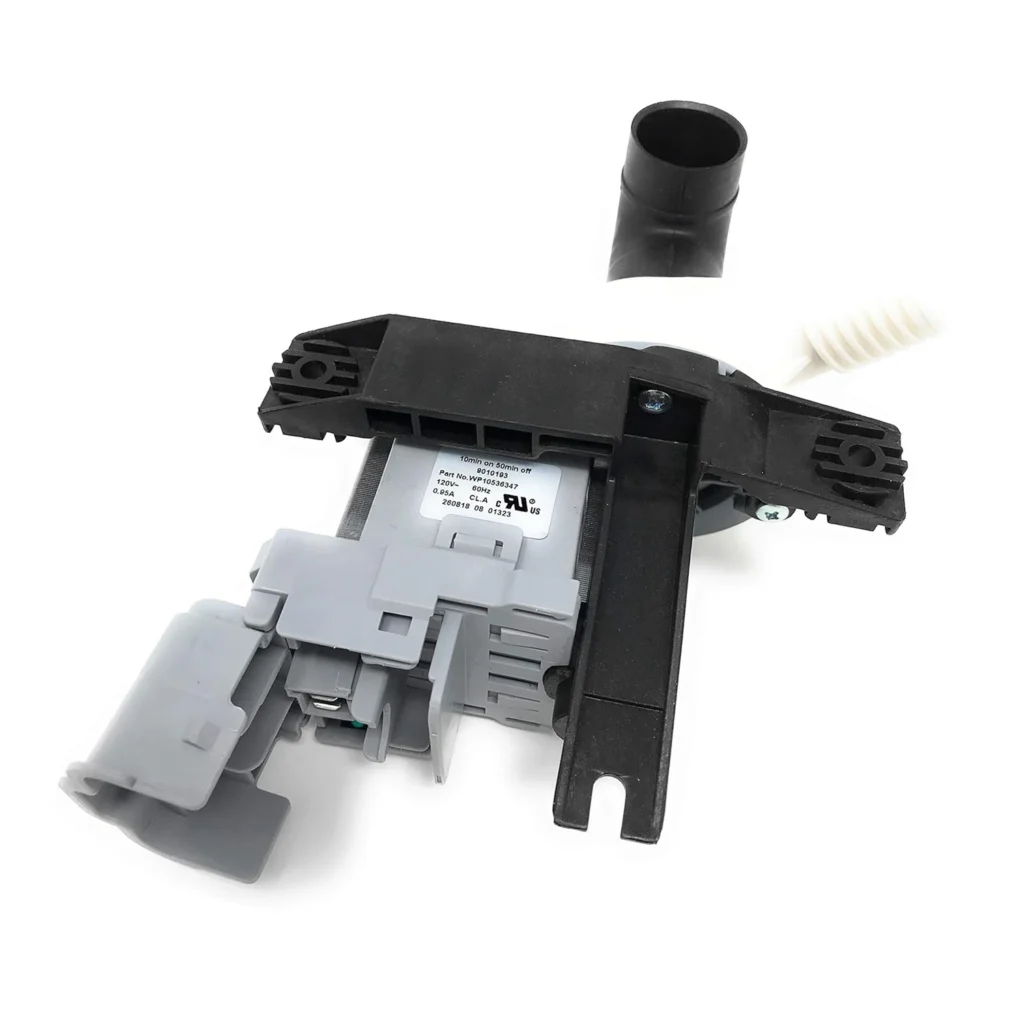
Here's something most people don't realize: the average washer drain pump lasts 5–8 years, but most fail between years 3–4. The difference? What's going down your drain. I've pulled everything from bobby pins to guitar picks out of failed pumps — and every single one could've been prevented.
The W10536347 drain pump assembly handles thousands of gallons during its life. It's a simple motor-impeller combo, but it's doing brutal work: forcing dirty water through narrow hoses against gravity. Let's talk about keeping yours running longer.
How Long Should Your Drain Pump Last?
In ideal conditions, you're looking at 8–12 years from this pump. But "ideal" rarely exists in real laundry rooms.
What kills pumps early:
- Coins and small objects — they jam the impeller instantly
- Lint buildup — acts like a brake on the motor
- Hard water deposits — narrows the outlet, making the motor work harder
- Detergent sludge — gunks up the impeller blades
- Running empty cycles — the pump needs water for cooling
Models like the WTW6600SW2, WTW7300XW0, and WTW8500DC0 all use this same pump design. If you've got a top-load Whirlpool, Maytag, or Kenmore from 2010–2020, this maintenance applies to you.
Signs Your Pump Is Wearing Out
You'll usually get warning signs before complete failure. Here's what to watch for:
The Washer Won't Drain Completely
If you're finding standing water after the cycle, the pump's struggling. First, it'll leave a half-inch. Then an inch. Then you're bailing water with a cup before you can open the door. The impeller blades wear down over time — they just can't move water as efficiently.
Grinding or Humming During Drain
A healthy pump is almost silent — just a smooth whir. When you start hearing grinding, something's caught in the impeller housing. Humming without draining? The motor's running but the impeller isn't turning. That's usually a jam or a sheared coupling.
Burning Smell During Cycles
This one's serious. If you smell burning rubber or electrical odor, the motor's overheating. Could be a partially blocked outlet making it work too hard, or the motor windings are failing. Either way, you're weeks from total failure.
Monthly Maintenance Checklist
Most of this takes under five minutes. Do it on the same day you clean the detergent dispenser:
Check the drain filter: Front-loaders usually have a filter access panel at the bottom front. Top-loaders — you'll need to check if your model has one (some don't). Pull it, rinse it, check for coins or debris.
Run a cleaning cycle: Use washer cleaner or white vinegar. This dissolves detergent buildup before it reaches the pump. I do this monthly with a cup of vinegar on the hottest setting.
Inspect discharge hose: Feel along the hose for kinks or narrow spots. A kinked drain hose makes the pump push harder than it should, shortening motor life.
What Actually Prevents Pump Failure
Here's the real maintenance that matters:
Empty pockets religiously. Coins, screws, and small hardware are pump killers. One quarter jammed in the impeller will burn out the motor in minutes. Check every pocket, every time.
Use less detergent. Seriously — you're probably using too much. That extra soap becomes sludge that coats everything, including pump components. Follow the detergent line, not the cap maximum.
Don't overload the machine. Heavier loads mean more water, which means the pump runs longer and works harder. Stick to manufacturer weight limits.
Clean lint traps regularly. Even top-loaders accumulate lint. Some goes down the drain. That lint can mat together and block the pump inlet or outlet.
When to Replace vs Keep Maintaining
Let's be honest about the economics here.
The W10536347 runs about $140. Professional installation adds another $150–$200. So you're looking at $300–$340 total.
Replace immediately if:
- The pump leaks from the housing (seal failure)
- It makes loud grinding despite being clear of debris
- The motor runs but won't pump at all
- You see burn marks or melted plastic
Keep maintaining if:
- It drains slowly but completely
- You hear slight humming during drain (might just need cleaning)
- The washer is under 5 years old
Here's the reality: if your washer's 10+ years old and the pump fails, you're probably looking at other issues soon. Door seals, bearings, and control boards all age together. Sometimes it's time to move on.
The Actual Lifespan Breakdown
From the pumps I've replaced over the years:
- Years 1–3: Failure here usually means a defect or installation issue
- Years 4–7: Normal lifespan if you maintain it
- Years 8–12: You're in borrowed time — start budgeting for replacement
- 12+ years: Congrats, you've beaten the odds
Compatible models include the entire WTW series (WTW6600SW1, WTW8500DC3, WTW7000DW1), most MVW Maytag top-loaders, and Kenmore 110 series washers from this era. If you've got one of these machines and it's past year 5, keep a spare pump on hand. It'll fail on a Sunday when you've got a house full of wet laundry.
Frequently Asked Questions
How often should I clean the drain pump filter?
Monthly if you've got pets or wash heavily soiled items. Every 2–3 months for typical household laundry. The filter catches lint, hair, and small debris before it reaches the pump. If your washer doesn't have an accessible filter, run hot cleaning cycles monthly to prevent buildup in the pump itself.
Can I use drain cleaning chemicals in my washer?
No — never. Drain cleaners like Drano are extremely caustic and will damage rubber seals, hoses, and the pump housing. They're designed for metal pipes, not washing machine components. Use white vinegar or commercial washer cleaner instead. If you've got a clog, manually clear it or call a tech.
Why does my pump work sometimes but not others?
Intermittent failure usually means partial blockage or a motor that's overheating. The blockage might shift position depending on load size, sometimes allowing water through and sometimes not. Or the motor's thermal protection is kicking in — it runs until it overheats, shuts off, cools down, then works again. Either way, this won't fix itself. Clear the pump and check for obstructions soon.
Element showing wear?
W10536347 · Replace before it fully fails