
How to Extend Your Whirlpool Dishwasher Thermal Fuse Life — Maintenance Guide
Always disconnect power at the breaker before accessing the control panel. Thermal fuses are located near live electrical components. Use a non-contact voltage tester to confirm power is off before touching any wires.
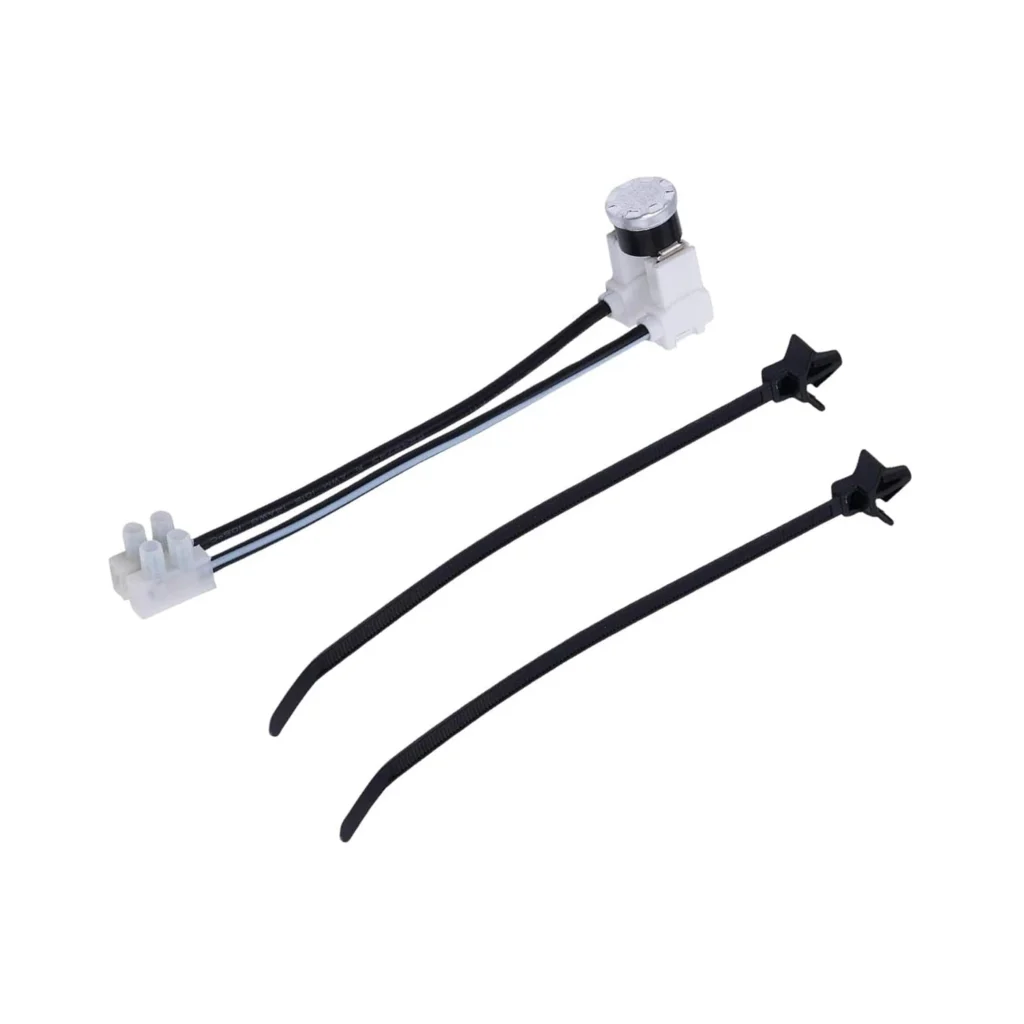
Here's the problem with thermal fuses in Whirlpool, KitchenAid, and Maytag dishwashers: they're designed to fail. That's their job. When temps spike beyond safe limits, this little component sacrifices itself to protect your control board from becoming a $400 mistake. The W10258275 thermal fuse typically lasts 8-12 years, but I've seen them blow in under 3 when certain conditions stack up.
One tech came into our shop last month saying he'd replaced the same fuse three times on a KUDA03CTBS1. The customer kept overloading the circuit, running the dishwasher during peak hours when the AC was maxed out. The fuse wasn't defective — the environment was killing it.
How Long Should It Last?
Under normal conditions, you're looking at 8-12 years from a thermal fuse. Some units like the GU2275XTVY3 and DU1010XTXB0 run cool enough that the original fuse outlasts the dishwasher itself. But lifespan depends heavily on these factors:
- Circuit load: If your dishwasher shares a circuit with other high-draw appliances, voltage fluctuations create heat
- Ventilation: Dishwashers tucked into tight cabinets with blocked vents trap heat around the control board
- Water temperature: Units set above 140°F stress the heating element and surrounding components
- Cycle frequency: Running 2-3 loads daily generates more cumulative heat than occasional use
The thermal fuse opens when temperatures exceed its rated threshold — usually around 180-200°F at the control board. It's a one-time safety device. Once it blows, you're replacing it.
Signs It's Wearing Out
The tricky part? Thermal fuses don't gradually fail. They work perfectly until they don't. But you can catch the conditions that'll kill one before it happens.
Dishwasher Won't Start At All
You press Start. Nothing. No lights, no sounds, completely dead. This is the classic signature of a blown thermal fuse. The circuit's open, so power can't reach the control board. One user quote nails it: "Found an open circuit on the thermal fuse" after checking with a volt meter. If you've got basic electrical testing skills, pull the control panel and test for continuity. Zero ohms means it's good. Infinite resistance means it's toast.
Not Draining After Cycles
This one surprises people because they don't associate drainage with a thermal fuse. But here's what happens: when the fuse blows mid-cycle, the control board loses power. The drain pump doesn't get its signal to activate. You open the door to standing water. The issue isn't the pump — it's that the fuse killed power before the drain sequence could complete.
Control Panel Feels Hot to Touch
This is your early warning. After a cycle, carefully touch the area around the control buttons. If it's noticeably warm — not just slightly warm, but uncomfortably hot — you've got heat building up. Could be blocked vents, could be a failing heating element drawing excess current, could be ambient room temperature if the dishwasher's installed near a range. Address this before the thermal fuse makes the decision for you.
When to Replace vs Maintain
Let's be straight: you can't maintain a thermal fuse. It's a sealed component. You can't clean it, adjust it, or extend its life once it's installed. What you can maintain is the environment around it.
Replace immediately when you test and find an open circuit. Don't bypass it. I've seen techs jumper thermal fuses to "get the customer through the weekend," and I've also seen the control board failures that cost 10x what the fuse would've cost.
Focus maintenance on prevention:
- Ensure your dishwasher's on a dedicated 15-20 amp circuit
- Check that cabinet vents aren't blocked by cookware or storage items
- Set water heater to 120°F max — let the dishwasher's booster handle higher temps
- Clean the heating element area every 6 months to prevent buildup that traps heat
For models like the 7GU2300XTVS0 and GU2300XTVS1, check the service manual for specific ventilation requirements. Some need a 1-inch gap on each side.
Frequently Asked Questions
Can I Test a Thermal Fuse Without Removing It?
Not reliably. You need to disconnect at least one wire and test for continuity with the fuse out of the circuit. Trying to test in-circuit gives you false readings because you're picking up parallel paths through other components. Takes 15 minutes to remove the control panel screws and get proper access — as one repair tech noted: "Removed the screws to access the controls" and then "Used my volt meter to check circuits." That's the right sequence.
Will a Blown Thermal Fuse Trip My Circuit Breaker?
No. The thermal fuse creates an open circuit, which actually reduces current flow to zero on that branch. Your breaker won't trip because there's no overcurrent condition — the fuse already interrupted the circuit. If your breaker's tripping, you've got a different problem, possibly a shorted heating element or pump motor.
Why Did My Replacement Fuse Blow Again After Two Months?
Because the thermal fuse wasn't your problem — it was your symptom. Something's generating excessive heat: a failing heating element drawing too much current, blocked vents preventing heat dissipation, or voltage irregularities from your home's electrical system. The W10258275 kit includes the fuse and mounting hardware, but it won't fix the underlying cause. Track down why temperatures are spiking, or you'll be replacing fuses every few months. Common culprits in models like the KUDC02 series include heating elements that've developed partial shorts or control boards with failing relay contacts.
Element showing wear?
W10258275 · Replace before it fully fails