
How to Extend Your LG Washer Lid Switch Life — EBF61674802 Maintenance Guide
Always disconnect washer from power and water sources before inspecting or cleaning near the lid switch assembly. Live voltage is present when plugged in.
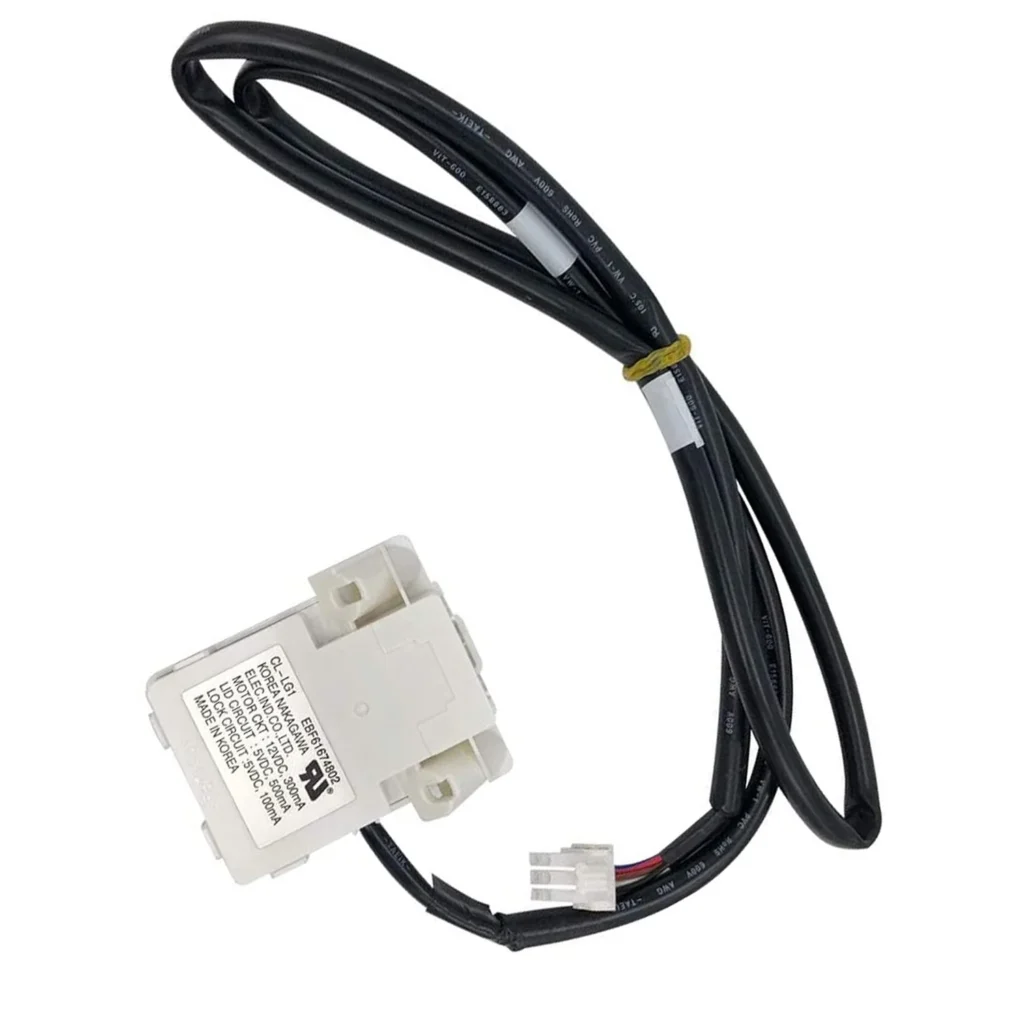
Here's something most people don't realize: the lid switch assembly on your LG top-load washer (like the WT5680HVA or WT7700HWA) typically lasts 8–10 years, but I've seen them fail in under three when owners don't follow basic care habits. The EBF61674802 lid switch and lock assembly isn't just a simple on/off button — it's a mechanical lock with electrical contacts that cycle thousands of times, and every slam shortens its life.
How Long Should It Last?
Under normal conditions, you're looking at 8–10 years of service from this assembly. That's roughly 3,000–4,000 load cycles if you're washing every other day. But here's what affects that number:
The biggest killer? Slamming the lid. Each hard close sends a shock through the locking mechanism that loosens the internal components over time. I've replaced switches on two-year-old machines where the owner admitted they always pushed the lid shut like closing a car door.
Water exposure is the second threat. This assembly sits right at the top rim where steam rises during hot wash cycles. If moisture gets into the electrical contacts, corrosion starts immediately. Models like the WT7500CW and WT7200CW are particularly vulnerable because their lid design doesn't deflect steam as well as newer units.
Detergent residue buildup around the lid area can also gum up the mechanical lock. Those sticky white deposits you see? They're not just cosmetic — they're adding friction to every lock cycle.
Signs It's Wearing Out
Don't wait for complete failure. The EBF61674802 assembly gives you warning signs weeks or even months before it stops working entirely.
Lid or Door Won't Close Smoothly
If you're finding yourself pressing down harder to get the lid to latch, that's your first red flag. The locking mechanism should engage with minimal pressure. On models like the WT5101HV and WT5170HV, you'll hear a distinct click when it locks properly. If that click becomes inconsistent or you need to jiggle the lid to make it happen, the internal striker or catch is wearing.
Locking Issues Mid-Cycle
The washer starts fine, but then you hear it beeping and the control panel flashes — the machine thinks the lid opened during the spin cycle even though you haven't touched it. This is the electrical contacts inside the switch assembly losing their connection. It happens because the contact points get worn or corroded, creating intermittent signals to the control board.
Will Not Start At All
You load the washer, add detergent, select your cycle, press start... nothing. The control panel lights up fine, but the machine won't begin. This is complete switch failure. The control board can't get the signal that the lid is closed and locked. If the lid switch is damaged, it will not allow the washer to run properly — at all.
Maintenance Schedule That Actually Works
I'm going to give you the maintenance routine I recommend to customers who want to maximize their parts investment. It's not complicated, but consistency matters.
After each use: Wipe down the lid rim and the area around the lock assembly with a dry cloth. This takes fifteen seconds and removes moisture before it can settle into the switch housing. Don't use harsh cleaners here — water and a mild detergent if needed.
Monthly: Clean any detergent buildup around the lid gasket and lock area using a solution of equal parts white vinegar and water. Apply it with a soft brush (an old toothbrush works great), let it sit for two minutes, then wipe clean. Check that the lid closes without resistance.
Every six months: With the washer unplugged, inspect the lock striker on the lid itself. This is the metal piece that engages with the assembly. Look for wear marks, rust, or misalignment. If it's bent even slightly, that's causing extra stress on the switch mechanism during every cycle.
Annually: Run an empty hot water cycle with two cups of white vinegar to clear any residue from the tub and internal components. This reduces the steam-borne deposits that settle around the lid area.
When to Replace vs Maintain
Let's be honest about when maintenance stops being the answer. If your switch already shows intermittent failure — the washer sometimes starts, sometimes doesn't — you're past the maintenance stage. The internal contacts are already compromised, and no amount of cleaning will restore them.
Same thing if you hear grinding or clicking from the lock mechanism when closing the lid. That's mechanical damage to the gears or striker, and those components can't be serviced separately from the assembly.
However, if your washer is working fine and you're just being proactive, good maintenance can absolutely push that 8–10 year lifespan to 12–15 years. I've seen it happen on well-maintained units.
One critical note: Be sure to disconnect the washer from the power and water sources before you begin any inspection or cleaning work near electrical components. This isn't optional — the lid switch assembly carries live voltage when the machine is plugged in.
Frequently Asked Questions
Can I Test the Lid Switch Without Replacing It?
Yes. Unplug the machine, remove the top panel (usually two screws at the back), and locate the lid switch assembly. You'll see a wire harness connected to it. Using a multimeter set to continuity mode, test across the switch terminals while manually pressing the switch actuator. You should get a reading showing the circuit closes. If there's no continuity or it's intermittent, the switch is faulty. Just remember this is diagnostic — once you confirm it's bad, replacement is your only option.
Why Does My Washer Work Sometimes But Not Others?
Intermittent operation screams electrical contact problems inside the switch assembly. As the contacts wear, they develop microscopic pitting and oxidation. Sometimes they make contact, sometimes they don't. Temperature changes can affect this too — the switch might work when cold but fail after a hot water cycle when metal expansion opens up those worn contact points. This pattern only gets worse over time, never better.
Will Using the Washer With a Faulty Lid Switch Damage Anything Else?
Not directly, but it creates risks. If the switch fails during operation, you lose the safety interlock that prevents the lid from opening during spin. That's a legitimate safety hazard if someone tries to add clothes mid-cycle. Also, some control boards will throw error codes and shut down other functions when they detect lid switch issues, which can make diagnosis confusing if you're not aware the switch is the root problem.
Element showing wear?
EBF61674802 · Replace before it fully fails