
How to Extend Your LG Door Lock Interlock Life — Maintenance Guide
Never force the door open before the unlock click—this breaks the striker mechanism. If door pops open during spin cycle, stop using washer immediately as this is a safety hazard.
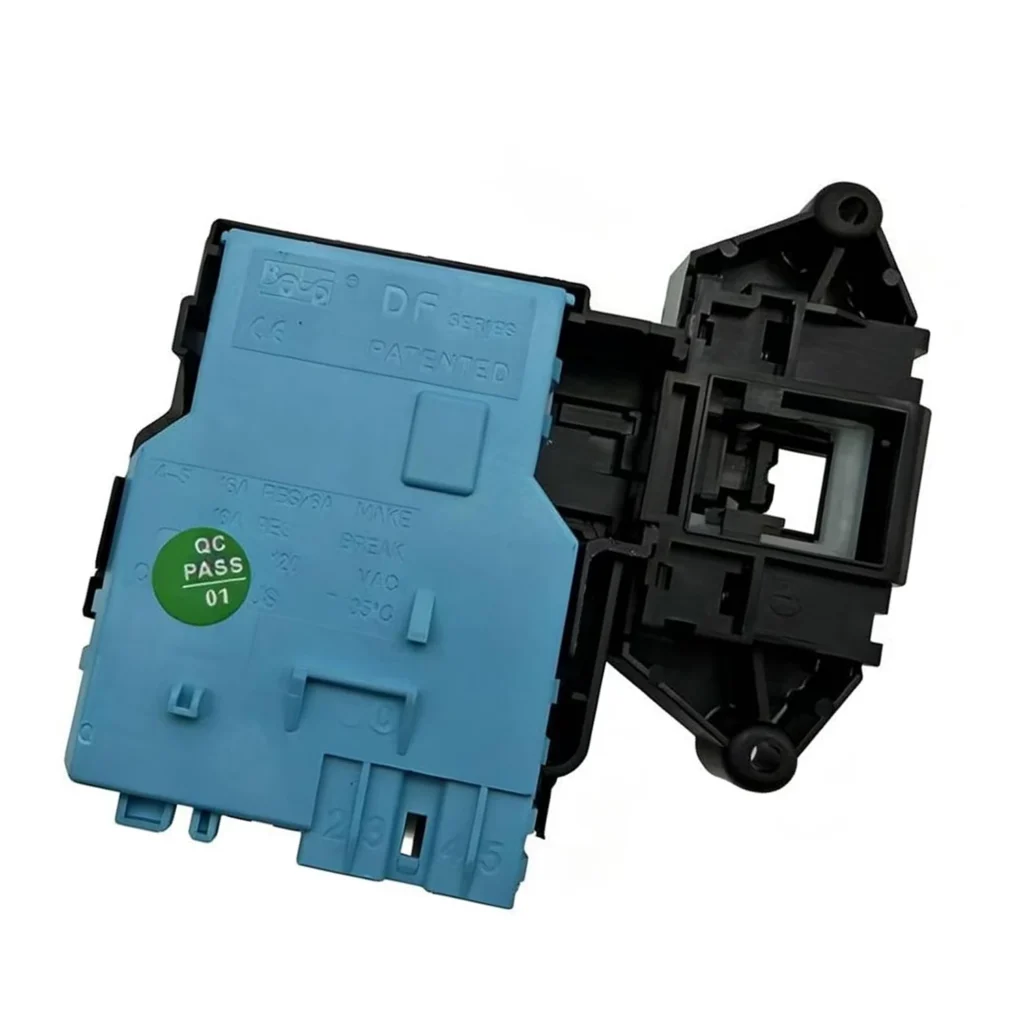
Most LG washer door locks fail between 3-5 years, but I've seen units run 8+ years with proper care. The EBF49827803 door lock interlock assembly is one of those parts that gets slammed, forced, and generally abused daily—yet it's built to handle over 10,000 cycles if you treat it right. The problem? Most people don't realize they're slowly destroying it.
I've replaced hundreds of these across models from the WM1480FHD to the F1695RDH, and the pattern is always the same: people force the door before the lock releases, ignore the warning clicks, and wonder why it suddenly won't latch after three years. Let's fix that.
How Long Should It Last?
Under normal conditions, the EBF49827803 door lock should last 5-7 years. That's roughly 2,500-3,500 wash cycles for an average household doing 8-10 loads per week. But here's what affects that lifespan:
Temperature cycling matters. If you alternate between hot sanitize cycles and cold washes, the thermal expansion and contraction stresses the plastic housing and electrical contacts. Not enough to avoid doing it—just know it's wearing the mechanism.
Detergent buildup is silent death. High-efficiency washers produce less suds, but even small amounts of detergent residue migrate into the lock mechanism through the door gap. Over months, this creates a sticky film that makes the solenoid work harder to engage and disengage. Eventually, it just gives up.
Door seal pressure changes everything. A worn or misaligned door gasket means the lock has to work harder to create the seal. What should be a clean mechanical click becomes a grinding struggle. The lock wasn't designed for that extra force.
Signs It's Wearing Out
The EBF49827803 doesn't fail suddenly—it tells you it's dying if you're paying attention. Here's what to watch for:
Delayed Lock Engagement
You press start, the washer fills, but the door takes 3-5 seconds longer than usual to click locked. This is the solenoid struggling against internal friction or weak spring tension. It'll work for a few more weeks, but you're on borrowed time. The delay gets progressively longer until one day it just won't lock at all.
Multiple Click Sounds Before Locking
A healthy lock clicks once—sharp and clean. If you're hearing two or three clicks, or a grinding/ratcheting sound, the striker mechanism is worn or the solenoid plunger is sticking. This is especially common on models like the WM2240CW and WM2350HRC that see heavy daily use. That sound is metal wearing against plastic, and plastic always loses.
Door Won't Release Immediately After Cycle
The cycle ends, you pull the handle, nothing happens. You wait 30 seconds, try again—still nothing. Third time it pops open. This is the release solenoid failing to fully retract. The thermal cutoff might also be activating incorrectly, keeping the lock engaged longer than it should. Once this starts, it gets worse fast.
Intermittent LE or DE Error Codes
Your F1403YD or WM1090FHB throws an LE (lock error) or DE (door error) code, but only sometimes. You restart it, the code clears, everything's fine. That's the control board losing communication with a failing lock switch. The electrical contacts inside are corroding or the wiring harness connection is loose from vibration.
Maintenance Schedule That Actually Works
After Each Use: Don't force the door open immediately after the cycle ends. Wait for the audible unlock click—usually 1-2 minutes after the cycle completes. Forcing it while still locked is the #1 cause of premature failure I see. The mechanism is designed for controlled release, not brute force.
Monthly: Wipe down the door strike plate (the metal piece on the washer frame that the lock catches) with a damp cloth. Remove any detergent residue, lint, or mineral deposits. These create friction points that make the lock work harder. Takes 15 seconds, adds years to the lock life.
Quarterly: Inspect the lock housing through the door opening. Look for cracks in the plastic, especially around the mounting tabs. Models like the F1248QDP1 and F1273TDP have notoriously brittle housings that crack from over-tightening during installation. Caught early, you can reinforce them with epoxy before they fail completely.
Every 6 Months: Test the lock manually. With the washer off, close the door and listen to the lock engage when you start a cycle. It should be immediate and positive. If there's hesitation, clean the electrical contacts with electronics contact cleaner (not WD-40, which leaves residue). This prevents 70% of intermittent error codes.
The Detergent Residue Problem
Here's something most people don't know: liquid detergent aerosol from inside the drum migrates to every crevice in your washer, including the door lock. Over time, it creates a sticky film on the solenoid plunger and the mechanical striker.
Once a month, run an empty hot water cycle with two cups of white vinegar. No detergent, no clothes. This dissolves the buildup before it becomes problematic. I started recommending this five years ago, and the customers who actually do it report significantly fewer lock replacements.
When to Replace vs Maintain
Be honest with yourself. If you're getting error codes more than once a month, or if the door won't lock without jiggling the handle, maintenance won't fix it. The internal components are already worn beyond the point where cleaning helps.
Replace if:
- You hear grinding or clicking sounds during normal operation
- The door pops open mid-cycle (safety issue—stop using immediately)
- You see visible cracks in the lock housing
- Error codes persist after cleaning contacts and checking wiring
- The lock has been in service 7+ years regardless of symptoms
Maintain if:
- Lock engagement is slightly slower but still consistent
- You're seeing early signs of detergent buildup
- The unit is under 4 years old with no error codes
- You've recently moved the washer (connections may just need reseating)
The EBF49827803 costs less than $50 and takes 30 minutes to replace. Don't risk a mid-cycle flood or door opening during spin because you wanted to squeeze another six months out of a failing lock. I've seen what happens when a door pops at 1200 RPM—it's not pretty.
Installation Quality Matters for Longevity
If you've recently replaced your door lock, installation quality determines how long the new one lasts. Over-tightening the mounting screws cracks the plastic housing. Under-tightening lets it vibrate loose. There's about a quarter-turn difference between perfect and problematic.
The wiring harness connection needs to be fully seated with the locking tab engaged. I've diagnosed dozens of "bad new locks" that were just loose connections. Push until you feel the click, then tug gently to confirm it's locked.
Compatible Models Reality Check
This lock fits dozens of LG models—everything from the compact F1073ND to the large capacity WD14311RD. But not all installations are equal. Some models like the WM1095FHB and F1447TD mount the lock in a high-vibration zone that accelerates wear. If you have one of these models, be extra diligent about the monthly maintenance.
The F12A8TDA and F14A8FD models have a known issue where the door gasket swells slightly over time, putting extra pressure on the lock striker. If you have one of these, check your door gasket annually and replace it if it's distorted—it'll save your door lock.
Frequently Asked Questions
Can I lubricate the door lock mechanism to extend its life?
No. Don't lubricate it. The lock mechanism uses dry friction points that are calibrated for specific engagement force. Adding any lubricant—even silicone spray—changes the friction coefficient and causes the solenoid timing to go off. You'll get false locks or delayed releases. The only exception is a tiny amount of dielectric grease on the electrical contacts, but nothing on the mechanical parts.
Why does my door lock fail more often than my neighbor's with the same model?
Usage pattern makes a huge difference. If you do a lot of heavy loads (towels, bedding) that create high spin vibration, the lock mechanism takes more mechanical stress. Water hardness matters too—mineral deposits accelerate electrical contact corrosion. And honestly, some people just slam the door harder. The lock sees that impact force every single time.
Will using the delay start feature wear out my door lock faster?
Actually, the opposite. Delay start means the lock cycles once at the scheduled start time instead of immediately when you load the washer. Fewer lock/unlock cycles equals longer life. The only exception is if you frequently cancel delayed cycles—then you're adding extra unnecessary cycles. But normal delay start use is fine for the lock.
Element showing wear?
EBF49827803 · Replace before it fully fails