
How to Extend Your LG Washer Circulation Pump Life — Maintenance Guide
Always unplug washer before accessing pump assembly. Standing water may still be present in the pump housing.
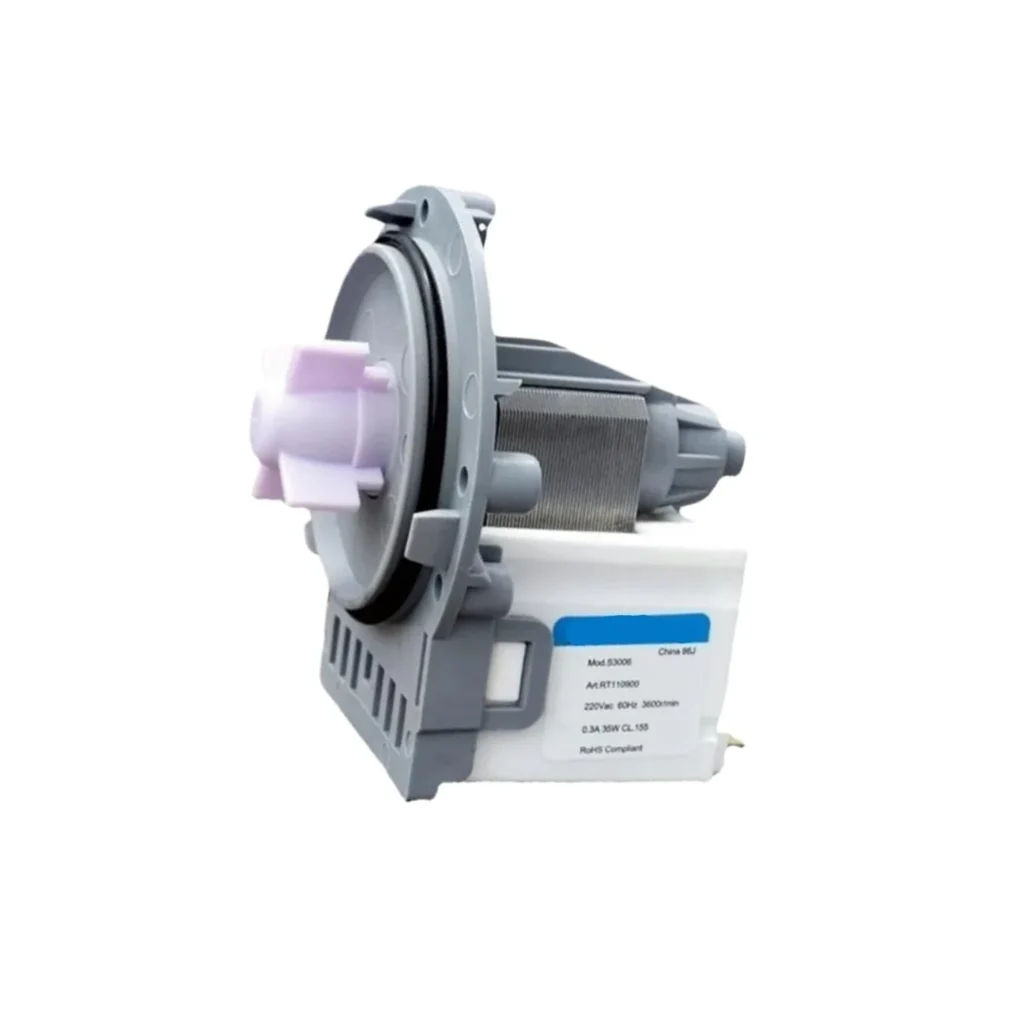
Here's the thing about circulation pumps in LG front-loaders: they should last 8–12 years, but most people replace them around year 5 or 6. That's not bad luck — it's usually debris buildup and hard water deposits slowly choking out a perfectly good motor.
The EAU61383501 circulation pump (also sold as EAU61383503, 4681EA2001C, and EAU62263303) handles a brutal job in models like the WM3997HWA, WM9000HVA, and WM8000HWA. It recirculates water during the wash cycle, pushing water through the spray arms and keeping clothes moving. When it fails, you'll know immediately — your washer won't drain properly, or it'll stop mid-cycle with standing water in the drum.
How Long Should It Last?
Under normal conditions, this pump should give you 8–12 years of service. But "normal" assumes reasonably clean water, occasional filter cleaning, and loads that don't include pet hair, lint, or small objects.
In reality, most pumps start showing problems around year 5. Here's what kills them early:
- Debris accumulation: Hair ties, coins, buttons, and pet hair get past the main filter and lodge in the pump impeller. The motor strains, overheats, and eventually burns out.
- Hard water deposits: Calcium and mineral buildup restricts water flow and makes the impeller work harder. Over time, this wears out the motor bearings.
- Detergent residue: Too much detergent (especially non-HE formulas) leaves sticky residue that gums up moving parts.
- Continuous heavy loads: If you're washing king-size comforters weekly or running back-to-back loads daily, the pump doesn't get cool-down time.
With proper maintenance, you can push this pump to 10–12 years easily. It's mostly about keeping water flowing freely and preventing debris from reaching the impeller.
Signs It's Wearing Out
Don't wait until your washer completely stops draining. These early warning signs tell you the pump is struggling:
Will Not Drain Completely
This is the classic symptom. You open the door after a cycle and there's still an inch or two of water sitting in the drum. Sometimes it drains slowly over 10–15 minutes, sometimes it doesn't drain at all. The pump motor might be running (you'll hear it humming), but the impeller isn't moving water effectively. Usually means something's blocking the impeller or the motor bearings are shot.
Unusual Grinding or Rattling Noise
A healthy circulation pump runs quietly — just a low hum during the wash cycle. If you're hearing grinding, rattling, or a high-pitched whine, something's caught in the impeller or the motor bearings are worn. This noise typically gets louder over several weeks before the pump fails completely.
Error Codes OE or dE2
LG washers throw an OE (drain error) or dE2 (door error due to standing water) when the pump can't move water fast enough. The washer knows water should be gone by a certain point in the cycle, and when it's not, it stops and displays the code. Sometimes this is a clog you can clear, sometimes it's a dying pump motor.
Cycles Take Much Longer Than Normal
If your normal wash cycle suddenly takes 2.5 hours instead of 90 minutes, the washer is probably trying to drain multiple times because the pump isn't keeping up. You might not even get an error code — the machine just keeps extending the cycle time trying to finish the job.
When to Replace vs Maintain
Here's the honest decision framework: if your pump is making noise or not draining, pull the drain filter first (it's behind the small access panel at the bottom front of the washer). Clean out any debris. If that fixes it, great — you caught it early.
If cleaning the filter doesn't help, you need to check the pump itself. On LG front-loaders, this means pulling the washer away from the wall, removing the back or bottom panel (depending on your model), and accessing the pump assembly. Spin the impeller by hand. It should turn freely with just slight resistance.
If the impeller won't turn or feels gritty, you can try flushing the pump housing with vinegar and hot water. Sometimes you'll dislodge enough buildup to get another year out of it.
But if the motor itself hums without the impeller turning, or if you smell burning plastic, the motor's cooked. Time to replace the whole pump assembly. The EAU61383501 isn't rebuildable — it's a sealed unit.
Cost-wise, you're looking at $123 for the part plus maybe $200–300 for installation if you hire it out. Most handy people can swap it themselves in 45 minutes with basic tools. Versus $800–1200 for a service call where they diagnose it, order the part, and come back to install it.
Frequently Asked Questions
How often should I clean the drain filter to protect the pump?
Every month if you wash pet bedding or have hard water. Every 2–3 months for normal use. The drain filter catches most debris before it reaches the circulation pump, but it only works if you actually empty it. Set a phone reminder — it takes 3 minutes and can save you $400 in pump replacements.
Can I use Affresh or other cleaners without damaging the pump?
Yes, washer cleaning tablets like Affresh are fine and actually help by removing detergent buildup. Run a cleaning cycle monthly if you use liquid detergent, every other month with powder. Just don't use more than the recommended amount — extra cleaner doesn't clean extra, it just leaves more residue.
Does hard water really shorten the pump's life?
Absolutely. Hard water deposits build up on the impeller blades and inside the pump housing, restricting water flow and making the motor work harder. If you've got hard water (you'll see white buildup on faucets), run a vinegar cycle every other month. Pour two cups of white vinegar directly into the drum and run a hot water cycle. It dissolves mineral deposits before they cause problems.
Element showing wear?
EAU61383501 · Replace before it fully fails