
How to Extend Your Samsung Dishwasher Drain Hose Life — DD67-00059A Maintenance Guide
Always disconnect power before servicing. Water and electricity don't mix — pull the plug or flip the breaker before inspecting or replacing the drain hose.
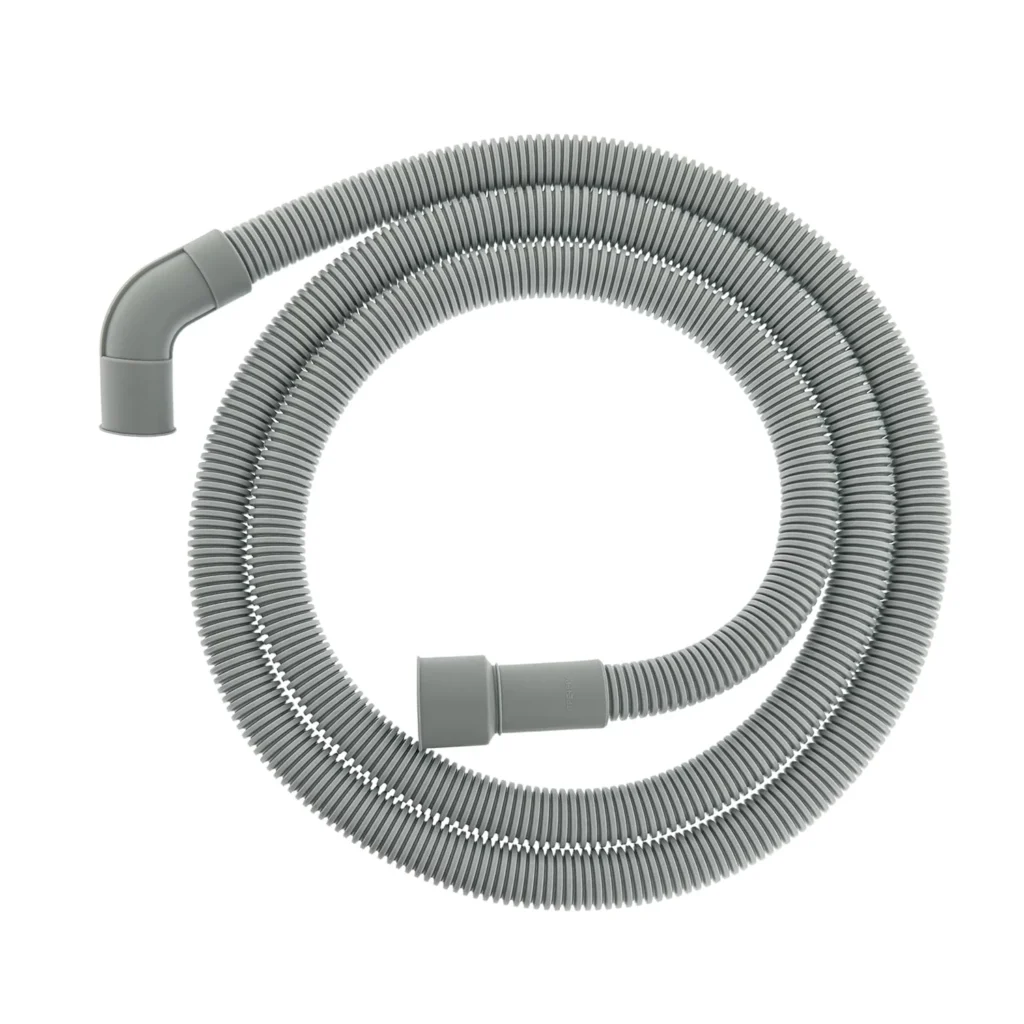
Most Samsung dishwasher drain hoses should last 8–10 years, but I see replacements needed after just 3–4 years when they're ignored. The DD67-00059A (which replaces DD81-02331A and DD81-02636A) is tucked behind your dishwasher where you can't see it gradually deteriorating — until you find water pooling under your DW80F600 or DMT800RHS.
Here's what I've learned from two decades of dishwasher repairs: the hose itself rarely fails spontaneously. It's the connections, the kinks, and the buildup that kill it early.
How Long Should It Last?
The DD67-00059A is made from reinforced rubber that's designed for hot water and detergent exposure. Under normal conditions, you're looking at:
- Standard lifespan: 8–10 years in typical household use
- With proper maintenance: 12+ years isn't uncommon
- Poor conditions: As little as 3–4 years if it's kinked or clogged
What affects lifespan? Three big factors: how your dishwasher drains (pump efficiency), what you're washing down (food particles, grease), and how the hose is routed behind the unit. A hose that's pinched between the dishwasher and cabinet will develop a weak point that eventually splits.
Signs It's Wearing Out
The most obvious symptom is leaking — and it's usually the first sign that something's wrong. But there are earlier warnings if you know where to look.
Leaking Water Under or Behind the Dishwasher
This is the big one. Water pooling under your DW7933LRAWW or DMT400RHB means the hose has either cracked, the connection has loosened, or there's a pinhole leak you can't see. Check both ends first — the dishwasher pump connection and where it attaches to your garbage disposal or drain pipe. These clamp connections can loosen over time from vibration.
Run a cycle and shine a flashlight along the entire hose length while it's draining. Look for moisture, drips, or wet spots on the hose exterior.
Slow Draining or Standing Water
If your dishwasher isn't emptying completely, the drain hose might be partially clogged with food debris or grease buildup. This doesn't mean the hose is failing yet, but the internal restriction puts extra pressure on the rubber, which can lead to bulging or splitting.
Feel along the hose when it's not running. Any section that feels harder or more rigid than the rest? That's buildup, and it's restricting flow.
Visible Cracks, Brittleness, or Soft Spots
Pull the dishwasher out and inspect the entire hose. Look for:
- Surface cracks in the rubber (especially near bends)
- Areas that feel unusually soft or squishy when you squeeze them
- Sections that look swollen or bulged
- Brittle areas that feel stiff rather than flexible
Any of these mean the rubber is breaking down from heat, chemicals, or age. It'll fail soon.
Monthly Maintenance That Actually Works
After Each Dishwasher Load
Scrape plates before loading. I know it sounds basic, but food particles are what eventually clog the drain hose. You're not trying to pre-wash everything — just remove the big stuff that'll never dissolve.
Monthly Deep Check
Once a month, pull out the bottom rack and check the drain filter at the bottom of your Samsung dishwasher. Clean out any debris. Then run a cycle with dishwasher cleaner or a cup of white vinegar on the top rack to flush grease buildup through the drain hose.
While you're at it, listen during the drain cycle. The pump should sound steady and strong. If you hear gurgling or the drain seems to labor, there's likely a partial blockage forming.
Every Six Months
This is when you actually pull the dishwasher out and inspect the DD67-00059A:
- Check both hose clamps are tight (but don't overtighten — you'll crack the plastic fittings)
- Look for any kinks or sharp bends in the hose routing
- Feel along the entire length for soft spots or brittleness
- Make sure the hose has a proper high loop or air gap to prevent backflow
When to Replace vs Maintain
Here's the honest truth: if your drain hose is leaking, you replace it. There's no reliable way to patch a drain hose that sees hot water, detergent, and constant pressure cycles. I've seen people try hose tape, epoxy, even clamps over cracks — it always fails within weeks.
Replace immediately if you see:
- Any active leak, even small drips
- Cracks in the rubber
- Bulging or soft spots
- Brittleness that causes cracking when you bend the hose
Maintain if:
- The hose looks good but drainage is slow (clean it out)
- Connections are loose (retighten clamps)
- The hose is kinked (re-route it properly)
The DD67-00059A fits dozens of Samsung models including the DMT400 and DW80F600 series. At $33.99, it's cheap insurance compared to water damage repairs from a failed hose.
What Kills Drain Hoses Early
Kinking: When the dishwasher gets pushed back too far or too fast, the drain hose can fold on itself. That creates a weak point that'll split under pressure.
No high loop: The drain hose should loop up higher than the sink drain connection before dropping back down. Without this, wastewater can siphon back into your clean dishwasher. Some people secure the loop to the underside of the counter with a bracket.
Heat exposure: If your drain hose runs too close to the dishwasher's heating element area or touches hot water supply lines, the rubber breaks down faster.
Harsh chemicals: Heavy-duty drain cleaners can deteriorate rubber faster than normal use. If you've got a slow drain, snake it out rather than dumping chemicals down.
Frequently Asked Questions
How often should I replace my Samsung dishwasher drain hose?
There's no set replacement schedule — it's condition-based. Inspect it every six months, and plan on replacement every 8–10 years even if it looks okay. Rubber degrades over time regardless of visible wear. If you see any cracks, leaks, or soft spots during inspection, replace it immediately rather than waiting for a failure.
Can I use a universal drain hose instead of the DD67-00059A?
You can, but I don't recommend it for Samsung dishwashers. The DD67-00059A is designed with the correct length, diameter, and connection fittings for your specific model. Universal hoses often require adapters or additional clamps, which create more potential leak points. The OEM part costs $33.99 — not worth the risk of a bad fit to save a few dollars.
Why does my drain hose have standing water in it between cycles?
That's actually normal for the lowest section of hose. The drain pump can't evacuate every drop. What's not normal is if the entire hose stays full or if water drains back into the dishwasher tub. That indicates either a clog in the hose, a faulty pump, or improper hose routing without a high loop. Check your installation — the hose should loop higher than your sink drain before connecting.
Element showing wear?
DD67-00059A · Replace before it fully fails