
How to Extend Your Samsung Dishwasher Dispenser Life — DD59-01003A Maintenance Guide
Disconnect dishwasher power before inspecting dispenser components. Rinse aid is toxic if ingested — keep away from children and pets. Never force a stuck dispenser door; this can break internal components and create sharp plastic edges.
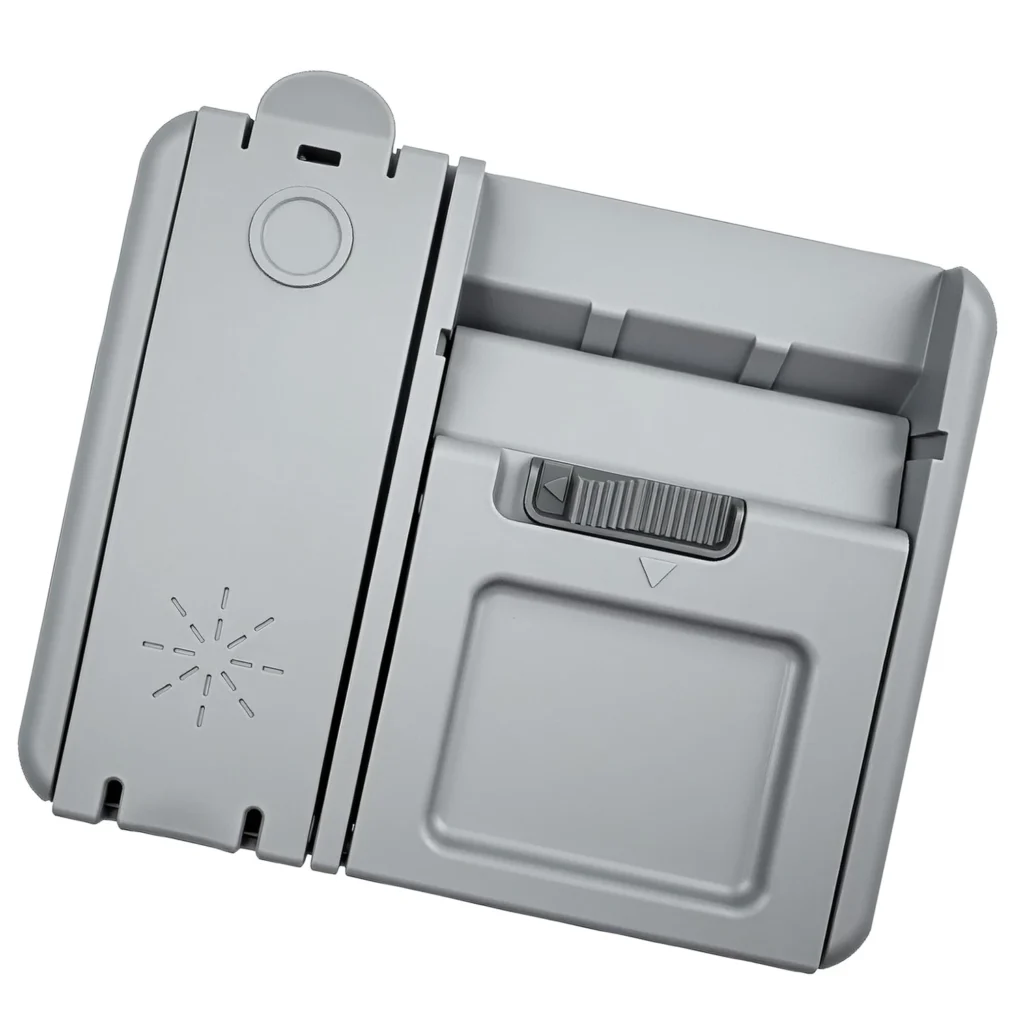
Here's something most Samsung dishwasher owners don't realize: that detergent and rinse aid dispenser assembly (DD59-01003A) should last 8-10 years, but most fail around year 5. The culprit? Not the part itself — it's how we use it.
This assembly is one of the more expensive dishwasher components at $170.99, which makes proper maintenance worth your time. Models like the DW80R7060US/AA, DW80R9950US/AA, and the entire R7000/R9000 series use this exact dispenser, and they all share the same weak points.
How Long Should It Last?
Under normal conditions, the DD59-01003A dispenser assembly is engineered for 2,000-2,500 wash cycles. That translates to:
- Daily use: 7-8 years
- Every other day: 10-12 years
- With proper care: Add 2-3 years to either estimate
The assembly includes the detergent cup, rinse aid reservoir, wax motor actuator, and spring mechanism. Each component has different failure modes, but most problems trace back to residue buildup or physical damage from overfilling.
Signs It's Wearing Out
Your dispenser will telegraph problems weeks before complete failure. Watch for these specific indicators on your Samsung DW80R models:
Dispenser Door Won't Open Completely
The door might crack open but not swing fully, leaving detergent stuck inside. You'll see this as a partially dissolved pod or clumped powder at the end of a cycle. The wax motor actuator is starting to fail — it's not generating enough force to fully release the spring latch. This usually happens gradually over 3-4 weeks.
Rinse Aid Leaks Onto Door
Check the bottom of your dishwasher door between cycles. If you see blue liquid pooling there, the rinse aid seal has degraded. This seal is rubber, and exposure to high heat plus chemical rinse aid breaks it down. Once it starts leaking, it won't stop — the seal doesn't regenerate.
Detergent Cup Won't Latch Closed
You push the door shut, it clicks, but pops back open before you start the cycle. The plastic catch mechanism has worn down from thousands of open-close cycles. Sometimes you can force it shut by pressing hard, but that's actually accelerating the wear. If you're having to use force, replacement is 2-3 months away.
White Crusty Buildup Around Door Edges
This isn't just cosmetic. That white crust is hardened detergent and mineral deposits working their way into the door mechanism. It's adding friction to moving parts that need to move smoothly. Left unchecked, it'll seize the door completely within 6-8 months.
Cycle Starts But Dishes Come Out Dirty
If everything seems normal but your dishes aren't getting clean, the dispenser might be opening but not ejecting detergent properly. This happens when the spring loses tension or when buildup blocks the detergent from dropping into the spray zone. Run an empty cycle and watch through the door — you should see the cup pop open about 15 minutes in.
Maintenance Schedule That Actually Works
Here's what extends dispenser life on the DW80R7060UG, DW80R9950US, and similar Samsung models:
After Every 5-7 Cycles (Weekly for Most Users)
Open the dispenser door and wipe out any detergent residue with a damp cloth. Get into the corners where the door hinges — that's where buildup starts. Takes 30 seconds. Don't use abrasive scrubbers; they'll scratch the plastic and create texture that holds more residue.
Monthly Deep Clean
Remove any detachable parts (check your model's manual — some dispenser caps twist off). Soak them in warm water with a tablespoon of white vinegar for 15 minutes. Use a soft toothbrush to clean around the rinse aid cap threads and the detergent cup latch. Rinse thoroughly — you don't want vinegar mixing with your next load's detergent.
Every 3 Months
Inspect the rinse aid reservoir seal. Press gently around its edge — it should feel pliable, not brittle. If it's starting to crack or feels hard, you've got maybe 6 months before leaks start. Also check that the rinse aid adjuster dial (the one that controls release rate) turns smoothly without sticking.
Twice a Year
Run a cleaning cycle with dishwasher cleaner or a cup of white vinegar on the top rack. This isn't just for your dispenser — it clears buildup from spray arms and drain lines that can splash back onto the dispenser assembly. Make sure the dispenser is empty when you do this.
What Kills Dispensers Early
I've replaced hundreds of DD59-01003A assemblies. Here's what actually causes premature failure:
Overfilling the detergent cup. That line inside the cup isn't a suggestion. Go over it and detergent clogs the mechanism. Modern pods are pre-measured for a reason — use them or measure carefully with powder/liquid.
Using the wrong detergent type. Some Samsung models perform better with powder, others with liquid. Check your manual. Using liquid in a powder-optimized dispenser creates a film that gums up the release mechanism.
Ignoring the rinse aid empty light. Running cycles with an empty rinse aid reservoir doesn't just affect drying — it can cause the dispenser to try opening when there's nothing to dispense, which stresses the wax motor unnecessarily.
Hard water without maintenance. If you have hard water (you'll know from white spots on glasses), your dispenser faces extra mineral buildup. Either install a water softener or increase your cleaning frequency to weekly.
Forcing a stuck door. If the dispenser door sticks, don't force it. That's a symptom of a deeper problem — forcing it just breaks the latch mechanism. Clean it thoroughly first, and if it still sticks, the wax motor is likely failing.
When to Replace vs Maintain
Maintenance extends life, but it can't fix mechanical failure. Replace the DD59-01003A when:
- The dispenser door won't open at all during cycles
- Rinse aid actively leaks (not just dampness, but actual dripping)
- The latch is cracked or broken (you'll see visible damage)
- The wax motor doesn't click when activated (you can test this with the door open during a cycle start)
- You've cleaned thoroughly but detergent still doesn't dispense properly
Don't try to "repair" a dispenser assembly. The DD59-01003A is sold as a complete unit because the internal components — wax motor, springs, seals — aren't serviceable separately. At $170.99, it's expensive, but labor to repeatedly patch a failing dispenser costs more in the long run.
Model-Specific Notes
The DD59-01003A fits Samsung's premium R7000 and R9000 series, including the DW80R7060US/AA, DW80R7061US/AA, DW80R9950US/AA, DW80R9950UG/AC, and DW80R9950MT/AA. These models share the same dispenser design but have different cycle options that affect dispenser wear:
AutoRelease door models (most R9000 series): These automatically crack the door at cycle end for better drying. That's an extra 250-300 open cycles per year beyond normal dispenser activation. Clean more frequently.
Zone Booster models (DW80R9950QH/AA, DW80R9950QN/AA): The concentrated spray in the third rack can splash back onto the dispenser. Wipe it down after heavy soil cycles.
Frequently Asked Questions
Can I Use Vinegar to Clean the Dispenser Regularly?
Yes, but diluted and infrequently. Once a month is fine — weekly vinegar exposure can degrade rubber seals faster than normal wear. Mix one part white vinegar to three parts water for cleaning. Never pour undiluted vinegar into the rinse aid reservoir; it's too acidic for the internal components and voids your warranty on new parts.
Why Does My Dispenser Sometimes Not Open Even Though It's Clean?
Most likely the wax motor actuator is failing. This component heats up to expand wax, which pushes a piston that releases the door. If your home voltage fluctuates or you've had power surges, the heating element inside may not reach full temperature. Test by running a cycle with the door cracked so you can watch — if the door doesn't pop open around the 15-minute mark, the wax motor is done. Unfortunately, this isn't fixable through maintenance; you need the full DD59-01003A assembly replacement.
Does the Rinse Aid Dial Setting Affect Dispenser Lifespan?
Indirectly, yes. Setting it higher than needed means you're refilling more often, which wears the cap threads and seal. Start at level 2 or 3 (mid-range) and only increase if you see water spots. Most users never need maximum. Also, overfilling when you refill — letting rinse aid overflow — accelerates seal degradation. Fill slowly until the indicator shows full, then stop immediately.
Element showing wear?
DD59-01003A · Replace before it fully fails