
How to Extend Your Samsung Dishwasher Water Inlet Valve Life — DD33-01002A Maintenance Guide
Always disconnect power and shut off water supply before servicing. Water under pressure can spray when connections are loosened. Never apply more than 10 PSI compressed air to valve.
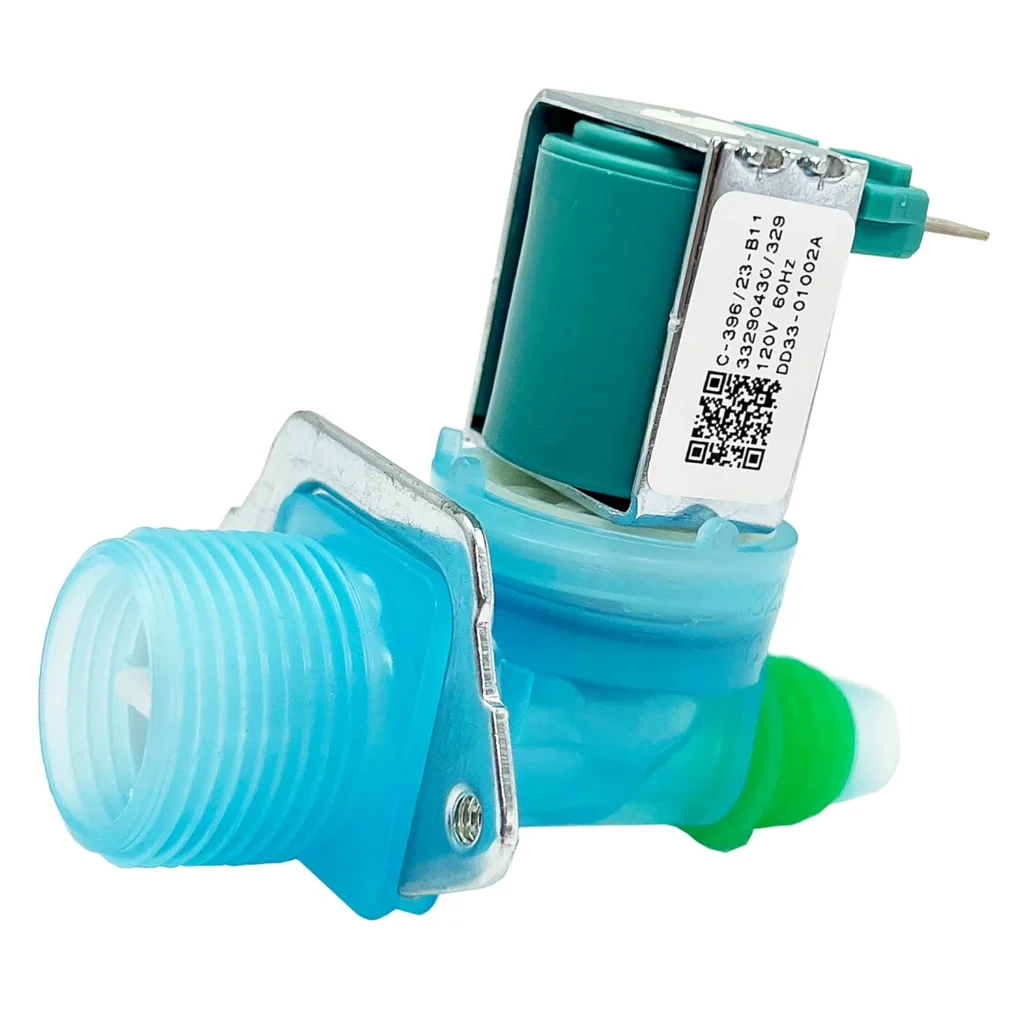
Most Samsung dishwasher water inlet valves fail between years 4 and 7. Mine lasted 9 years by following a simple maintenance routine I'm about to share. The DD33-01002A inlet valve used in models like the DW80M9550UG/AA and DW80M9990US/AA handles hundreds of gallons under constant pressure — it needs periodic attention to reach its full lifespan.
How Long Should It Last?
Samsung rates these valves for approximately 5-7 years of normal use, which translates to roughly 2,500-3,500 wash cycles. But here's what actually affects how long yours will last:
Water quality matters more than anything else. Hard water deposits build up on the solenoid screen and valve seat, causing premature failure. If you've got hard water (over 7 grains per gallon), expect the lower end of that range without maintenance.
Water pressure plays a role too. The DD33-01002A is designed for 20-120 PSI. Pressure over 100 PSI stresses the internal diaphragm and can cause early leaks. Pressure below 20 PSI makes the valve work harder to fill, wearing out the solenoid coil.
Temperature fluctuations in unheated spaces accelerate rubber seal degradation. If your dishwasher's in a garage or utility room that freezes, you're looking at significantly shorter valve life.
Signs It's Wearing Out
The valve doesn't just quit overnight. It gives you warnings:
Slow Fill Times
Your dishwasher takes noticeably longer to fill than it used to. What was once a 45-second fill now takes 90 seconds or more. This usually means mineral buildup is restricting flow through the valve screen or the solenoid is weakening.
Intermittent No-Fill Conditions
Sometimes it fills normally, sometimes it doesn't fill at all. You might hear a faint humming when it should be filling — that's the solenoid energizing but the valve not opening fully. This points to a sticking plunger inside the valve body.
Water Leaks at the Valve Connection
You notice moisture or small puddles under the dishwasher near the left side where water connects. The rubber gasket inside the valve inlet has hardened and no longer seals properly. This typically happens after 5-6 years as the rubber loses elasticity.
Dishwasher Overfills or Won't Stop Filling
Water keeps running even when the tub is full, or the dishwasher shuts off with an error code. The valve isn't closing completely when the solenoid de-energizes. Mineral deposits or a failed spring mechanism prevent proper shut-off.
When to Replace vs Maintain
Here's the honest truth: if your inlet valve is actively leaking or failing to open, maintenance won't fix it. Replace it. The DD33-01002A isn't rebuildable — there are no serviceable internal parts.
But if it's still working and you want to prevent premature failure, regular maintenance buys you years of additional life. I recommend maintenance for valves under 4 years old with no symptoms. Beyond that, you're in the replacement zone anyway.
The maintenance we're talking about isn't invasive. You're not disassembling the valve itself — you're maintaining the conditions around it and cleaning accessible surfaces. Think of it as preventive care, not repair.
Also consider this: a new DD33-01002A costs around $25-35. If your valve is 6+ years old and showing symptoms, just replace it. Spending time on maintenance when you're close to end-of-life doesn't make economic sense.
Monthly Quick Check (5 Minutes)
Once a month, pull your dishwasher forward enough to see the left side panel where water connects. You're looking for:
Moisture or corrosion at the inlet connection. If the brass fitting looks green or you see water streaks, the valve's inlet gasket is compromised. Tighten the connection first — sometimes it's just loose. If moisture persists, you'll need a new valve soon.
Listen during fill. Run a cycle and pay attention when it starts filling. The valve should make a single click when it opens, then steady water flow. Multiple clicks, buzzing, or humming without water flow means internal valve problems.
Every 6 Months: Screen Cleaning
The inlet screen catches debris before it reaches the valve. In hard water areas, it also catches mineral deposits. This is your highest-value maintenance task.
Turn off water supply to the dishwasher. Disconnect the water line from the valve inlet — you'll need a wrench for the compression fitting. Pull out the small mesh screen from the valve inlet port using needle-nose pliers.
Soak the screen in white vinegar for 30 minutes if you see any white or greenish buildup. Rinse thoroughly. If the screen is damaged or the mesh is deformed, replace it — they're cheap insurance.
While the line is disconnected, turn the water supply on briefly into a bucket. This flushes the supply line. You'd be surprised how much sediment comes out, especially if you have older pipes.
Annually: Complete Inspection
Once a year, give the valve and connections a thorough look:
Check the wire harness connection to the solenoid. Wiggle it gently — if it's loose or corroded, clean the terminals with electrical contact cleaner. A poor electrical connection makes the solenoid work harder and fail sooner.
Inspect the mounting bracket. The valve should be solidly attached with no movement. Vibration from a loose mounting accelerates internal wear.
Test water pressure at the supply valve. Install a pressure gauge on a washing machine hose adapter. Pressure should read 20-80 PSI ideally. Above 100 PSI, install a pressure reducer. Below 20 PSI, you've got a supply problem to address.
Hard Water Considerations
If you're on well water or in an area with hard water above 10 grains per gallon, normal maintenance intervals won't cut it. You need to clean that inlet screen every 3 months, not every 6.
Consider installing an inline sediment filter before the dishwasher. A basic 10-micron filter ($15-20) catches most of what would otherwise clog your valve screen. Change it every 6 months.
Better yet, install a water softener for the whole house if you don't have one. It's the single biggest thing you can do for appliance longevity. Every water-using appliance in your home will last longer.
Freezing Environment Protection
If your Samsung dishwasher is installed anywhere that might freeze — garage, basement, vacation home — the inlet valve is vulnerable. Water trapped inside the valve body can freeze and crack the valve housing or rupture the internal diaphragm.
Before winter, if you're winterizing the home, shut off water supply and run the dishwasher on a rinse cycle with the supply valve closed. This empties the valve. Then disconnect the inlet line and blow compressed air through the valve (very low pressure, under 10 PSI) to clear remaining water.
For year-round installations in unheated spaces, insulate the water supply line and valve with foam pipe insulation. It won't prevent freezing if temperatures drop below 20°F for extended periods, but it helps during brief cold snaps.
What Maintenance Can't Fix
Let's be clear about limitations. You can't maintain away a failed solenoid coil. You can't reverse a cracked valve body. You can't fix a ruptured internal diaphragm.
Maintenance extends life by preventing the conditions that cause those failures — mineral buildup, debris damage, pressure stress, and corrosion. But once the valve has failed mechanically or electrically, replacement is your only option.
The good news: the DD33-01002A is a direct replacement that works across dozens of Samsung dishwasher models including the DW80M9550UG, DW80M9990UM, DW80M9960US, and DW80M9550US series. Installation takes 15-20 minutes and requires basic tools.
Frequently Asked Questions
Can I test if my inlet valve is working without removing it?
Yes. Start a wash cycle and listen — you should hear a distinct click when the valve opens, followed immediately by water flow. If you hear the click but no water, the valve is stuck closed. If water runs continuously without stopping, the valve isn't closing. Use a multimeter to test solenoid resistance: disconnect power, remove the wire connector, and measure across the solenoid terminals. You should read 500-1500 ohms. Infinite resistance means the coil is open (failed). Near-zero resistance means it's shorted.
How do I know if I have hard water affecting my valve?
Look for white or greenish buildup on faucet aerators, showerheads, or the dishwasher's spray arms. That's mineral deposit. You can also test your water hardness with an inexpensive test kit from a hardware store. Above 7 grains per gallon is considered hard; above 10 grains is very hard and will definitely impact valve life. Check the inlet screen when you remove it — heavy white coating or completely clogged mesh confirms hard water is your enemy.
Will cleaning the inlet screen solve slow fill problems?
Sometimes, but not always. If the screen is heavily clogged, cleaning it will restore normal flow immediately. But if mineral deposits have formed inside the valve body itself — downstream of the screen — cleaning the screen won't help. You'll know within one or two cycles after cleaning the screen. If fill time improves significantly, the screen was your problem. If it's still slow, the valve internals are compromised and you need a replacement. Also verify your home water pressure is adequate (20-80 PSI) — low pressure causes slow fills regardless of valve condition.
Element showing wear?
DD33-01002A · Replace before it fully fails