
How to Extend Your Samsung Washer Suspension Rod Life — Maintenance Guide
Always unplug washer before inspection. Never operate washer with visibly damaged or missing suspension rods — drum can damage tub and cabinet.
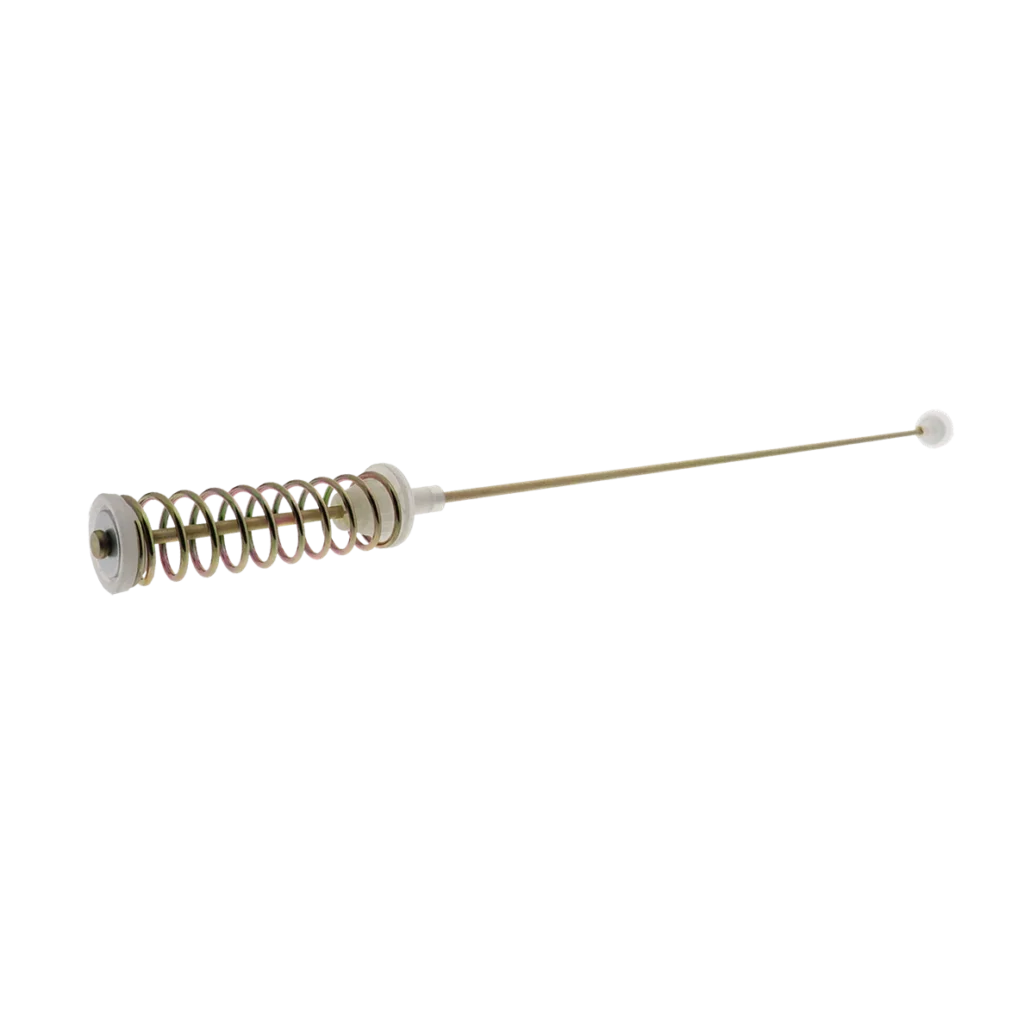
Here's something most Samsung washer owners don't know: those four suspension rods holding your drum should last 8-10 years, but most fail around year 5. The DC97-16350E suspension rod assembly takes a beating every single wash cycle — supporting anywhere from 10 to 40 pounds of wet laundry while absorbing vibrations at 1200+ RPM during spin.
I've replaced hundreds of these rods over the years, and the wear pattern is almost always the same. The rubber bushings dry out first, then the rod starts making contact with metal parts it shouldn't touch, and suddenly your washer sounds like it's trying to escape across the laundry room floor.
How Long Should Your Suspension Rods Last?
Samsung designs these suspension rod assemblies for about 8-10 years of typical use. That's roughly 2,500-3,000 wash cycles. But here's what actually affects that number:
Overloading kills them fast. Every pound over the manufacturer's max capacity puts exponential stress on the rods. If you regularly stuff that drum to capacity, you're looking at 5-6 years instead of 10.
The washer's location matters more than you'd think. A machine sitting on a concrete floor with proper leveling lasts longer than one on a second-floor laundry room with a wooden subfloor that flexes. Models like the WA456DRHDWR/AA and WA50R5400AW/US are particularly sensitive to improper leveling because they're larger capacity units.
Water quality plays a role too. Hard water doesn't directly damage the rods, but it increases vibration during spin cycles, which accelerates wear on the rubber components.
Signs Your Suspension Rods Are Wearing Out
You'll know something's wrong long before complete failure. The washer tells you — you just have to listen and look.
Excessive Movement During Spin Cycle
This is usually the first sign. Your washer starts "walking" across the floor during spin, even with a balanced load. It might only move an inch or two per cycle, but that's not normal. The suspension rods are supposed to keep that drum centered — when they weaken, the drum throws the whole machine off balance.
Check behind your washer monthly. If it's moved from where you last saw it, your rods are probably compromised.
Loud Banging or Clunking Sounds
When the rubber bushings in the suspension rod assembly start deteriorating, you'll hear metal-on-metal contact. It sounds like someone's inside the machine hitting it with a wrench. This typically happens during the transition from wash to spin, or when the spin cycle ramps up to full speed.
On models like the WA45H7000AW/A2 and WA45T3400AW/A4, this banging is especially pronounced because of their larger tub size.
Visible Drum Tilt or Sag
Open the washer lid and look straight down at the drum. It should sit perfectly level. If one side sits noticeably lower, or if you can see the drum isn't centered in the cabinet, at least one suspension rod has failed or is about to.
You can test this by gently pushing down on different sections of the drum lip. It should have equal resistance all around. If one section drops more easily than others, that's your weak rod.
Maintenance That Actually Extends Rod Life
Level Your Washer Properly (Right Now)
Get a basic bubble level and check both side-to-side and front-to-back. Most washers have adjustable front feet — turn them to get perfect level. An unlevel washer can reduce suspension rod life by 40% because it creates uneven stress distribution.
For second-floor installations, consider anti-vibration pads under the feet. They're $20 and genuinely help.
Stop Overloading (Seriously)
That capacity rating in your manual? It's for dry laundry weight. Wet cotton weighs about 2.5x more than dry. If you're loading 20 pounds of dry towels into a washer rated for 4.5 cubic feet, you're hitting 50 pounds during the spin cycle. The DC97-16350E rods aren't designed for that.
Leave at least 4-5 inches of space at the top of the drum. Your clothes need room to move anyway — tighter packing means dirtier clothes and worn suspension rods.
Run a Balance Test Monthly
Most Samsung washers have a calibration mode. On models like the WA50R5200AW/US and WA45N3050AW/A4, it's usually accessed by pressing Temp + Delay End + Start/Pause simultaneously for 3 seconds. The washer will run through a balance cycle to recalibrate its sensors.
This helps the machine distribute loads properly, reducing uneven stress on the suspension rods.
Inspect the Rods Every Six Months
You don't need to disassemble anything. Just:
- Unplug the washer and pull it away from the wall
- Remove the back panel (usually 4-6 screws)
- Look at where each rod connects to the drum and cabinet
- Check for cracked rubber, loose connections, or bent metal
- Look for rust or corrosion at attachment points
This 10-minute inspection catches problems early when they're cheaper to fix.
When to Replace vs. When to Keep Maintaining
Here's the honest truth: if you see any of these, it's replacement time, not maintenance time:
- Cracked or missing rubber bushings — they don't rebuild themselves
- Bent rod shafts — this means catastrophic overload already happened
- Broken mounting brackets — the structural damage is done
- Drum drops more than 1 inch when pressed — the rod has lost tension permanently
The DC97-16350E suspension rod assembly is $11.99. If you're seeing these symptoms, spending money on maintenance products won't help — you need new rods. The good news? Replacing all four rods at once (which you should do) still costs under $50 in parts.
Maintenance works when the rods are still functional. Once they've failed, they've failed. Don't waste time trying to "restore" them with sprays or lubricants — that's not how suspension rods work.
The Real Cost of Ignoring Suspension Rod Maintenance
Failed suspension rods don't just make noise. They create a cascade of other failures:
The drum starts hitting the cabinet during spin, which cracks the tub. That's a $200-400 repair. The increased vibration damages the motor mount and bearings. That's another $150-300. The walking motion can pull loose the water lines, flooding your laundry room.
I've seen all of this happen from homeowners ignoring obvious suspension rod symptoms for 6-8 months. A $50 rod replacement turns into a $600 repair bill, or a decision to buy a new washer entirely.
Frequently Asked Questions
Can I Replace Just One Suspension Rod Instead of All Four?
You can, but you shouldn't. If one rod has failed, the other three have been taking extra stress and are near failure too. Plus, mixing old and new rods creates uneven suspension, which causes more vibration and faster wear. Replace all four at once — it's only $48 in parts and prevents you from doing the same job again in three months.
How Often Should I Lubricate the Suspension Rods?
Never. The DC97-16350E suspension rod assembly uses sealed rubber bushings that don't require lubrication. Adding grease or oil actually attracts dirt and lint, which accelerates wear rather than preventing it. If your rods are squeaking or sticking, they need replacement, not lubrication.
Will Anti-Vibration Pads Really Help My Suspension Rods Last Longer?
Yes, but only if your washer sits on a flexible floor or is on the second floor. Anti-vibration pads reduce the shock feedback into the suspension system by about 20-30%. On a solid concrete floor, they make minimal difference. On wooden subflooring, especially in older homes, they can extend rod life by 1-2 years by dampening the oscillation cycle that fatigues the rubber bushings.
Element showing wear?
DC97-16350E · Replace before it fully fails