
How to Extend Your Samsung Dryer Thermal Fuse Life — DC47-00016A Maintenance Guide
Never bypass or attempt to reset a thermal fuse. It's a one-time safety device designed to prevent dryer fires. Always unplug the dryer before inspecting or replacing the fuse.
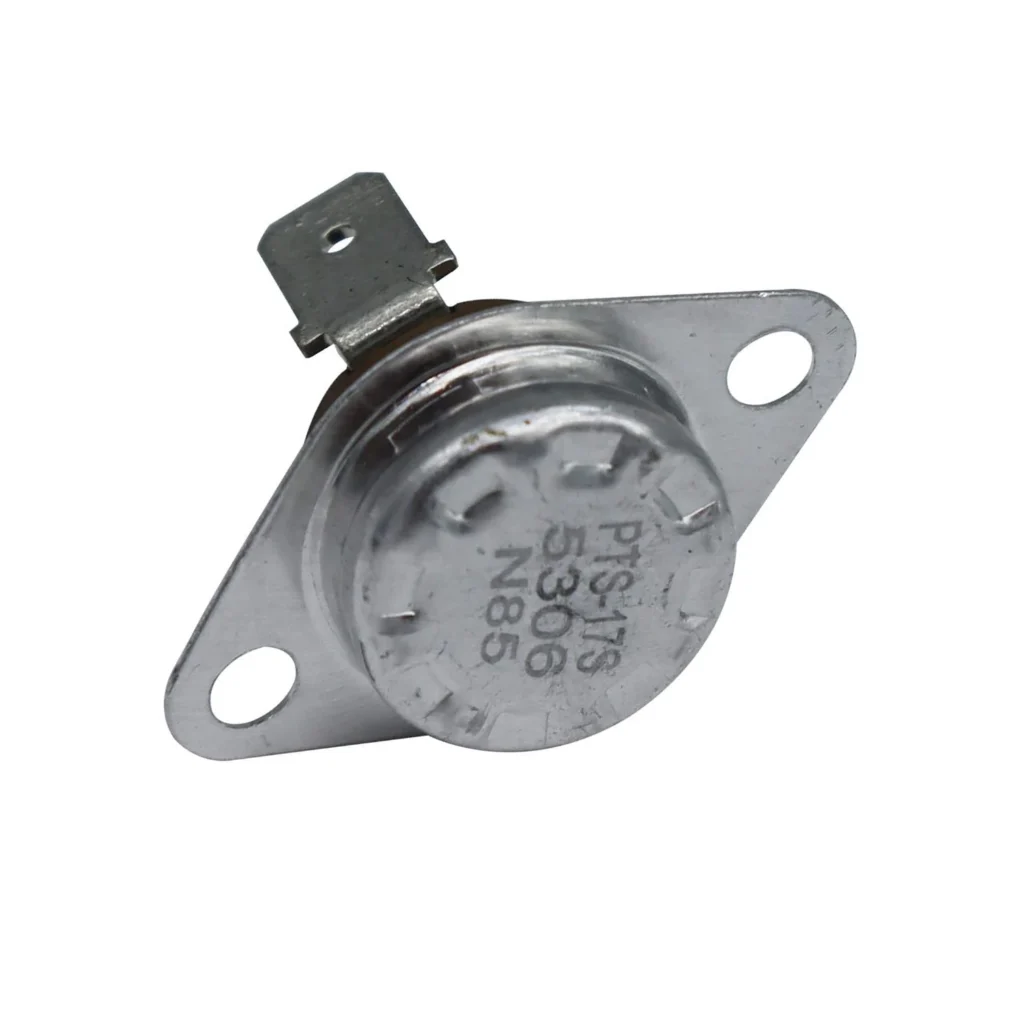
Here's something most Samsung dryer owners don't realize: the thermal fuse in your DC47-00016A isn't designed to wear out from age—it's designed to blow once and die protecting your machine. Yet I've seen these fuses last 15+ years in some dryers and fail within 18 months in others. The difference? How well you maintain the conditions around it.
If your DV5471AEW, DV422EWHDWR, or DV48J7770EW suddenly won't start or heat, that fuse has likely sacrificed itself. But you can prevent that premature death—and the $25.99 replacement cost—by understanding what kills thermal fuses early.
How Long Should a Thermal Fuse Last?
Technically, a thermal fuse like the DC47-00016A should last the lifetime of your dryer. It's a one-time safety device that only trips when exhaust temperatures hit 187°F—well above normal operating range. In ideal conditions, you'd never replace it.
Reality is different. Most fail between 5-8 years, not because they're defective, but because something else in the system is making your dryer run dangerously hot. I've replaced these fuses in dryers as young as 14 months old when the exhaust vent was completely blocked.
The fuse itself contains a small alloy pellet that melts at a precise temperature, permanently breaking the circuit. Once it blows, there's no reset button—it's toast. Your job is making sure it never reaches that temperature in the first place.
Signs Your Fuse Is About to Blow (Or Already Has)
The tricky part about thermal fuses: they give you warning signs before they fail, but those signs look like other dryer problems. Here's what to watch for:
Dryer Not Heating
Your Samsung starts, the drum turns, but clothes come out damp after a full cycle. This is the most common symptom of a blown DC47-00016A. The fuse sits in series with the heating element—when it blows, no electricity reaches the heater. You'll hear the motor running normally, but zero heat output.
Before assuming the fuse is dead, check if your DV331AEW or DV2C6BEW/XAA is actually heating. Put your hand near the exhaust vent outside while the dryer runs. Nothing? Fuse is likely gone. Hot air coming out? The problem's elsewhere.
Dryer Won't Start at All
On models like the DV42H5000EW and DV48H7400EW, a blown thermal fuse can prevent the dryer from starting entirely. You press start, maybe hear a click, then nothing. The control board is functional, but it won't engage the motor with a blown fuse in the circuit.
This symptom confuses people because they assume a heating problem wouldn't stop the motor. But Samsung's safety system is designed this way—if the fuse blows, the entire dryer shuts down to prevent fire risk.
Clothes Taking 2-3 Cycles to Dry (Pre-Failure Warning)
This is your early warning system. If your DVE52M8650V/A3 or DVG47CG3500VA3 suddenly needs multiple cycles to dry a normal load, your exhaust system is restricted. The dryer's running hotter than designed, and that thermal fuse is absorbing more heat every cycle. It hasn't blown yet, but it's under stress.
Check your lint trap and exhaust duct immediately. I've seen cases where cleaning the vent extended the fuse life by years.
What Actually Kills Thermal Fuses Early
Every premature thermal fuse failure I've diagnosed traces back to one of three causes:
Blocked exhaust venting. This is the killer. When lint builds up in your ductwork, hot air can't escape. Internal temperatures spike, and the fuse does its job by blowing. The DC47-00016A is rated for 187°F—blocked vents can push temps past 200°F. Clean your entire vent system, not just the lint trap, every 6-12 months.
Restricted airflow from the lint screen. Even a partially clogged lint filter reduces airflow enough to cause overheating. That fabric softener residue you can't see? It's coating the screen mesh and blocking air. Wash your lint filter with hot soapy water monthly.
Operating the dryer with wet shoes or heavy loads. Your DV419AGW/XAA's thermal fuse sits near the heating element housing. When you overload the dryer or run it with items that don't tumble properly, heat concentrates instead of distributing. The fuse reads that localized heat and interprets it as a dangerous condition.
The Honest Truth: When to Replace vs. When to Clean
You can't maintain the thermal fuse itself—there's no cleaning it, no resetting it, no extending its life once it's installed. What you're really maintaining is the environment around it.
If your Samsung dryer already shows the "not heating" or "won't start" symptoms, the fuse is blown. You need the DC47-00016A replacement—there's no workaround. That's a $25.99 part and about 30 minutes of your time if you're comfortable with basic repairs.
But if your dryer's still working and you want to prevent that $25.99 expense, focus on these maintenance tasks. Every restricted vent you clear is one less stress cycle on that fuse.
Here's my recommendation: treat thermal fuse maintenance as vent system maintenance. The fuse is the canary in the coal mine—if it blows, your dryer's been running dangerously hot for weeks or months. Fix the root cause (usually ventilation) and the new fuse will last years.
Frequently Asked Questions
Can I bypass the thermal fuse to test if it's bad?
Technically yes, but don't. I've seen this advice online, and it's dangerous. The DC47-00016A exists to prevent dryer fires—it's a $25.99 insurance policy against burning your house down. If you bypass it and the dryer overheats, there's no safety cutoff. Test it with a multimeter instead: unplug the dryer, remove the fuse, and check for continuity. No continuity = blown fuse. Replace it, don't bypass it.
Why did my new thermal fuse blow after two weeks?
You didn't fix the underlying problem. The DC47-00016A doesn't fail randomly—it blows because your dryer hit 187°F. If you replaced the fuse without cleaning the exhaust vent or checking the blower wheel, you've just installed another fuse that'll blow for the same reason. Before installing a new fuse, disconnect and inspect your entire vent run. I guarantee you'll find a restriction.
Are aftermarket thermal fuses as reliable as OEM Samsung parts?
The DC47-00016A replacement we carry is functionally identical to OEM part AP4201894—same 187°F trip temperature, same electrical rating. I've installed hundreds of these in Samsung and Kenmore dryers (model 40289032010 and similar) with zero issues. The key isn't brand name, it's ensuring the temperature rating matches. Never install a fuse with a higher trip temperature thinking it'll last longer—that defeats the entire safety purpose.
Element showing wear?
DC47-00016A · Replace before it fully fails