
How to Extend Your Manitowoc Ice Thickness Control Probe Life — Maintenance Guide
Always disconnect power before removing or cleaning the probe. Minerals and moisture create electrical conductivity — you can short the control board if you clean the probe while the machine is energized.
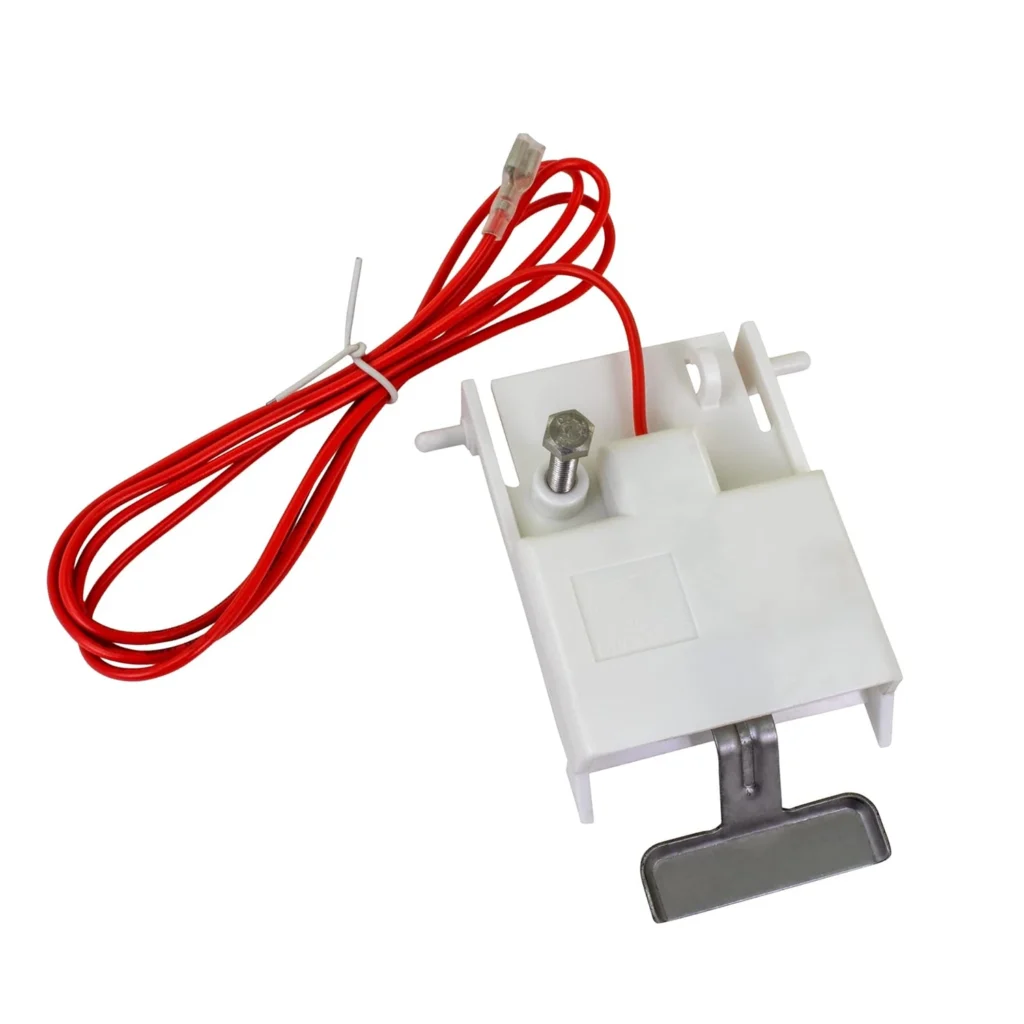
Most Manitowoc ice thickness control probes fail between 3-5 years, but I've seen well-maintained units on BD and BR series machines push past 8 years. The difference? Mineral buildup. That probe sits in your ice maker's water all day, every day — and if you're in a hard water area, scale creeps up the sensor housing until it can't accurately detect ice thickness anymore.
Your machine starts making ice that's too thin (wastes water, melts fast) or too thick (jams the harvest cycle). Neither scenario is cheap.
How Long Should It Last?
The 7627813 probe has a typical service life of 4-6 years under normal conditions. But "normal" assumes reasonably soft water and regular cleaning. In reality, three things kill these probes early:
- Mineral scale buildup — Changes the probe's thermal conductivity, throws off readings
- Physical damage during cleaning — The probe housing is plastic; aggressive scraping cracks it
- Electrical corrosion at connections — Moisture gets into the terminal block, creates resistance
If you're running this probe on a BD0602A or BR0800A in Phoenix or Vegas with untreated tap water? You're looking at 2-3 years max before it starts giving you trouble. Install an inline water filter and do monthly cleanings, and you'll hit 7+ years easy.
Signs It's Wearing Out
The probe doesn't just quit one day. It degrades gradually, and your ice quality tells the story before the machine throws an error code.
Ice Sheets Are Getting Thinner or Thicker
You'll notice this first on clear cube machines like the BD series. Your ice used to be a consistent 3/8" thick, now it's closer to 1/4" — or suddenly it's 1/2" and the cubes are jamming during harvest. The probe's sensing the wrong temperature because scale has insulated it from the actual ice temperature. On a BD1302A or BD1802A running heavy production, this throws off your yield numbers significantly.
Harvest Cycle Timing Gets Erratic
The probe tells the control board when ice has reached proper thickness by sensing temperature change. When mineral deposits coat the sensor, that signal gets delayed or comes too early. You'll see harvest cycles that start too soon (thin ice, lots of water waste) or too late (thick ice, potential auger damage on Q series machines). If your IB0822DC is harvesting every 18 minutes one cycle and 28 minutes the next, the probe's reading inconsistently.
Visible White Scale on Probe Housing
Pull the probe out during your monthly cleaning. If you see crusty white or yellowish buildup on the black plastic housing — especially around the metal sensing tip — that's calcium carbonate and magnesium deposits. Light film is normal and cleans off easily. Heavy buildup that doesn't come off with vinegar soaking means you've waited too long between cleanings, and the probe's accuracy is already compromised.
When to Replace vs Maintain
Here's the honest decision framework: If you catch scale buildup early and clean it monthly, you can maintain the same probe through its full 6-year lifespan. But if you've let it go and now you're seeing erratic harvest times plus visible cracks in the probe housing, just replace it. A new 7627813 probe costs $36.99 — trying to nurse along a damaged probe for another six months while your machine makes bad ice costs you more in wasted water and customer complaints.
Replace immediately if:
- The probe housing has any visible cracks (water intrusion kills the sensor)
- You've descaled it three times and harvest cycles are still inconsistent
- The wiring insulation at the connection point is cracked or corroded
Keep maintaining if:
- Scale comes off cleanly with vinegar or citric acid solution
- The housing is intact with no stress cracks
- Harvest timing becomes consistent after cleaning
For high-volume operations running BD1002A, BD1302A, or BD1802A models — buy a spare probe now. Keep it sealed in the box. When your working probe starts acting up during a rush, you'll have 10 minutes of downtime instead of waiting three days for shipping.
Frequently Asked Questions
Can I clean the probe with regular dish soap instead of descaling solution?
No — dish soap doesn't dissolve mineral scale, it just removes surface dirt. You need an acidic descaler: either white vinegar (5% acetic acid), citric acid solution (2 tablespoons per quart of water), or a commercial ice machine descaler like Nu-Calgon. Soak the probe for 15-20 minutes, then gently brush with a soft nylon brush. Soap leaves a residue that can actually attract more scale buildup.
How often should I replace the probe on a commercial ice machine running 24/7?
Plan on 4-5 years for continuous operation machines like the BR series in restaurants or hotels. The constant thermal cycling (freezing temps to room temp during harvest, back to freezing) fatigues the sensor faster than residential-style intermittent use. If you're on well water or municipal water above 180 PPM hardness, budget for replacement every 3-4 years even with monthly descaling.
Will a failing probe trigger an error code on the control board?
Not always — and that's the problem. The probe fails gradually by giving inaccurate readings rather than stopping completely. Your machine keeps running but makes progressively worse ice. Some Manitowoc control boards will eventually throw a "long freeze" or "short freeze" alarm, but by that point you've already wasted weeks of water and energy. Watch your ice quality and harvest timing; they'll tell you about probe problems before any error light comes on.
Element showing wear?
7627813 · Replace before it fully fails