
How to Extend Your LG Refrigerator Dispenser Micro Switch Life — Maintenance Guide
Always unplug the refrigerator before inspecting or replacing the micro switch. Even low-voltage circuits can cause burns or damage components if shorted.
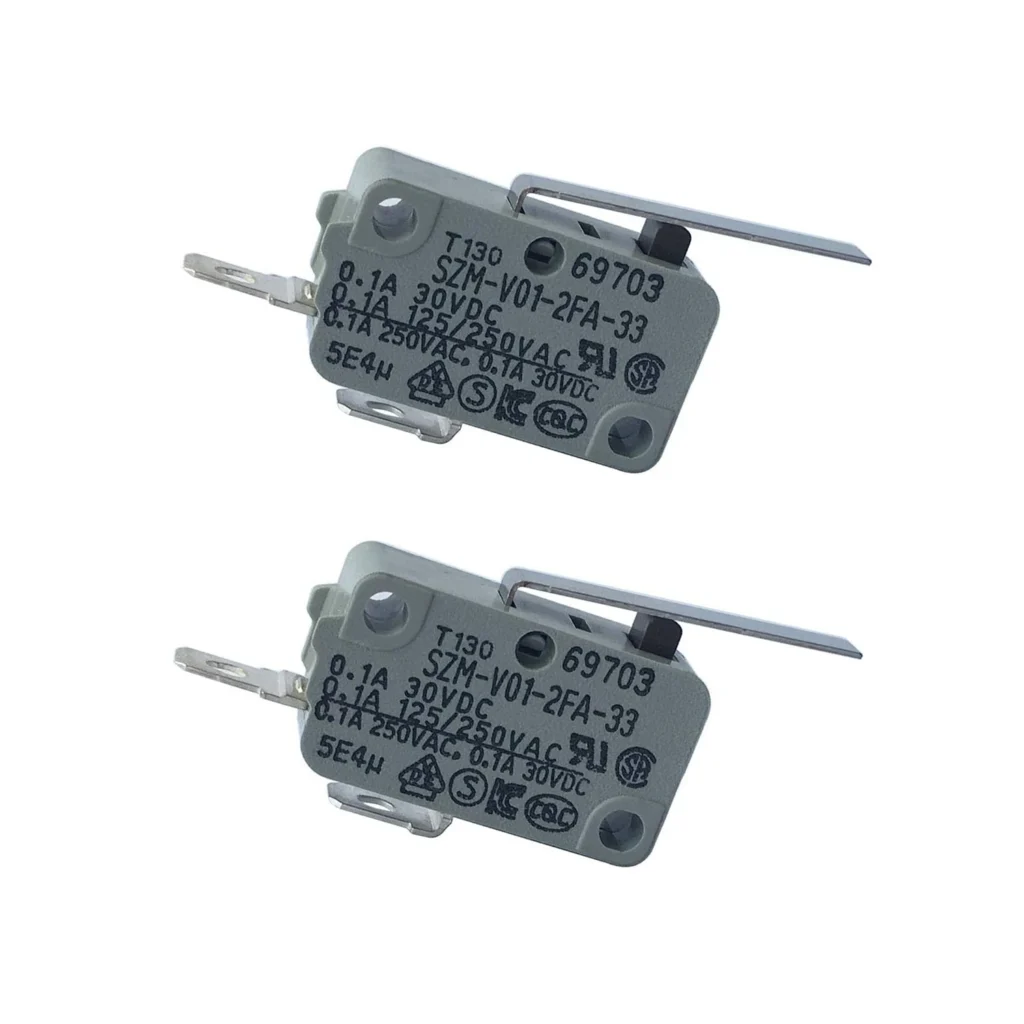
Most LG refrigerator dispenser micro switches like the 6600JB3001C are rated for about 100,000 actuations — that's roughly 274 presses per day for a year. But here's the reality: families blow through that in 18 months because of how we actually use our dispensers. Kids hold the lever down. Ice gets jammed. Someone tries to force it when the bucket's full.
I've replaced hundreds of these switches on models from the LMXS28626S to the LFXS30796S, and almost half the failures could've been prevented. The switch itself is a simple mechanism — a tiny lever arm that completes a circuit when pressed — but how you treat your dispenser directly impacts how long it lasts.
How Long Should It Last?
Under normal conditions, the 6600JB3001C should give you 3–5 years of reliable service. That's assuming you're pressing the dispenser lever normally — a quick press and release, not holding it down while you fill a 64-ounce water bottle.
The problem is most of us aren't using it normally. We're impatient. We're distracted. We're letting kids operate it unsupervised. Those behaviors dramatically reduce the switch's lifespan because every time you hold that lever down longer than necessary, you're keeping the switch contacts closed under load, which generates heat and causes premature wear.
Temperature swings also matter. If your fridge is in a garage where it drops to 40°F in winter or spikes to 90°F in summer, the plastic housing around the micro switch becomes brittle faster. The electrical contacts can corrode more quickly too.
Signs It's Wearing Out
The beauty of micro switch failures is they're usually obvious — until they're intermittent, which is when they become maddening. Here's what to watch for:
Ice Maker Won't Dispense Ice
You press the lever and nothing happens. No grinding, no motor noise, just silence. This is the classic dead switch scenario. The electrical contacts inside have either corroded or physically separated, so pressing the lever doesn't complete the circuit anymore. On models like the LRFVS3006S and LRMVS3006D, you'll often hear the water dispenser still works fine — it's on a separate circuit — but ice delivery is dead.
Ice Maker Dispenses Too Much Ice
This one's sneakier. You barely touch the lever and ice comes pouring out like you've won a jackpot. Or worse — you're not touching it at all and ice randomly dumps. This happens when the switch contacts weld themselves together from arcing. It's stuck in the "on" position. I've seen this flood ice buckets on LFXS28968S and LFX25971ST models when owners were at work.
Not Dispensing Water
If water won't dispense but ice does, you're probably looking at a water valve issue. But if neither works, or if water dispensing becomes intermittent — works sometimes, doesn't other times — the micro switch is failing. The contacts are making partial connections, enough to sometimes trigger the solenoid but not reliably. You'll press the lever five times and it'll work on the third and fifth press.
Daily Habits That Actually Matter
Most maintenance advice is useless because it's too vague. "Clean regularly" doesn't help anyone. Here's what actually extends switch life:
Use short presses. Press and release. Don't hold the lever down for the entire fill time. The dispenser will keep running for a moment after you release — that's by design. Holding it down just keeps the switch under electrical load unnecessarily.
Clear ice jams immediately. When ice bridges in the chute and you hear that grinding sound, don't keep pressing the lever hoping to force it through. You're creating excess pressure on the switch mechanism. Clear the jam first, then dispense.
Check the ice bucket monthly. A full or overfilled bucket puts back-pressure on the auger motor, which makes the switch work harder. On models like the LMXS28626S and LFXS30796S, the bucket holds about 4 pounds of ice. Empty it before it hits that limit.
Wipe down the dispenser area weekly. Sticky residue from juice, soda, or even just hard water deposits can gum up the lever mechanism. When the lever doesn't move smoothly, people press harder, which increases stress on the switch. A damp cloth takes 10 seconds.
When to Replace vs Maintain
Be honest: if your dispenser is already showing symptoms — intermittent operation, no response, or continuous dispensing — maintenance won't fix it. The 6600JB3001C costs $27.99 and takes about 20 minutes to replace. Compare that to weeks of frustration trying to baby a failing switch.
Replace immediately if you notice:
- Any burning smell near the dispenser (indicates arcing)
- Intermittent operation that's getting worse
- Complete failure to respond
- Continuous dispensing without touching the lever
Maintain and keep using if:
Everything works normally but you want to prevent future problems. Focus on the daily habits above. Consider replacement preventatively after 4–5 years even if it's still working, especially on heavily-used dispensers.
The Dispenser Lever Itself
Here's something nobody mentions: the plastic lever arm that you actually push can crack or wear down over time. When it does, it doesn't press the micro switch plunger squarely anymore — it hits it at an angle or doesn't press it far enough. This causes incomplete contact closure and intermittent operation.
Every few months, look at the lever from the side while someone else presses it. It should move straight back without twisting or binding. If it wobbles or you see cracks in the plastic, that's a separate part you'll need to address. On LG models, it's usually integrated into the dispenser housing assembly.
Frequently Asked Questions
How do I know if it's the micro switch or the control board?
Unplug the fridge and remove the dispenser cover. Locate the micro switch — it'll have two or three wire terminals. Disconnect the wires and use a multimeter set to continuity. Press the switch plunger manually. You should hear a click and see continuity. Release it and continuity should break. If that works but the dispenser doesn't, your control board's the problem. If the switch doesn't click or show continuity changes, it's dead.
Can I clean the micro switch contacts instead of replacing it?
Technically yes, but practically no. You'd need to disassemble a sealed component that costs $27.99. Even if you successfully clean the contacts, you're still dealing with a switch that's already failed once — the spring tension is probably off, the plastic housing might be cracked, and you've got maybe a few months before it fails again. Just replace it.
Why does my switch fail faster than my neighbor's on the same model?
Usage patterns. If you have kids who hang on the dispenser lever or regularly fill large containers, you're cycling that switch far more than someone who fills a single glass twice a day. Manufacturing variation plays a role too — you might've gotten a switch from a different production batch with slightly different tolerances. And environmental factors: a fridge in a temperature-stable kitchen will outlast one in a garage.
Element showing wear?
6600JB3001C · Replace before it fully fails