
How to Extend Your LG Water Level Pressure Switch Life — Maintenance Guide
Unplug washer before inspecting pressure switch or hose. Never blow compressed air into switch — use gentle lung pressure only.
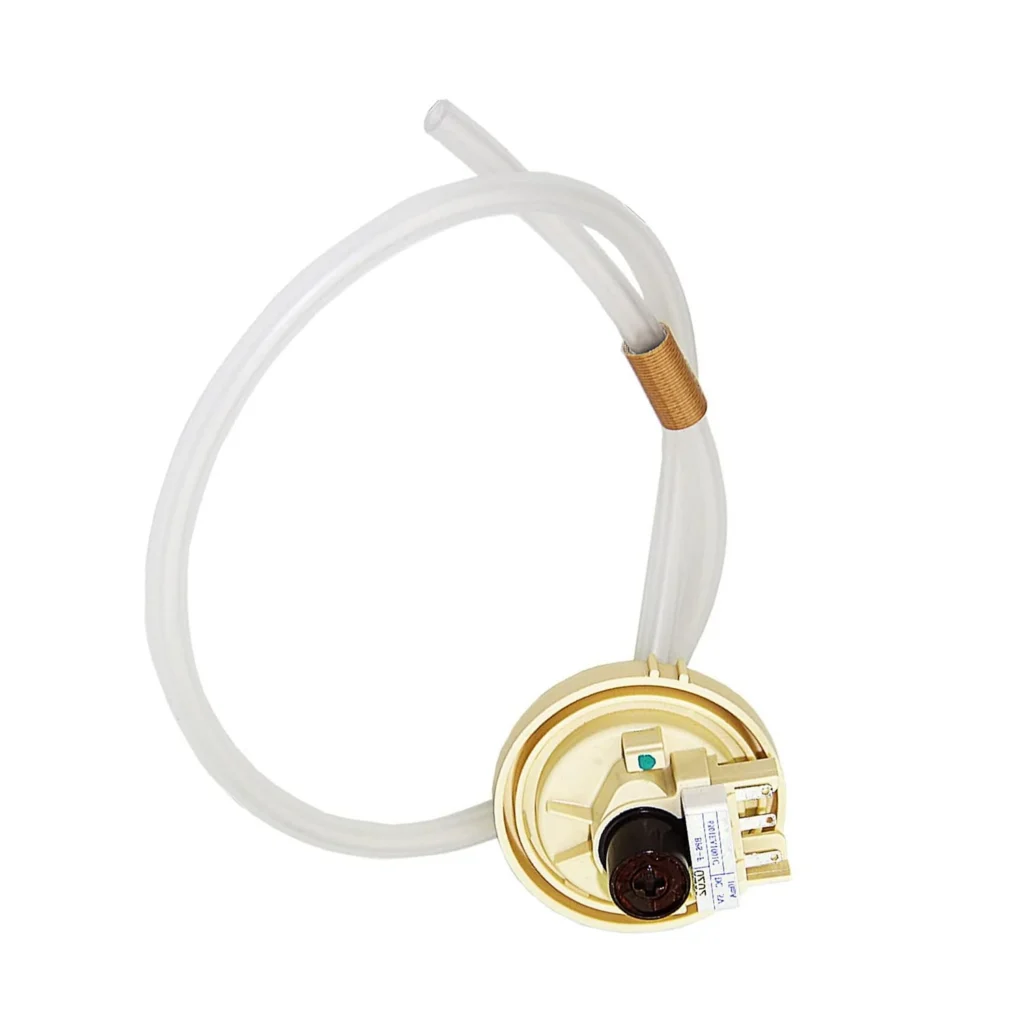
Most LG water level pressure switches (like the 6501EA1001R) should last 8-12 years, but the average homeowner replaces them around year 5 or 6. That's a lot of wasted lifespan — and most failures happen because nobody ever checks the pressure hose or cleans the connection port.
The pressure switch doesn't have moving parts like a motor, so when it fails early, it's usually because something external damaged it. Let's talk about how to keep yours working until the washer itself gives up.
How Long Should It Last?
In ideal conditions, a water level pressure switch can outlive your washer. It's a simple pneumatic device — air pressure pushes a diaphragm, which trips electrical contacts. No friction, no wear.
But here's what actually kills them:
- Clogged pressure hose: Lint, detergent buildup, or water scale restricts airflow. The switch can't sense water level changes accurately, leading to overfilling or underfilling cycles that stress the diaphragm.
- Water intrusion: If the tub seal leaks or the drain backs up, water can travel up the pressure hose and corrode the switch internals.
- Electrical surges: Power spikes from storms or grid fluctuations can fry the contacts inside the switch.
- Vibration damage: On top-load models like the WT5101HW or WT1801HWA, if the washer isn't level or the load is constantly unbalanced, vibration can crack the mounting bracket or loosen wire connections.
With basic maintenance, you're looking at 10-15 years instead of 5-6.
Signs It's Wearing Out
The pressure switch doesn't gradually fail — it works fine until suddenly it doesn't. But there are warning signs if you know what to look for.
Washer Overfills or Underfills
Your WT7200CW fills until water spills over the top, or it barely covers the clothes. The switch isn't detecting water level correctly. Before replacing it, check the pressure hose first — 70% of the time, that's the actual problem.
Won't Advance Past Fill Cycle
Water fills normally, then nothing. The washer sits there with a full tub, not agitating or spinning. The switch contacts might be stuck closed, so the control board thinks the tub is still filling.
Error Codes Related to Water Level
On models like the WT5270CW or WT1701CW, you'll see OE (drain error) or IE (water inlet error) codes even when the inlet valve and drain pump work fine. The control board is getting bad data from the pressure switch.
Clicking Sound During Fill
You hear repeated clicking from behind the control panel as water fills. That's the switch contacts bouncing — a sign the diaphragm inside is damaged or the electrical contacts are pitted.
When to Replace vs Maintain
Here's the honest truth: if the switch itself has failed — cracked housing, corroded terminals, burned contacts — you replace it. There's no fixing it.
But before you spend $60, check these things that mimic a bad switch:
- Pressure hose: Disconnect it from the switch and blow through it. Should be clear airflow. If it's clogged, clean or replace the hose (costs $8).
- Hose connections: Make sure the hose is firmly seated on both the switch port and the tub connection. A loose hose creates false pressure readings.
- Wire harness: Wiggle the wire connector on the switch. Corrosion or loose pins can cause intermittent problems.
- Mounting bracket: If the switch is loose or the bracket is cracked, the diaphragm won't move correctly.
On models like the WT5680HWA or WT4970CW, the pressure hose runs down the back panel and can get kinked during installation. That's a 2-minute fix versus a $60 part.
Replace the switch when you've confirmed the hose is clear, connections are tight, and you're still getting erratic water levels or error codes.
Frequently Asked Questions
Can I test the pressure switch without removing it?
Sort of. Disconnect the pressure hose and gently blow into the switch port while listening for clicks. You should hear distinct clicks as the contacts open and close. If it doesn't click, or clicks weakly, the diaphragm is probably shot. But this doesn't test the electrical side — you'd need a multimeter to check continuity between terminals.
How often should I clean the pressure hose?
Once a year if you use powdered detergent (it leaves more residue), every two years if you use liquid. Pull the hose off both ends, flush it with hot water, and make sure it's completely dry before reconnecting. Takes 10 minutes and prevents 90% of pressure switch problems.
Will a bad pressure switch damage other parts?
Yes. If it overfills, water can flood the control board or short out the motor. If it underfills, clothes don't get clean and you'll run extra cycles, wearing out the drive system faster. On models like the WT5001CW, chronic overfilling can also leak down into the bearings and cause rust. Fix pressure switch issues quickly — they cascade into bigger problems.
Element showing wear?
6501EA1001R · Replace before it fully fails