
How to Extend Your Frigidaire Washer Shock Absorber Life — Maintenance Guide
Always unplug the washer before inspecting or replacing shock absorbers. The machine can tip forward when pulled away from the wall — have someone help stabilize it.
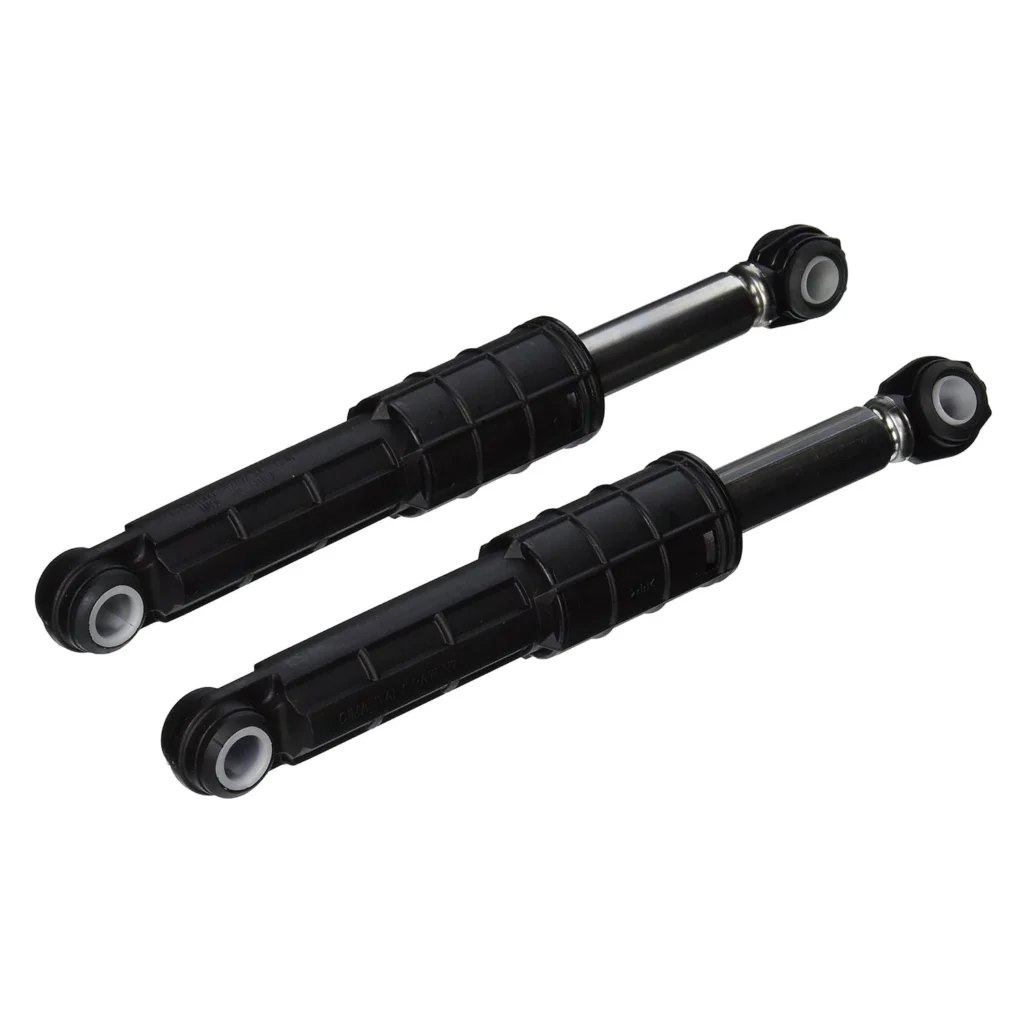
Most Frigidaire front-load washer shock absorbers are designed to last 5–7 years, but I've seen them fail in half that time when owners ignore the warning signs. One customer told us their "front loader washer was banging when it was running. noisy and shook a lot" — classic shock absorber failure that could've been caught earlier with a simple monthly check.
The good news? You can double the lifespan of your shock absorbers with minimal effort. Let's talk about what actually wears them out and how to spot problems before your washer starts walking across the laundry room.
How Long Should Shock Absorbers Last?
In a perfect world, the 5304485917 shock absorber kit should give you 5–7 years of service on models like the ATF7000ES1 or ATF8000FG0. Reality's messier. I've replaced sets at 3 years because of overloading, and I've seen original shocks still working at 10 years in homes that stick to proper load sizes.
Here's what kills them early:
- Overloading — cramming in one more towel every time adds up to thousands of pounds of extra stress over years
- Unbalanced loads — washing a single heavy comforter forces the shocks to work overtime
- Floor vibration — washers on wooden floors or unlevel surfaces compound shock wear
- Hard water buildup — mineral deposits can affect the drum's smooth rotation, creating uneven forces
The shock absorbers on Frigidaire, Electrolux, Gibson, and Kelvinator front-loaders are essentially heavy-duty dampeners. They've got pins that secure them to the frame, and those connection points are where most failures start.
Signs Your Shock Absorbers Are Wearing Out
Your washer will tell you when the shocks are going. You just need to know what to listen and look for.
Shaking and Moving During Spin Cycle
This is the big one. If your washer's creeping across the floor or you can hear it thumping from another room, the shock absorbers aren't doing their job anymore. A properly balanced washer with good shocks shouldn't move more than an inch or two during the highest spin speeds.
Walk up to your washer during a spin cycle. Place your hand on top. You should feel gentle vibration, not violent shaking. If it feels like it's trying to escape, your shocks are worn.
Loud Banging or Clunking Noises
One customer described their washer as "banging when it was running" — that's the drum hitting the cabinet because the shock absorbers can't control its movement anymore. You might also hear a metallic clunk as the worn pins shift in their mounting holes.
The noise usually gets worse as the spin cycle ramps up to full speed. If you're turning up the TV to drown out your washer, that's not normal wear and tear.
Leaking Water
Surprised? Worn shock absorbers cause excessive drum movement, which can loosen hose connections and door seals. If you've got water pooling under your washer and you can't find an obvious leak, check the shocks first.
Spinning Issues or Slow Spin
When shocks fail completely, the washer's control board may detect the excessive vibration and reduce spin speed or stop the cycle entirely. Your clothes come out soaking wet because the machine won't risk damaging itself with a full-speed spin.
Monthly Quick-Check (Takes 3 Minutes)
Pull your washer away from the wall enough to peek behind it. You don't need to disconnect anything.
Grab the top of the drum through the door opening and try to rock it side-to-side and front-to-back. There should be resistance and controlled movement — about 1–2 inches of play. If it moves freely or makes clunking sounds, your shocks are compromised.
While you're back there, look at the shock absorber pins where they connect to the frame. If you see rust, elongated holes, or the pins sitting crooked, plan for replacement soon.
When to Replace vs. Maintain
Let's be straight: shock absorbers aren't really maintainable in the traditional sense. There's no oil to change or parts to lubricate. They're sealed units designed to wear out gradually.
But you can prevent premature failure:
Replace immediately if:
- Your washer moves more than 6 inches during a cycle
- You hear metal-on-metal grinding or see sparks (yes, it happens)
- The drum hits the cabinet walls when you push on it manually
- One shock is visibly damaged or leaking fluid
You can wait if:
- There's slight vibration but the washer stays in place
- Noise is present but not getting worse
- The washer completes all cycles normally
Here's the thing about shock absorber replacement: it's a moderate difficulty job that takes 1–2 hours. One installer noted that "removing and installing pins took a lot more force than showed on the movie" — the factory videos make it look easier than it is. Another used "some 1/4" extensions and a 1/2 socket to push out the old pins" and "an old bolt to align the holes and bracket for installing new pins."
You'll need pliers, screwdrivers, and a socket set. If you're comfortable tilting the washer and working in tight spaces, it's doable. Otherwise, call a tech.
What Actually Extends Shock Life
Since you can't maintain the shocks themselves, focus on reducing the stress they endure:
Load properly: Fill the drum 3/4 full maximum. Your clothes need room to tumble freely. If you're jamming clothes in, you're jamming years off your shock absorbers.
Balance large items: Washing a single heavy comforter? Add a couple of towels to balance the load. The drum shouldn't be fighting itself during spin.
Level your washer: Use a bubble level on top of the machine. Adjust the feet until it's perfectly level in both directions. An unlevel washer forces the shocks to compensate for gravity on every cycle.
Check the floor: If your washer sits on a wooden floor, consider putting it on a rubber anti-vibration mat. This reduces the feedback loop between floor flex and shock wear.
Run a cleaning cycle monthly: This prevents buildup that can throw the drum balance off over time.
The Real Cost of Ignoring Worn Shocks
I've seen what happens when people keep running a washer with bad shock absorbers. The excessive movement damages the spider arm (that's a $400+ repair), cracks the outer tub (often totals the machine), and can even damage your floor or walls.
The 5304485917 shock absorber kit costs a fraction of those repairs. One customer said it "made my wife happy to have the washer back without missing a wash cycle" — that's code for "I should've done this sooner."
Compatible models include the ATF6000ES0, ATF6500GG0, ATF7000FE0, ATF8000FE0, and dozens more Frigidaire, Electrolux, Gibson, and Kelvinator front-loaders. This kit replaces older part numbers AP5590192, 134560400, 131268200, and 134564200.
Frequently Asked Questions
How do I know if my shock absorbers are bad or if it's something else?
Run an empty spin cycle. If the violent shaking stops or reduces significantly, your shocks are fine — you've been overloading the washer. If it still shakes like crazy with nothing inside, the shocks are worn. Also check that all four leveling feet are touching the floor firmly.
Can I replace just one shock absorber instead of all four?
Technically yes, but I don't recommend it. Shocks wear at similar rates, so if one failed, the others are close behind. Plus, having mismatched shock stiffness causes uneven drum control. The 5304485917 kit includes all the parts you need for a complete replacement.
Why is shock absorber replacement harder than the videos show?
Because the videos show new pins sliding out easily. Your pins have been under tension for years, and they've likely got some corrosion. As one installer put it, they "took a lot more force than showed on the movie." Have a hammer, some penetrating oil, and patience ready. Using channel locks or a socket extension as a drift pin helps push the old pins out without damaging the brackets.
Element showing wear?
5304485917 · Replace before it fully fails