
How to Extend Your LG Washer Inlet Valve Life — Maintenance Guide
Always disconnect power and shut off water supply before servicing. Water pressure remains in hoses even after shutoff — drain into bucket first.
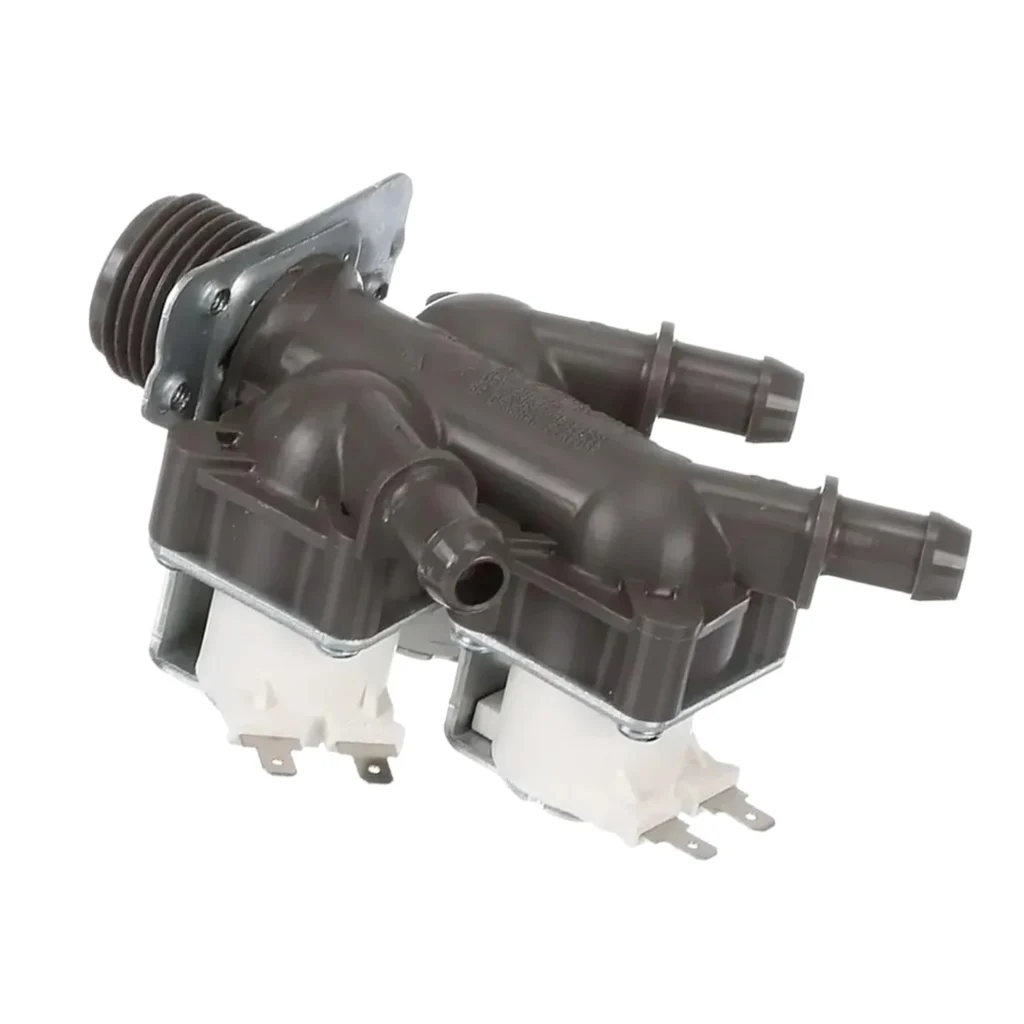
Most inlet valves on LG and Kenmore Elite washers fail between years 4 and 7, but I've seen units running strong at 12 years with proper care. The difference? Water quality and a few simple habits that prevent sediment buildup and solenoid burnout.
The 5221ER1003M inlet valve assembly controls water flow into your washer drum. It's got dual solenoids that open and close based on your cycle selection. When sediment clogs the screens or hard water corrodes the solenoid coils, you'll notice slow fills, no fills, or constant running even when the machine's off.
How Long Should It Last?
Under normal conditions, expect 5–8 years from this valve. That number drops to 3–5 years if you've got hard water above 10 grains per gallon or high sediment in your supply lines. Conversely, if you're on city water with a whole-house filter and you clean the inlet screens annually, you can push it past 10 years.
The solenoid coils are the weak point. They're rated for about 100,000 cycles, which sounds like a lot until you realize that's only 6–7 years of daily washing in a busy household. Heat and mineral buildup accelerate the degradation.
Signs It's Wearing Out
Inlet valves don't usually fail catastrophically. They give you warnings weeks or months in advance. Here's what to watch for on your WM3700HWA, WM8900HBA, or any of the compatible LG and Kenmore Elite models:
Slow Fill Times or Weak Water Pressure
If your washer used to fill in 3–4 minutes and now takes 8–10, the inlet screens are probably clogged. You'll hear the valve click open, but water trickles instead of flows. This is the earliest warning sign and the easiest to fix — you can clean the screens without replacing the whole valve yet.
Water Continues Running After Cycle Stops
The solenoid isn't closing completely. You'll hear a faint hissing or see water slowly accumulating in the drum even when the machine's off. This usually means the rubber diaphragm inside has warped or the solenoid coil is weak. Once this starts, you've got maybe 2–4 weeks before it fails completely or causes an overflow.
No Water Flow on One Temperature Setting
Your hot works but cold doesn't, or vice versa. Each temperature has its own solenoid in the valve assembly. When one side quits, the other still functions — but you're down to single-temp washes only. This is a clear sign the valve's reached end of life. You can't replace individual solenoids; the whole assembly goes.
Visible Corrosion or Mineral Buildup on Valve Body
Pull the washer out and look at the valve where the hoses connect. White, green, or orange crusty deposits mean hard water's been eating away at the housing and internal components. The screens are definitely clogged, and the solenoids are probably compromised.
When to Replace vs Maintain
Here's the honest decision framework: if you're catching slow fills early and your valve's under 5 years old, clean the screens. Takes 15 minutes, costs nothing. But if you're dealing with intermittent failures, water running after cycles, or the valve's past 7 years, replacement makes more sense than gambling on a temporary fix.
The 5221ER1003M runs $97.99. A service call for the same job costs $200–$300 with labor. If you've already got symptoms beyond clogged screens — like weak solenoids or leaking seals — you're not buying much time with maintenance. Replace it.
That said, if your water's clean and the valve's young, preventive care absolutely works. I've extended valve life 3–4 years with simple annual cleaning, especially in areas with seasonal sediment spikes or well water systems.
Frequently Asked Questions
Can I Clean the Inlet Valve Screens Without Removing the Valve?
Yes, but only partially. Turn off water supply, disconnect the inlet hoses, and you'll see the screens right there in the valve ports. Pull them out with needle-nose pliers, rinse under a faucet, and reinstall. This clears surface debris. For deep cleaning — the stuff stuck in the solenoid chambers — you need to remove the valve and disassemble it, which is 80% of the work of just replacing it.
Does a Water Softener Really Help the Inlet Valve Last Longer?
Absolutely. Hard water's the number one killer of these valves. Calcium and magnesium build up on the rubber diaphragms and solenoid seats, preventing proper closure. I've seen valves from soft water areas still working fine at 12 years, while hard water units fail at 4. If you're above 7 grains hardness, a softener or inline filter pays for itself in extended appliance life.
Will Shutting Off Water Between Loads Extend Valve Life?
Not really. The solenoids wear from cycling open and closed during operation, not from sitting under pressure. However, shutting off water prevents leaks if a solenoid does start failing and won't close fully — you won't come home to a flooded laundry room. It's cheap insurance but doesn't meaningfully extend valve lifespan. Focus on water quality instead.
Element showing wear?
5221ER1003M · Replace before it fully fails