
How to Extend Your LG Dryer Drum Motor Life — Maintenance Guide
Always unplug dryer before inspection. If you smell burning or see smoke, stop using immediately and unplug — overheating motors can be a fire hazard.
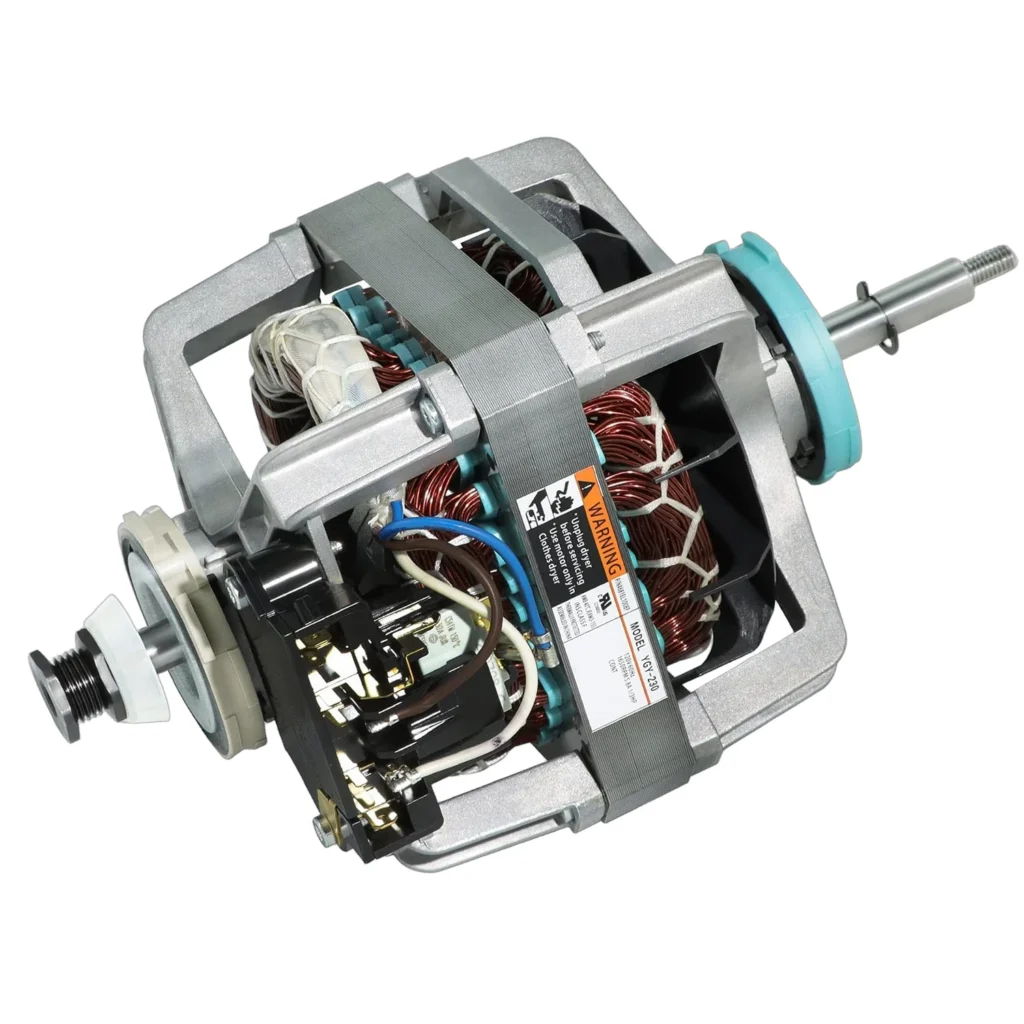
Here's what most people don't realize: the average drum drive motor in an LG dryer is designed to last 10-15 years, but most fail around the 7-year mark. The difference? How you load your dryer and what maintenance habits you've built (or ignored). If you've got a DLEX2501W or DLG2251W running strong, let's keep it that way.
How Long Should It Last?
The 4681EL1008A drum drive motor should give you 10-15 years of solid service under normal conditions. But "normal" is doing a lot of heavy lifting here. If you're running 2-3 loads daily with overloaded drums, you're asking that motor to work twice as hard. Every time you stuff towels in there until the door barely closes, you're shortening its lifespan.
What affects it most:
- Load weight — Overloading forces the motor to strain during startup and throughout the cycle
- Ventilation — Poor airflow means longer dry times, which means more motor runtime per load
- Bearing condition — Worn drum support rollers create drag that the motor has to overcome
- Frequency of use — Commercial-level use in a residential dryer accelerates wear
- Lint buildup — Restricted airflow makes the motor work harder and run hotter
With proper care, you can push that motor into the 12-15 year range. Without it, you'll be looking at replacement around year 6 or 7.
Signs It's Wearing Out
The motor doesn't just quit without warning. It'll tell you it's struggling if you know what to listen for. Here's what to watch for on models like the DLEX3360V or DLGX3901B:
Drum Not Spinning
This is the obvious one — you close the door, hit start, and the drum just sits there. Sometimes it'll make a humming sound, sometimes nothing. The motor's getting power but can't generate enough torque to turn the drum. This often happens when the motor's internal windings have degraded or the capacitor (if equipped) has failed. Before you assume it's the motor, check that your drum support rollers aren't seized — a stuck roller can prevent the drum from turning even with a good motor.
Intermittent Spinning
The drum spins for a few minutes, then stops. Or it won't start on the first try, but works on the second or third attempt. This is classic early motor failure — the windings are still functional but starting to short out internally. You'll notice this more on heavy loads because the motor needs maximum torque to get that weight moving.
Unusual Motor Noise
A healthy drum motor on an LG dryer is surprisingly quiet — you should barely hear it over the tumbling clothes. If you're hearing grinding, squealing, or a loud humming that wasn't there before, the motor bearings are wearing out or the motor's internal components are failing. Don't confuse this with drum roller noise (which sounds more like thumping or rumbling). Motor noise is higher-pitched and comes from the back of the dryer.
Burning Smell During Operation
If you smell burning rubber or electrical odor coming from your DLEX7177RM or DLGX7188RM, that's the motor overheating. The insulation on the windings breaks down as it ages, causing shorts that generate heat. This isn't a "wait and see" situation — unplug the dryer and investigate immediately. Running an overheating motor can damage other components or create a fire hazard.
Preventive Maintenance Schedule
You can't oil this motor or replace brushes (it's an induction motor, fully sealed). But you can eliminate the external factors that kill it early.
After Each Load
Clean the lint screen. Every single time. A clogged screen reduces airflow by up to 50%, which doubles your dry time and makes the motor run twice as long. That extra runtime adds up fast — over a year, it's like adding 3-4 extra years of wear.
Monthly
Check your exhaust vent outside. Is air flowing strongly when the dryer's running? If not, you've got a restriction somewhere. Pull the dryer out and disconnect the vent hose — you should be able to see daylight through it. If you can't, it's time to clean it out. A restricted vent is the single biggest cause of premature motor failure because the dryer can't evacuate moisture efficiently.
Every 3 Months
Vacuum behind and underneath the dryer. Lint gets past the screen and accumulates around the motor housing and blower wheel. On models like the DLE7000W, you can remove the lower front panel and vacuum out the entire cavity. You'd be surprised how much lint collects in there — I've seen motors completely caked in it.
Annually
Inspect the drum support system. Spin the drum by hand with the dryer off. It should rotate smoothly with minimal resistance. If you feel binding or hear squeaking, your support rollers or glides are wearing out. Replace them before they seize completely — a seized roller puts enormous strain on the motor and will kill it fast.
When to Replace vs. Maintain
Let's be realistic about the economics here. At $222.99, this isn't a cheap part. But it's also not the most expensive dryer repair you'll face.
Replace if:
- The motor won't spin the drum at all and you've confirmed power is reaching it
- You smell burning and the motor housing is hot to the touch
- The motor hums but doesn't turn (windings have failed)
- Your dryer is 8+ years old and showing other wear issues (might be time for a new machine)
Maintain and monitor if:
- Spinning is intermittent but still works most of the time
- You hear slight noise changes but the motor still performs normally
- The dryer is less than 7 years old with no other issues
- You've just cleaned the vent system and performance improves
One more thing: if you're replacing this motor, take the opportunity to replace the drum support rollers and belt at the same time. You've already got the dryer torn apart — it's the perfect time to refresh the whole drum drive system. New rollers will reduce drag on your new motor and extend its life.
Load Management Makes a Difference
I'll be straight with you — how you load the dryer matters more than any maintenance routine. The motor on models like the DLE2514W is sized for normal residential loads, not stuffed-to-capacity loads every time.
Follow the 3/4 rule: fill the drum no more than 3/4 full. Clothes need room to tumble properly. When you pack it tight, the motor struggles during startup (the heaviest load moment), and the extended dry time from poor tumbling means longer runtime. Both factors accelerate wear.
Heavy items like comforters and sleeping bags? Run them alone or with one other similar item. Don't throw in three heavy blankets and expect the motor to handle it gracefully for years.
Frequently Asked Questions
How long does it take to replace the 4681EL1008A motor?
For someone with moderate DIY skills, plan on 60-90 minutes. You'll need to remove the top and front panels, disconnect the drum, and access the motor from the rear. The motor itself is held by three bolts. The time-consuming part is reassembling the drum support system correctly. If you've never worked on a dryer before, budget 2-3 hours and watch a full video walkthrough first.
Can I test if my motor is bad before ordering a replacement?
Yes, but carefully. Unplug the dryer, access the motor, and disconnect its wire harness. Use a multimeter to check continuity across the motor windings — you should see some resistance (typically 3-10 ohms depending on the winding). Infinite resistance means open windings (motor's dead). Zero resistance means shorted windings (also dead). If readings are normal but the motor still won't run, the issue might be the control board or thermal fuse, not the motor.
Will a bad motor damage other dryer components?
Usually no, but there are exceptions. If the motor's overheating badly, it can trip the thermal cutoff fuse — that's actually a safety feature protecting you. But if you keep resetting that fuse and running the dryer with a failing motor, you risk damaging the main control board through voltage irregularities. The motor itself typically fails in isolation without taking other parts with it.
Element showing wear?
4681EL1008A · Replace before it fully fails