
How to Extend Your Whirlpool Defrost Thermostat Life — Maintenance Guide
Always disconnect power before accessing the evaporator compartment. The defrost heater can remain hot for 15–20 minutes after a defrost cycle. Wear gloves when handling the thermostat — the metal contacts can have sharp edges.
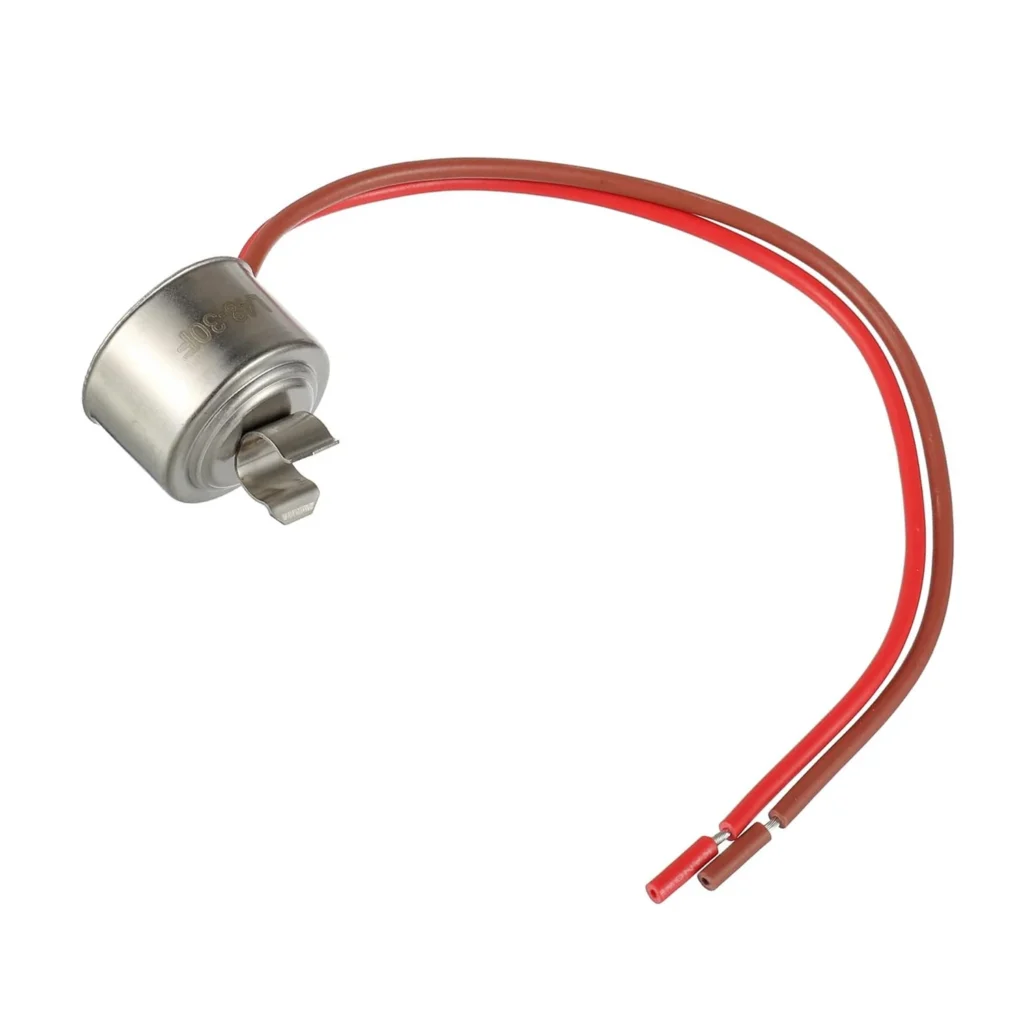
Most bimetal defrost thermostats like the 4387503 should last 8–12 years in a typical refrigerator. But I've seen them fail in under 3 years when frost buildup forces them to cycle constantly. The difference between a thermostat that lasts a decade and one that dies early often comes down to how well you maintain the defrost system around it.
This component cycles your fridge in and out of defrost mode by responding to temperature changes in the evaporator coils. When it works correctly, you'll never notice it. When it fails, you'll end up with either a freezer full of frost or a puddle under your refrigerator.
How Long Should It Last?
The 4387503 bimetal defrost thermostat is designed for 10,000–15,000 defrost cycles under normal conditions. In a typical household refrigerator, that translates to 8–12 years of service life. Models like the ET18NKXAW02, ET20DKXAB01, and ET22DMXDN00 that use this thermostat generally run defrost cycles every 8–10 hours of compressor runtime.
Several factors cut that lifespan short:
- Frequent door openings — humid air gets in, creates more frost, forces more defrost cycles
- Poor door seal — same problem, but constant instead of occasional
- Blocked drain tube — water can't escape, refreezes on coils, thermostat cycles excessively
- Overloaded freezer — blocks airflow, creates uneven temperatures, confuses the thermostat
- High ambient humidity — basement or garage installations in humid climates stress the defrost system
I've pulled thermostats from refrigerators in Florida garages that failed after 4 years, while the same part in a climate-controlled Minnesota kitchen was still going strong after 14 years. Environment matters more than most people realize.
Signs It's Wearing Out
The bimetal defrost thermostat doesn't give you much warning before it fails completely. You're looking for subtle changes in your refrigerator's behavior over weeks or months.
Excessive Frost Buildup on Evaporator Coils
Check behind the back panel inside your freezer compartment. You should see thin, even frost on the coils — maybe a quarter-inch thick at most. If you're seeing thick ice formations, icicles hanging off the coils, or solid ice blocks, your thermostat isn't triggering defrost cycles properly. This is the most common early warning sign.
On Whirlpool models like the 3ET18DKXAW00 and 4ET18ZKXBN00, you can usually access the evaporator by removing a few screws from the interior back panel. Do this check every 6 months.
Water Pooling Under Crisper Drawers
When the defrost thermostat starts failing intermittently, it might trigger defrost mode at odd times or stay in defrost too long. You'll notice water under the produce drawers or along the bottom of the fresh food compartment. This happens because excess defrost water overwhelms the drain system.
Don't confuse this with a clogged drain tube — the difference is timing. A clogged drain gives you water every defrost cycle. A failing thermostat gives you unpredictable water at random times.
Temperature Fluctuations in Freezer
Pull out that bag of frozen peas you've had for months. If it's rock-hard one week and slightly soft the next, your defrost system isn't cycling correctly. The thermostat controls when the fridge stops cooling to melt frost, so when it malfunctions, you get temperature swings.
I've seen this on ET20NKXAW04 and ET22DKXAN04 models where the thermostat was stuck partially open — the compressor would run fine, then the defrost heater would kick on at weird times and partially thaw everything.
Maintenance That Actually Matters
You can't service the thermostat itself — it's a sealed bimetal switch. But you can maintain the system around it to prevent premature failure.
Keep the Drain Tube Clear
Every 3–4 months, flush the defrost drain with hot water mixed with a bit of dish soap. The drain opening is usually at the bottom of the evaporator compartment. Use a turkey baster to force water through the tube. If water backs up, use a length of flexible wire or a pipe cleaner to clear the blockage.
A clogged drain means defrost water can't escape, it refreezes on the coils, and your thermostat has to work overtime clearing that ice. I've seen this single issue cut thermostat life in half.
Check Door Seals Monthly
Close your refrigerator door on a dollar bill. If you can pull it out easily, your seal is compromised. Humid air infiltration is the number one cause of excessive frost buildup, which directly stresses the defrost thermostat.
On models like the ET25DKXDW00 and 3VET19ZKBW00, the door gaskets are inexpensive and take 10 minutes to replace. Don't wait until you're seeing visible gaps.
Maintain Proper Airflow
Don't block the vents inside your freezer. Air needs to circulate across the evaporator coils for the thermostat to sense accurate temperatures. When frozen pizzas or ice cream boxes block the vents, you create cold spots that confuse the thermostat's temperature sensing.
Leave at least 2 inches of space around interior vents. This is especially important on side-by-side models like the 3VET21DKBW00 where the evaporator serves both compartments.
When to Replace vs Maintain
Here's the honest truth: if your defrost thermostat is already showing symptoms, maintenance won't save it. These are binary components — they either work or they don't. The maintenance I've described prevents premature failure, but once the bimetal contacts inside start sticking or corroding, you're replacing the part.
Replace immediately if you have:
- Solid ice block covering the entire evaporator (thermostat stuck closed)
- Compressor running constantly with warm freezer temps (thermostat stuck open)
- Visible frost or ice on the thermostat itself
- Continuity testing shows the thermostat won't close at 15°F or won't open at 59°F
The 4387503 costs $39.99 and takes about 30 minutes to replace. Compare that to a $200 service call or a ruined freezer full of food. I've never seen someone regret replacing a questionable defrost thermostat.
Prevention is worth it when the fridge is working fine. But once you're diagnosing problems, you're past prevention — you're into repair territory.
Frequently Asked Questions
How often should I manually defrost my refrigerator to extend thermostat life?
You shouldn't need to manually defrost at all if the automatic defrost system is working correctly. If you're frost-free models like the ET20HDXBW00 or ET25DQRBW01 requiring manual defrosting more than once every 2–3 years, something's wrong with your defrost system — possibly the thermostat, heater, or timer. Manual defrosting is a band-aid, not maintenance.
Can I test my defrost thermostat without removing it?
Not reliably. You need to remove it and test continuity with a multimeter at specific temperatures. At room temperature (around 70°F), it should show no continuity (open circuit). Place it in a freezer for 30 minutes until it drops below 20°F, and it should show continuity (closed circuit). Testing it in place gives false readings because of surrounding components and wiring.
Will a failing defrost thermostat damage other refrigerator components?
Absolutely. When a thermostat fails closed (stuck in cooling mode), frost builds up until it blocks airflow completely. Your compressor runs constantly trying to cool, burning excessive electricity and shortening its life. When it fails open (stuck in defrost mode), your defrost heater might stay on too long, potentially damaging plastic components near the evaporator. I've seen failed thermostats lead to $400+ compressor replacements because people ignored the early warning signs. Replace the $40 part before it kills the $400 part.
Element showing wear?
4387503 · Replace before it fully fails